Rajasthan Advancing Rapidly Towards Water Self-Reliance Under Chief Minister Bhajan Lal Sharma

Upper High-Level Canal Project Set to Become a Milestone for the Vagad Region
Major Irrigation Initiative to Boost Agricultural Productivity and Economic Development in Tribal Areas
- Lift irrigation system to provide water to 42,000 hectares of farmland across 338 villages
- Project being developed at a cost of ₹2,500 crore
- Total main canal length of 102 kilometres
Jaipur, June 2026: Under the leadership of Chief Minister Bhajan Lal Sharma and the guidance of Water Resources Minister Suresh Singh Rawat, the Rajasthan government is giving top priority to the Upper High-Level Canal Project, with construction progressing on a war footing. Emerging as a beacon of hope for farmers in the Vagad region, the project is expected to transform agriculture and strengthen the rural economy in the tribal-dominated areas of southern Rajasthan.
The project, with an estimated cost of approximately ₹2,500 crore, will provide irrigation water through a lift irrigation system to nearly 42,000 hectares of agricultural land across 338 villages located in six tehsils—Banswara, Bagidora, Kushalgarh, Sajjangarh, Anandpuri, and Gangadtalai—in three Assembly constituencies of Banswara district: Banswara, Bagidora, and Kushalgarh.
Once completed, the project is expected to directly and indirectly benefit around 350,000 people, significantly improving agricultural productivity and livelihoods in the region.
Modern Engineering and Extensive Canal Network
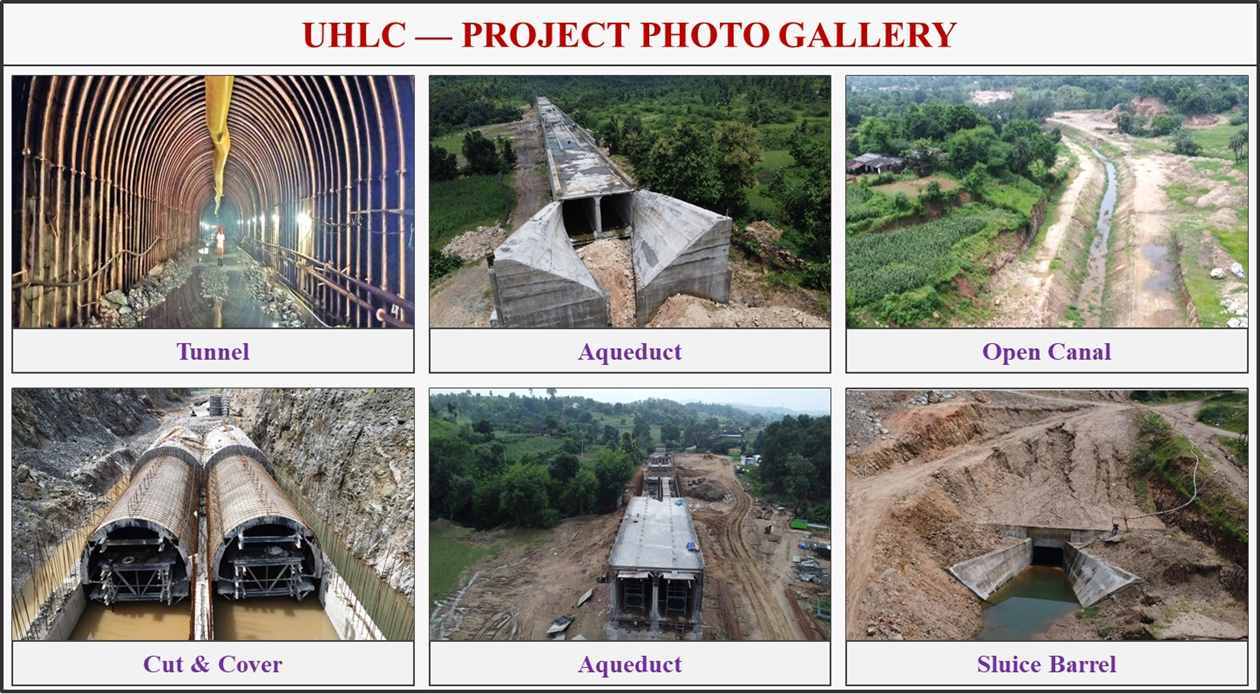
The Upper High-Level Canal Project incorporates advanced engineering technologies for the construction of an extensive canal network and associated infrastructure. The project’s main canal will stretch over 102 kilometres, including 22.5 kilometres of tunnels and cut-and-cover structures.
Several major engineering structures are being developed as part of the project, including aqueducts and siphons to cross rivers. In addition, approximately 230 other canal-related structures such as super passages, drainage siphons, road bridges, escape-cum-cross regulators, and head regulators are being constructed.
Development of a Pressurized Irrigation Command Area
A modern pressurized irrigation command area is being developed under the project to ensure scientific and controlled irrigation up to the farm level through an advanced SCADA-based system.
Around 200 water storage reservoirs (diggis) are proposed at the “chak” level, each serving approximately 200 hectares of irrigated land. Water from the main canal system will be supplied to these reservoirs through MS and DI pipelines.
From the reservoirs, an underground HDPE pipeline network of nearly 5,000 kilometres will be developed, enabling pressurized irrigation directly to agricultural fields. Hydrants will be installed at intervals covering approximately 1.25 to 1.5 hectares, allowing farmers direct access to irrigation water.
This system will ensure equitable water distribution, minimal water loss, and highly efficient irrigation. The use of micro-irrigation and pressurized irrigation techniques will enable a larger area to be irrigated with less water, providing farmers with a reliable year-round irrigation facility.
Automated Monitoring Through SCADA Technology
The project will also incorporate a sophisticated SCADA (Supervisory Control and Data Acquisition) system, enabling fully automated monitoring and operation of the entire pressurized irrigation network.
The system will facilitate uniform water distribution, automatic regulation of pressure and flow, real-time monitoring, and centralized operational control. Continuous monitoring of pumping stations, relief valves, hydrants, and water flow across various canal branches will help maximize efficiency and reduce wastage.
Construction Progressing Rapidly
Currently, work is underway on approximately 42 kilometres of the canal system. Construction of the intake structure and sluice barrel is nearly complete. Work on tunnels, aqueducts, siphons, cut-and-cover sections, and the underground pipeline network connecting canals to reservoirs is progressing simultaneously at multiple locations.
The project is being regularly monitored to ensure timely and transparent execution. Construction agencies have been instructed to adhere strictly to project timelines and quality standards.
Land Acquisition and Future Benefits
For implementation of the project, around 270 hectares of private land across 78 villages are being acquired in accordance with legal procedures. Compensation awards worth approximately ₹47 crore have already been approved for 211 hectares of land in 67 villages, while nearly ₹15 crore has been disbursed to affected landowners. The remaining land acquisition and forest land transfer processes are also moving forward swiftly.
Water Resources Minister Suresh Singh Rawat said that upon completion, the Upper High-Level Canal Project will become one of the most important irrigation schemes in Banswara district and will provide farmers with year-round access to irrigation water.
He noted that the project is expected to increase agricultural production, expand the cultivation of maize, wheat, pulses, oilseeds, and horticultural crops, and significantly enhance farmers’ incomes. In addition, it will contribute to groundwater recharge, water conservation, and overall rural development.
According to the minister, the project will play a transformative role in accelerating social and economic development across the tribal regions of Vagad and will serve as a landmark achievement in Rajasthan’s journey toward water self-reliance.





The govt will not allow the education of any poor or needy person to be disrupted: Chief Minister
A young girl who arrived with her elderly mother appealed for support to pursue a B.Tech d…

The govt will not allow the education of any poor or needy person to be disrupted: Chief Minister
A young girl who arrived with her elderly mother appealed for support to pursue …