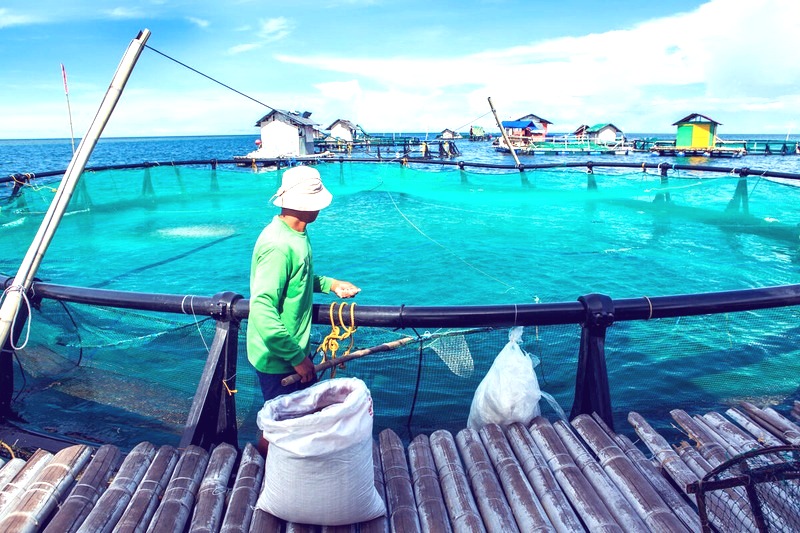
SOFIA 2026: Report Highlights Sustainability In Global Fisheries And Aquaculture Production Reaches New Highs.

Rome/Mombasa; June 2026: At $184 billion, trade in aquatic animal products continues to hit record highs and now rivals terrestrial meat trade in value. Ensuring sustainable and equitable growth of marine and inland ecosystems, however, remains a key challenge, according to the latest State of World Fisheries and Aquaculture (SOFIA 2026) report by the Food and Agriculture Organization of the United Nations (FAO).
The report which has been launched today (Tuesday – 16th June 2026) at the 11th Our Ocean Conference in Mombasa, Kenya, presents updated global fisheries and aquaculture statistics. It highlights how FAO, with Members, communities, institutions, industry and partners, is translating its Blue Transformation vision into measurable results.
SOFIA 2026 estimates global fisheries and aquaculture production reached a record 235 million tons in 2024, of which 195 million tons aquatic animals, confirming the sector’s expanding role in feeding the world.
While wild fisheries have largely stabilised, reflecting ecological limits and effective management of some fishery stocks, aquatic animal production has continued to grow, averaging 3.2% annually since the 1950s. In particular, in 2024 aquaculture production of aquatic animals surpassed 100 million tons for the first time (valued at $371 billion at farm gate). Capture fisheries reached about 92 million tons and have remained within the 86–94 million tons range since the late 1980s.
Aquatic animal foods are increasingly central to diets: 89% of production of aquatic animals goes to human consumption, supplying at least one-fifth of the animal protein consumption of 3.1 billion people. The sector also supports more than 600 million livelihoods worldwide.
Despite rising availability, benefits remain uneven. Per capita aquatic animal food supply, particularly in Africa, lags well below the global average, underscoring the need for targeted policies.
At the same time, the sector faces growing pressures. Climate change, environmental degradation, economic shocks and geopolitical shifts are affecting performance and sustainability. For example, under high emissions scenarios, exploitable fish biomass is projected to decline by over 10% by 2050 in several regions.
The report examines how these pressures will shape the sector, alongside advances in adaptation and mitigation to climate change. “The report illustrates that, more than ever before, a healthy planet requires a healthy ocean and healthy inland waters”, FAO Director-General QU Dongyu wrote in its Foreword. “We need to ensure that all necessary efforts are made to reverse the decline in sustainability and secure the long-term potential of the sector, for generations to come”.
Trade implications and regional breakdown –
In 2023, the availability of aquatic animal foods reached 171 million tons, but its distribution remains uneven. While in Asia the sector provides 26.3 kg per person, the availability in Africa is only 9.1 kg of aquatic animal foods per individual.
Trade in aquatic products has expanded significantly. Between 1976 and 2024, export value rose more than twenty-threefold (nearly sixfold in real terms), in line with global trade in goods. Growth reflects higher production, improved logistics and processing, competitive pricing and trade liberalisation, with products often crossing multiple borders before reaching consumers as part of complex supply chains.
FAO projects continued growth in production, consumption and trade, with total aquatic animal production expected to reach 214 million tons by 2034.
FAO’s Blue Transformation –
FAO works with Members and partners through its Blue Transformation Roadmap 2022-2030 to improve sustainability, productivity and inclusiveness. Since its launch in 2021, the initiative has driven concrete action worldwide.
In aquaculture, FAO promotes science-based governance, spatial planning and innovation, including climate-smart and integrated systems such as rice–fish farming, trout production and models combining aquaculture with renewable energy.
In capture fisheries, FAO supports stronger governance, better data and enhanced monitoring and surveillance. It works with regional fishery bodies to manage shared stocks and combat illegal, unreported and unregulated fishing, while helping countries implement the Voluntary Guidelines for Securing Sustainable Small-Scale Fisheries.
SOFIA 2026 Key facts and figures –
- Aquaculture aquatic animal production topped 100 million tons for the first time in 2024, reaching 103 million tons;
- Aquaculture now provides 53% of total aquatic animal production and over 59% of aquatic animal food output, including algae, aquaculture produced 141 million tons valued at $391 billion;
- Since the late 1980s, nearly all growth in aquatic production has come from aquaculture. Wild fisheries have plateaued; capture output of aquatic animals reached 92 million tons in 2024, including 80 million tons from marine fisheries In 2023, 72.6% of all landings originated from biologically sustainable stocks;
- Tuna catches reached a record 9.3 million tons in 2024. Anchoveta catches rebounded strongly in 2024, rising by 109% to over 5.0 million tons from 2.4 million tons in 2023
- Inland fisheries reached a record 12.3 million tons in 2024;
- At $184 billion, aquatic animal trade now rivals terrestrial meat trade; over one-third of production is traded internationally;
- Global per capita availability of aquatic animal food averaged 21.1 kg in 2023, rising to an estimated 21.3 kg in 2024;
- The sector supports over 600 million livelihoods worldwide.
Team Maverick.




Mutual trust is world’s most valuable strategic asset: PM Modi at G7 Summit
Evian (France), June 2026 : Prime Minister Narendra Modi on Tuesday underscored the import…
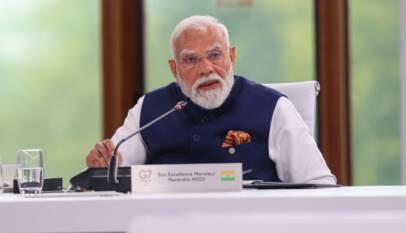
Mutual trust is world’s most valuable strategic asset: PM Modi at G7 Summit
Evian (France), June 2026 : Prime Minister Narendra Modi on Tuesday underscored the importance …