Maharashtra to Draft DELTA Law to Unlock ‘Latent Value’ of Properties: CM Devendra Fadnavis

Expert Committee to Be Formed for Comprehensive Legislation
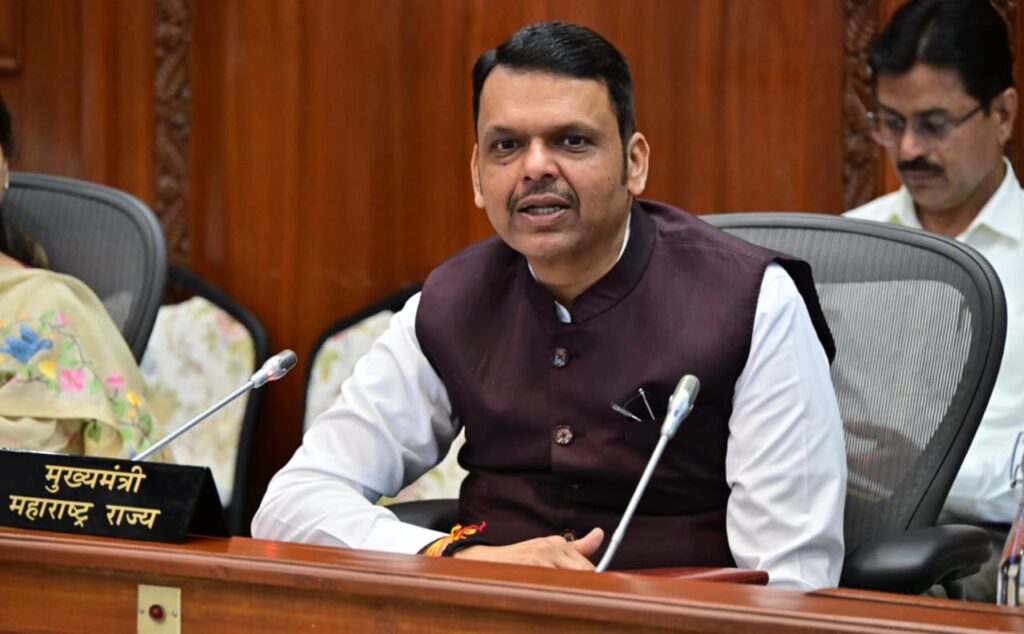
Mumbai, July 2026: Maharashtra Chief Minister Devendra Fadnavis has directed officials to draft a new law aimed at unlocking the “latent value” of immovable properties to generate new sources of revenue and support the state’s goal of becoming a USD 1 trillion economy by 2030.
The proposed legislation, titled the DELTA (Maharashtra Digitisation and Exchange of Land Token Assets) Act, seeks to leverage the untapped economic potential of land and real estate assets for public benefit. The Chief Minister emphasized that the law should be designed to fully harness the “latent value” embedded in properties.
Fadnavis also instructed officials to constitute an expert committee comprising representatives from the Securities and Exchange Board of India (SEBI), Bombay Stock Exchange (BSE), National Stock Exchange (NSE), along with industry experts and experienced professionals, to help frame a comprehensive and inclusive legal framework.
The directions were issued during a meeting at Sahyadri Guest House, where the draft framework of the proposed DELTA law was presented. Minister of State for Urban Development Madhuri Misal was also present.
Blockchain-Based Tokenisation of Real Estate
Speaking at the meeting, Fadnavis said that property tokenisation would become a significant source of economic value globally in the coming years. Under the proposed framework, immovable properties would be converted into digital tokens using blockchain technology, enabling value enhancement and facilitating new forms of transactions.
He directed officials to study existing international laws, regulatory systems and best practices governing blockchain-based property tokenisation.
The Chief Minister noted that Maharashtra would become the first state in India to propose such legislation and expressed confidence that the DELTA Act would reinforce the state’s reputation for pioneering progressive legal reforms.
“Maharashtra has always taken the lead in introducing path-breaking legislation that serves as a model for the country. This law should further strengthen that legacy,” he said.
Digital Ecosystem with Legal Protection
According to the proposed framework, the entire system will operate through a fully digital blockchain-based platform. Landowners will receive digital tokens corresponding to the value of their properties, enabling secure and transparent transactions.
Fadnavis stressed that it would be crucial to provide legal protection to all blockchain-enabled property transactions. He said Maharashtra should take the lead in establishing a robust legal ecosystem to support such digital asset exchanges.
He further directed that the drafting process should incorporate inputs from leading institutions, blockchain experts, legal scholars, technology professionals and startups working in this field to ensure that the legislation is comprehensive and future-ready.
The Chief Minister also emphasized that the law must clearly establish and safeguard property ownership rights within blockchain-based transactions.
Faster Transactions and Greater Economic Value
Fadnavis observed that the current processes involved in buying, selling and mortgaging properties are often lengthy and cumbersome. Digitising these procedures through tokenisation would significantly improve efficiency, transparency and ease of transactions.
He said recognising the hidden or latent value of land assets would allow property owners to derive greater financial benefits while simultaneously creating new revenue streams for the government.
The Chief Minister also directed officials to examine relevant regulations of the Central Government while preparing the legislation and asked the Urban Development Department and the Law and Judiciary Department to expedite work on the proposed Act.
He noted that several developed countries have already established blockchain-based platforms for property tokenisation and said Maharashtra should ensure it remains at the forefront of technological and regulatory innovation.
“This initiative will not only modernise property transactions but also contribute to increasing the state’s revenue while unlocking the economic potential of real estate assets,” Fadnavis said.
The meeting was attended by Chief Secretary Rajesh Agrawal, Additional Chief Secretary (Finance) O.P. Gupta, Additional Chief Secretary (Revenue) Vikas Kharge, Principal Secretary (Law and Judiciary) Dilip Ghumare, Secretary (Planning) Shaila A., and other senior officials. Nagpur Divisional Commissioner Vijayalakshmi Bidari participated through video conferencing, while Nagpur Metropolitan Region Development Authority Commissioner Sanjay Meena delivered the presentation on the proposed DELTA framework.





British Deputy High Commissioner Calls on Hon’ble Deputy Chief Minister Shri K V Singh Deo to Discuss UK-Odisha Partnership
Bhubaneswar, July 2026 : Dr. Andrew Fleming, British Deputy High Commissioner, Kolkata, ca…

British Deputy High Commissioner Calls on Hon’ble Deputy Chief Minister Shri K V Singh Deo to Discuss UK-Odisha Partnership
Bhubaneswar, July 2026 : Dr. Andrew Fleming, British Deputy High Commissioner, Kolkata, called on …