Union Budget 2025: Tax Cuts, TDS Relief, and Boost for Startups

The Union Budget for 2025, presented by Finance Minister Nirmala Sitharaman, marks a pivotal moment for India’s economy, addressing key challenges and setting the stage for future growth. It is the first full Union Budget of Prime Minister Narendra Modi’s third term and is noteworthy for being Sitharaman’s eighth consecutive Budget, bringing her closer to the record held by Morarji Desai. This Budget comes at a time when India’s economic growth has slowed to a four-year low, and global uncertainties, such as U.S. tariff threats and geopolitical tensions, add complexity to the situation. However, the government has laid out a comprehensive roadmap that focuses on economic resilience, bolstering infrastructure, and implementing sectoral reforms aimed at boosting long-term growth. The central elements of this year’s Budget revolve around income tax relief, simplification of tax processes, startup support, and fiscal adjustments.
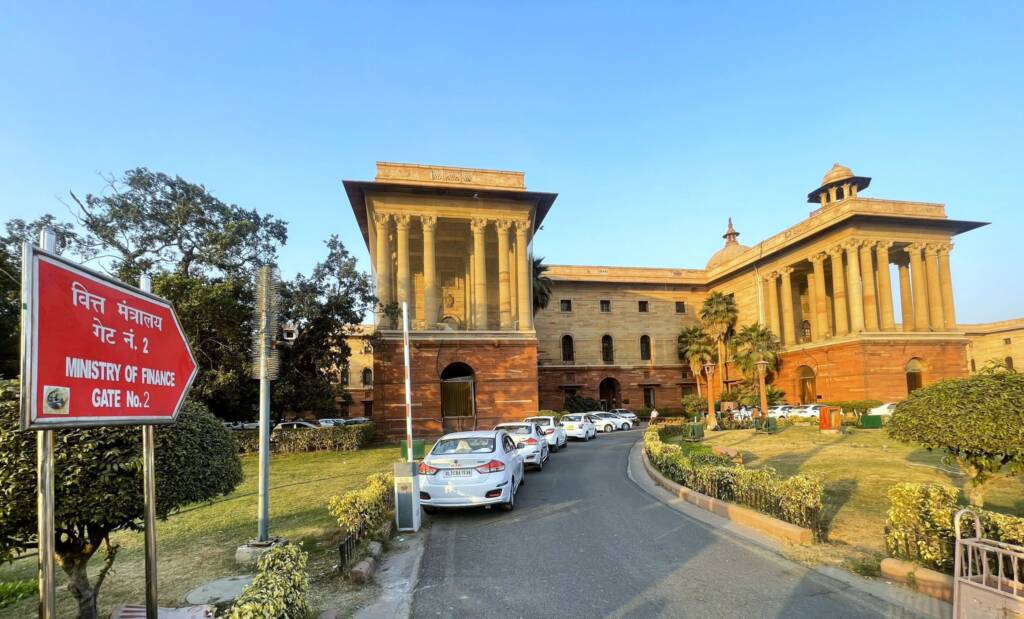
New Income Tax Regime: Simplified Slabs and Higher Exemptions
One of the most significant announcements in the Union Budget 2025 is the overhaul of the income tax regime, which aims to ease the tax burden on individuals. Under the new regime, there is no income tax on earnings up to Rs 12 lakh annually. This move is expected to provide substantial relief to the middle-income group, allowing them to retain more of their earnings. In addition, individuals earning up to Rs 25 lakh annually will benefit from a tax reduction of Rs 1.1 lakh. The new income tax slabs are designed to be simpler and more progressive, providing the following structure:
- Up to Rs 4 lakh – No tax
- Rs 4 lakh to Rs 8 lakh – 5% tax
- Rs 8 lakh to Rs 12 lakh – 12% tax
- Rs 12 lakh to Rs 16 lakh – 15% tax
- Rs 16 lakh to Rs 20 lakh – 20% tax
- Rs 20 lakh to Rs 24 lakh – 25% tax
- Above Rs 24 lakh – 30% tax
This reform will impact approximately Rs 1 lakh crore in direct tax revenue and result in Rs 2,600 crore in indirect tax losses. The tax reforms also include various measures to simplify tax compliance, particularly by rationalizing the Tax Deducted at Source (TDS) and Tax Collected at Source (TCS) frameworks. These initiatives aim to make the tax system more taxpayer-friendly and encourage better compliance.
TDS & TCS Rationalization and Additional Relief Measures
Further relief is provided to middle-class taxpayers through the rationalization of TDS and TCS thresholds. The number of TDS rates and the respective thresholds will be reduced to ease the process of tax deduction and compliance. One notable change is the increase in the TCS threshold for remittances under the Liberalized Remittance Scheme (LRS), which has been raised from Rs 7 lakh to Rs 10 lakh. Similarly, the TDS threshold for rental payments has been increased to Rs 6 lakh. The Budget also proposes to remove TCS on education loans up to Rs 10 lakh from specified financial institutions, benefiting students and their families.
Another important measure is the decriminalization of delayed TCS payments. Delays in TCS payments will no longer be treated as a criminal offense, reducing the compliance burden on businesses. Additionally, the government has extended the time limit for filing updated tax returns from two years to four years, further easing the tax process for taxpayers.
Support for Startups and MSMEs
The government has extended support to startups by increasing the period for incorporating a startup to avail tax benefits by an additional five years. This move is expected to encourage innovation and entrepreneurship, particularly in the startup ecosystem. In a bid to support micro, small, and medium enterprises (MSMEs), the government has announced several measures to ease credit availability. The credit guarantee cover for MSMEs will be increased from Rs 10 crore to Rs 20 crore, with customized credit cards for micro-SMEs offering limits of up to Rs 5 lakh. Additionally, a new fund-of-funds with a Rs 10,000 crore corpus will be established to support startups, fostering innovation and job creation.
The footwear and leather sector will also benefit from a new scheme that is expected to create employment opportunities for 22 lakh people and attract investments of Rs 4 lakh crore. The government aims to position India as a global manufacturing hub for toys, further boosting the MSME sector.
Customs Duty Reforms
The Union Budget 2025 also addresses changes in customs duties to support both industrial growth and consumer welfare. A total of seven tariff rates will be removed, continuing the trend of tariff rationalization from previous Budgets. The government has also provided exemptions on several items, including critical minerals and life-saving drugs. Notably, the Basic Customs Duty (BCD) on flat panel displays will be increased from 10% to 20%, while the BCD on 12 critical minerals will be exempted. Additionally, 35 capital goods for electric vehicle (EV) manufacturing will be added to the BCD exemption list, signaling the government’s push toward clean energy technologies.
Furthermore, the government has reduced the customs duty on open-cell panels for TVs to 5%, aiming to make the electronics sector more competitive and affordable for consumers.
Fiscal Deficit and Market Borrowing
The fiscal deficit for FY25 is projected at 4.8% of GDP, with the target for FY26 set at 4.4%. The Budget also provides projections for market borrowing, with gross borrowing for FY26 expected to reach Rs 14.82 lakh crore. These fiscal adjustments aim to ensure a balanced approach to government spending while maintaining fiscal discipline. The government has set a revised capital expenditure (Capex) target of Rs 10.18 lakh crore for FY25, focusing on boosting infrastructure development.
Insurance and Financial Reforms
The Union Budget 2025 also announces significant reforms in the insurance sector, including a hike in the Foreign Direct Investment (FDI) limit from 74% to 100%. This move is aimed at enhancing the capital base of Indian insurance companies and increasing foreign investment in the sector. The government also plans to introduce a new income tax bill next week, signaling a shift toward further tax reforms. Additionally, a Central KYC registry will be rolled out in 2025 to streamline financial processes and improve compliance.
Initiatives in Tourism, Energy, and Infrastructure
The Budget also focuses on boosting tourism and infrastructure. The government plans to develop 50 top tourism destinations across India in partnership with states, aiming to boost the country’s tourism sector. Special emphasis will be placed on medical tourism, with initiatives like “Heal-in-India” to attract international patients. Mudra loans will be made available for homestay businesses, promoting local tourism. A National Geospatial Mission will also be launched to improve spatial data and mapping capabilities for better planning and development.
In terms of energy and infrastructure, the government has set ambitious targets for nuclear energy, with plans to achieve 100 GW of nuclear energy by 2047. A dedicated nuclear energy mission will be launched, focusing on the research and development of small modular reactors, with an outlay of Rs 20,000 crore. The government will also provide additional borrowing capacity to states for implementing select reforms, aiming to stimulate regional development.
Education, Healthcare, and Social Welfare Initiatives
In the education and healthcare sectors, the Budget outlines plans to establish five National Centers of Excellence for Skilling to promote vocational training. The government will also introduce new social welfare measures, including a scheme for gig workers that provides E-shram portal registration and insurance. Day-care cancer centers will be set up in every district, with 200 centers planned for 2025-26, providing better access to healthcare services.
The Budget also focuses on the development of medical colleges and hospitals, with an additional 10,000 seats planned for FY26. The government has promised Rs 1.5 lakh crore in 50-year interest-free loans to states for capital expenditure, further strengthening the nation’s infrastructure.
Agricultural and Regional Development Focus
In agriculture, the government has introduced several key initiatives aimed at boosting production and rural prosperity. A national mission to promote high-yielding seeds will be launched, and a five-year mission to boost cotton production has been proposed. The loan limit under the new Kisan scheme will be increased to Rs 5 lakh. Additionally, the Dhan Dhanya Krishi Yojana will target low-productivity districts, benefiting 1.7 crore farmers.
Conclusion
Union Budget 2025 aims to drive India’s economic recovery and growth amid global uncertainties by implementing a series of reforms targeting income tax relief, infrastructure development, and sector-specific support. The focus on MSMEs, startups, and agricultural development reflects the government’s commitment to building a resilient and inclusive economy. By balancing fiscal discipline with ambitious growth targets, the government hopes to create an environment conducive to sustainable long-term development across various sectors.
Team Maverick.



Rahul Gandhi, INDIA Bloc Hold Candlelight Vigil at Gandhi Smriti Over NEET Paper Leak Row
New Delhi, July 2026 : The Opposition intensified its campaign over the alleged NEET exami…

Rahul Gandhi, INDIA Bloc Hold Candlelight Vigil at Gandhi Smriti Over NEET Paper Leak Row
New Delhi, July 2026 : The Opposition intensified its campaign over the alleged NEET …