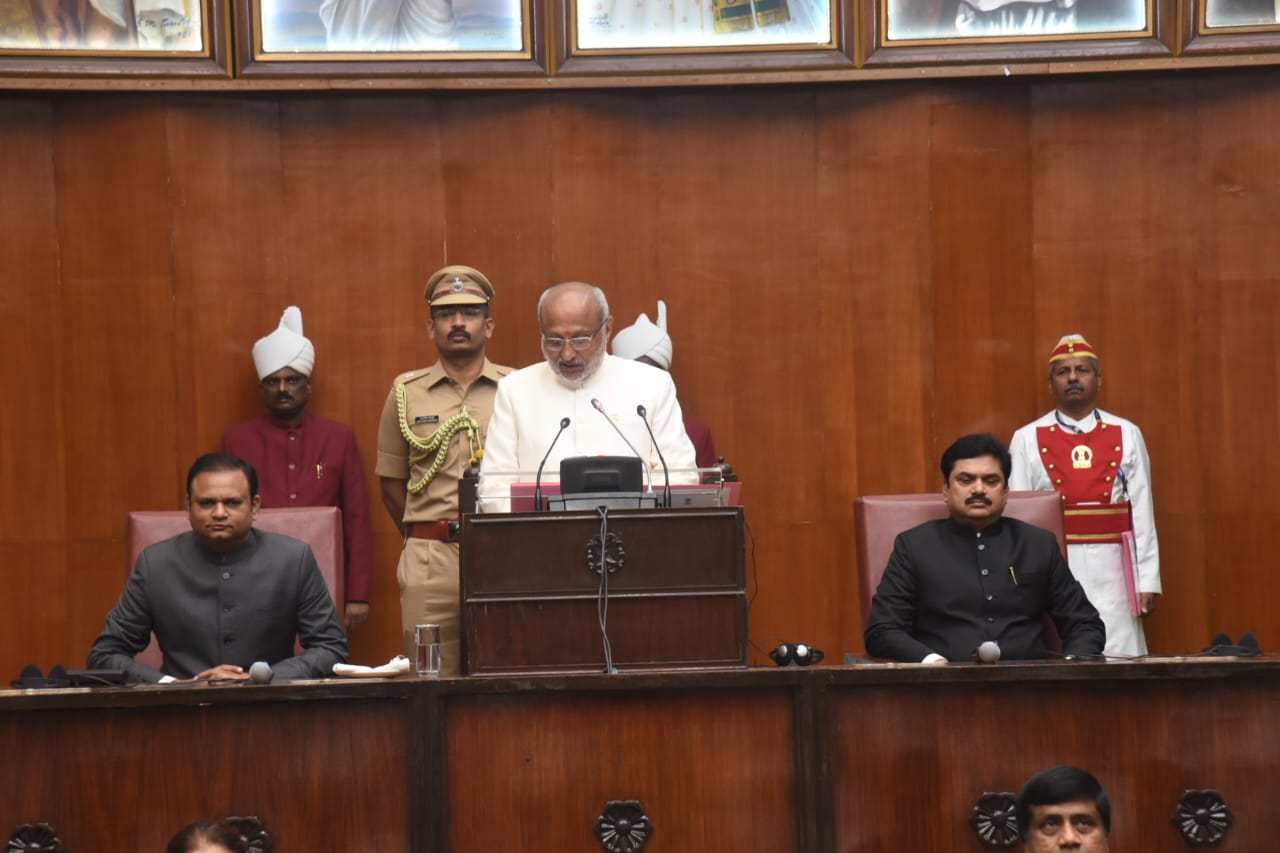
Progressive, Developed Maharashtra Moving Forward – Governor C. P. Radhakrishnan

State Budget Session Begins with Governor’s Address
Mumbai : The government prioritizes the empowerment of farmers, women, and weaker sections of society, along with strengthening health, employment, industry, and infrastructure. The state government is working towards creating an inclusive, progressive, forward-thinking, and developed Maharashtra by taking all sections of society together, stated Governor C. P. Radhakrishnan in his address at the State Legislature’s budget session.

Priority to Farmers’ Welfare
The Governor said that the state government is making decisions prioritizing farmers’ welfare by expanding opportunities in the agriculture sector. Under the ‘Maa Geel Tyaala Solar Pump Scheme,’ 3,12,000 solar pumps have been installed to help farmers get water for agriculture through solar energy pumps. Under this scheme, 10 lakh solar pumps will be provided to farmers over five years. Maharashtra has set a target to become the first state in the country to solarize all agricultural power lines under the ‘Pradhan Mantri-KUSUM’ and ‘Mukhyamantri Solar Krishi Vahini Yojana.’ In just nine months, the state has commissioned 119 power lines with a total capacity of 147 MW of solar energy. In Jalna district, an open market has been established to support silk-producing farmers by facilitating the purchase and sale of silkworm cocoons. The construction of the market is complete, and it will soon be opened for farmers, boosting silk production and productivity in the region.
Under the ‘Pradhan Mantri Kisan Samman Yojana,’ more than 95 lakh farmers in the state have been selected as beneficiaries, and over 87 lakh farmers have been provided with Kisan Credit Card facilities through banks. The objective of this initiative is to empower farmers by providing financial assistance and credit facilities. To ensure timely financial aid to farmers, a target of distributing ₹74,781 crore as crop loans has been set for the financial year 2024-25. So far, banks have disbursed ₹55,334 crore to farmers, and the government is working proactively to achieve this target.
This year, under the ‘Silt-Free Dam, Silt-Rich Farmland’ scheme, around 4 crore cubic meters of silt have been removed from 1,274 reservoirs and spread across 95,000 acres of land, benefiting over 31,000 farmers. Awareness about watershed management is being raised through the ‘Water Conservation Journey’ organized under the ‘Pradhan Mantri Krishi Sinchayee Yojana,’ encouraging public participation. The journey, which started on February 8, 2025, will cover 140 projects across 30 districts of the state by March 31, 2025. Maharashtra is effectively implementing the ‘Atal Bhujal Yojana’ to promote sustainable groundwater management through public participation. Under this scheme, ₹1,336 crore has been spent on institutional strengthening, capacity building, and convergence components, bringing over 1,32,000 hectares of farmland under micro-irrigation.
A new scheme called ‘AgriStack – Agricultural Digital Public Infrastructure’ has been launched to enable rapid and effective delivery of various government schemes to farmers using digital services in the agricultural sector.
To promote sustainable energy and reduce carbon emissions, the state has taken initiatives to boost ethanol production and supply as an alternative fuel. For the year 2024-25, Maharashtra’s sugar mills have set a target to supply 121 crore liters of ethanol to oil companies. To assist farmers, under the ‘Minimum Support Price Scheme,’ 11,21,385 metric tons of soybeans have been procured through 562 purchase centers in the 2024-25 season.
During the 2024-25 Kharif marketing season, more than 7 lakh metric tons of paddy and over 171 metric tons of coarse grains have been procured. The ‘One Taluka, One Market Committee’ scheme is being implemented to establish at least one independent Agricultural Produce Market Committee (APMC) in each taluka. Under the ‘Dr. Shyama Prasad Mukherjee Jan-Van Development Scheme,’ more than 10,000 beneficiaries in sensitive villages have been provided subsidies of up to ₹15,000 for installing individual solar-powered fencing. This initiative will help reduce human-wildlife conflicts in tiger reserve buffer zones and protected areas.
Swift measures have been taken to assist farmers affected by natural disasters across the state. Financial assistance amounting to ₹814 crore has been disbursed to over 7.8 lakh farmers.
A decision has been made to establish government veterinary colleges in Parli, Beed district, and Baramati, Pune district. To raise awareness among students from classes 9 to 12 about higher education opportunities, scholarships, and other educational resources, ‘School Connect Part 2.0’ has been launched, involving around 1,200 colleges, 4,800 schools, and over one lakh students.
Priority to Women’s Development
The Governor said that under the centrally sponsored ‘Namo Drone Didi’ scheme, a decision has been made to distribute drones for agricultural purposes to 325 women self-help groups in the state during the financial year 2024-25. To increase women’s workforce participation and provide affordable and safe housing for working women in urban areas, proposals have been made under the ‘Special Assistance Scheme for State Capital Investment 2024-25’ to construct hostels for working women.
To create more employment opportunities for women, the recruitment process has been initiated to fill around 18,000 vacant posts for Anganwadi workers. The ‘Lakhpati Didi’ initiative is being implemented to enhance women’s household income. So far, 17 lakh women have successfully increased their family income to ₹1 lakh or more. By the end of 2024-25, the government aims to empower 26 lakh rural women as ‘Lakhpati Didis.’
To uplift various communities in the state, 18 corporations have been established, each receiving ₹50 crore as share capital.
A decision has been made to celebrate ‘Chhatrapati Shivaji Maharaj Jayanti’ annually in Anganwadis to educate children about Shivaji Maharaj’s character and contributions and inspire them. Coaching classes have been introduced for Scheduled Tribe students preparing for engineering and medical entrance exams to increase their admissions to government medical and engineering colleges.
Expansion of Educational Opportunities
The Governor stated that Maharashtra holds the top position in the country for the highest number of colleges and universities accredited by the National Assessment and Accreditation Council (NAAC), highlighting the state’s commitment to improving education quality. The state is implementing the National Education Policy 2020 and making necessary financial provisions for it. A decision has been made to implement the ‘Ram-Kaal Path’ project in Nashik to preserve the city’s Ramayana-era heritage and transform it into a holistic pilgrimage site.
An advanced ‘Maharashtra Cyber Security Project’ has been launched in Mahape, Navi Mumbai, equipped with cutting-edge technology, skilled manpower, and resources. This project will assist police personnel in investigating cybercrimes, particularly those affecting women, children, and senior citizens.
Strengthening Healthcare Facilities
The Governor stated that a decision has been made to regularize contract employees who have served for 10 years under the National Health Mission in the state. Accordingly, they will be absorbed into equivalent recognized positions in the healthcare sector. A decision has been made to start a ‘Post Basic Diploma in Oncology Nursing’ course to ensure the availability of skilled oncology nurses for treating cancer patients at chemotherapy and radiotherapy centers. Additionally, to strengthen the healthcare workforce, three new B.Sc. Nursing colleges will be established in the districts of Nashik, Sindhudurg, and Satara.
To make Maharashtra a center for medical research and innovative initiatives and to address public health challenges through advanced research and education, a decision has been made to establish a company named ‘Consortia for Health, Applied Knowledge, and Research Autonomy.’ The Maharashtra Institute of Postgraduate Education and Research, under the Maharashtra University of Health Sciences, Nashik, will function as the central hub, while seven other government medical colleges will act as supporting centers for research purposes.
Seven health campaigns have been initiated across the state, including a blood donation campaign, organ donation awareness, cancer awareness and treatment, obesity awareness and treatment, thyroid campaign, cataract-blindness prevention campaign, and oral health awareness campaign. Under these special campaigns, around one lakh beneficiaries will be included by March 2025. The ‘Desh Ka Prakriti Parikshan’ campaign is being conducted to bring Ayurveda to every household. This campaign emphasizes time-tested Ayurvedic treatment methods to maintain balanced health, promote a healthy lifestyle, and boost immunity. Under this campaign, more than 40 lakh citizens have been screened, and Maharashtra has secured the first position in the country.
Leading in Foreign Investments
The Governor stated that Maharashtra is a preferred state for Foreign Direct Investment (FDI) and contributes over 14% to the country’s Gross Domestic Product (GDP) as a leading industrial state. During the World Economic Forum in Davos, Switzerland, in January 2025, investment agreements worth approximately ₹15.72 lakh crore were signed with 63 national and international companies. This investment will create over 15 lakh job opportunities in the state.
To attract investments, promote industrial development, and create employment opportunities, the government plans to distribute an investment promotion grant of ₹5,000 crore to various industries. Additionally, to support and boost industrialization, the Maharashtra Industrial Development Corporation (MIDC) has decided to allocate around 3,500 acres of industrial land. Considering the rising demand for industrial land, 10,000 acres will be notified for industrial purposes. Furthermore, to promote industrialization, improve supply chain efficiency, and develop world-class business ecosystems, a decision has been made to establish 10 integrated industrial centers and integrated logistics hubs.
The Governor mentioned that Maharashtra has approved the launch of the ‘Maharashtra Technical Textile Mission’ to strengthen and expand the state’s textile sector. Maharashtra has become the first state in India to introduce a mission aligned with the National Technical Textile Mission of the Central Government. From February 14 to 17, 2025, Maharashtra participated as a ‘Knowledge Partner State’ in the ‘Bharat Tex-2025’ global event organized by the Government of India in New Delhi. This participation has helped promote Maharashtra’s textile products in the global market, leading to increased investment and employment opportunities in the state’s textile sector.
Emphasis on Skilled Employment Generation
The Governor stated that the ‘Chief Minister Youth Work Training Scheme’ has been launched to enhance the employability of the state’s youth and provide skilled manpower to industries. Under this scheme, more than 1.32 lakh youths have received training. The government has set a target to train 10 lakh youth in 2024-25, allocating ₹5,500 crore for this purpose.
In 2024-25, to connect unemployed youth with industries and create job opportunities, 611 ‘Pandit Deendayal Employment Fairs’ have been organized at the district level in Maharashtra. This year, over 19,000 candidates have secured jobs through these fairs. A ‘Trisutri Program’ is being implemented to achieve the goal of efficient and good governance, focusing on restructuring government processes, enhancing employee efficiency, and developing an integrated human resource system. To achieve transformation through training, around five lakh employees are being registered under the i-GOT system as part of the ‘Karmyogi Bharat Program.’ The government is ensuring that all employees receive training.
To encourage government departments to achieve dynamic and quality work objectives, a ‘Sevakarmi Award Program’ will be introduced.
Strengthening Infrastructure
The Governor announced that the construction of the Nagpur-Goa Shaktipeeth Expressway has been planned, and it will be completed with the involvement of all stakeholders. This expressway will connect major religious and pilgrimage sites along its route. It will not only reduce travel time but also boost economic development in the region. The estimated cost of this project is ₹86,300 crore.
To enhance road durability, improve connectivity, and ensure safe and efficient transport, the Public Works Department has decided to construct 7,480 kilometers of cement-concrete roads under various schemes. To improve toll plaza efficiency, reduce congestion, and promote digital transactions, starting April 1, 2025, toll collection across all toll plazas in the state will be conducted exclusively through FASTag.
Under the Central Government’s ‘PM e-Bus Service Scheme,’ 1,290 buses have been approved for 20 municipal corporations in the first phase. Financial assistance will be provided to these municipal corporations to develop bus depots and metered energy infrastructure.
Starting April 1, 2025, a new ‘Maharashtra Electric Vehicle Policy’ will be implemented for the next three years. This new policy focuses on promoting electric vehicles and encouraging the scrapping of old vehicles. It aims to reduce carbon emissions in the state and make transportation more eco-friendly.
To enhance urban infrastructure and improve the quality of urban life, Maharashtra is committed to effectively implementing the ‘Nagrotthan Mahabhiyan.’ Under this scheme, ongoing projects related to water supply, sanitation, and road development will be completed within two years.
For strengthening energy storage and management capabilities, the state has signed agreements with 13 agencies for 38 pumped-storage hydroelectric projects through public-private partnerships. These projects will generate 55,970 MW of electricity, attracting investments worth ₹2.95 lakh crore and creating over 90,000 job opportunities.
The ‘Pradhan Mantri Awas Yojana (Urban)’ is being implemented in 409 urban clusters across the state. Under this scheme, more than two lakh houses have been built, while over 1.85 lakh houses are under construction. Under the first phase of the ‘Pradhan Mantri Awas Yojana (Rural),’ more than 12.64 lakh houses have been completed in Maharashtra. In the second phase, a decision has been made to construct over 16.81 lakh houses.
To address the specific needs of hilly regions, the ‘Dongri Region Development Program’ is being implemented in 77 full-group hilly talukas and 101 sub-group hilly talukas across 28 districts of the state.
Promotion of Sports
The Governor stated that to enhance the performance of state athletes in key international competitions, including the Olympics, a new and ambitious ‘Mission Lakshyavedh’ has been launched. Under this, six high-performance centers and 37 regional sports excellence centers will be established. This initiative will focus on 12 Olympic sports, including athletics, badminton, boxing, weightlifting, hockey, wrestling, archery, shooting, rowing, canoeing, lawn tennis, and table tennis.
To provide international-level sports facilities, particularly for athletes from Vidarbha, a decision has been made to upgrade the regional sports complex in Nagpur to the same level as the state-level sports complex in Balewadi.
On the occasion of the 75th anniversary of the Indian Constitution, the ‘Ghar Ghar Samvidhan’ campaign has been launched to raise awareness among citizens about the Indian Constitution, their constitutional rights, and fundamental duties. The Governor also thanked Prime Minister Narendra Modi and the Central Government for granting classical language status to Marathi.
Maharashtra remains committed to resolving the Maharashtra-Karnataka border dispute and has appointed expert lawyers to represent the state in the Supreme Court. Various welfare schemes are being implemented for Marathi-speaking people in the border areas.
Promotion of Sports
The Governor stated that to enhance the performance of state athletes in key international competitions, including the Olympics, a new and ambitious ‘Mission Lakshyavedh’ has been launched. Under this, six high-performance centers and 37 regional sports excellence centers will be established. This initiative will focus on 12 Olympic sports, including athletics, badminton, boxing, weightlifting, hockey, wrestling, archery, shooting, rowing, canoeing, lawn tennis, and table tennis.
To provide international-level sports facilities, particularly for athletes from Vidarbha, a decision has been made to upgrade the regional sports complex in Nagpur to the same level as the state-level sports complex in Balewadi.
On the occasion of the 75th anniversary of the Indian Constitution, the ‘Ghar Ghar Samvidhan’ campaign has been launched to raise awareness among citizens about the Indian Constitution, their constitutional rights, and fundamental duties. The Governor also thanked Prime Minister Narendra Modi and the Central Government for granting classical language status to Marathi.
Maharashtra remains committed to resolving the Maharashtra-Karnataka border dispute and has appointed expert lawyers to represent the state in the Supreme Court. Various welfare schemes are being implemented for Marathi-speaking people in the border areas.
Once again I extend my warm greetings.
JAI HIND !
JAI MAHARASHTRA !
Bypoll Results: Vote Counting Underway in MP, Bihar and Gujarat
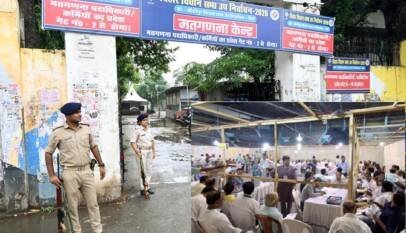
New Delhi, Aug 2026 : Counting of votes for Assembly by-elections in Madhya Pradesh’s Dati…
Bypoll Results: Vote Counting Underway in MP, Bihar and Gujarat
New Delhi, Aug 2026 : Counting of votes for Assembly by-elections in Madhya Pradesh’s …