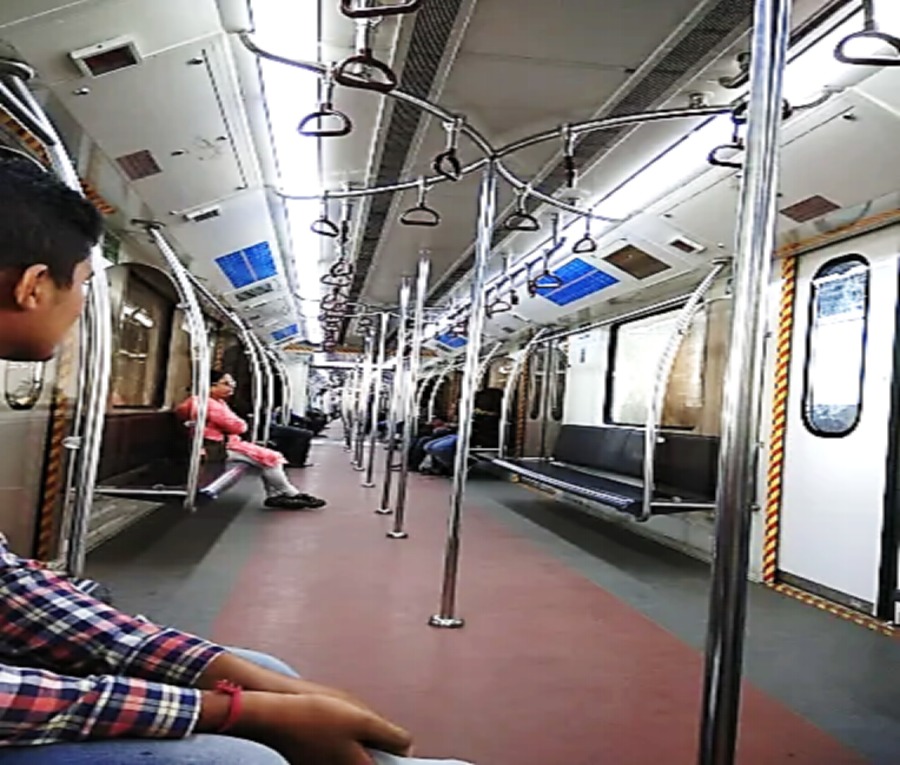
Metro Railway using Regenerative Braking System for saving energy.

Metro Railway, Kolkata have been reaching new destinations with the opening of new Corridors. With this, the authorities are striving to further improve Metro services and augment passenger amenities. While doing so, special care has also been taken for nurturing Mother Nature. Metro authorities have been adopting green technologies and taking eco-friendly steps for ensuring sustainable growth having long standing positive impact on the environment.
In Metro rakes and lifts, Regenerative Braking System is now being used to save energy as well as reduce carbon footprints. Regenerative Braking for trains is a technology that allows a train’s electric motors to operate in reverse (like a generator) during braking, leading to conversion of the train’s kinetic energy back into electrical energy rather than wasting it in the form of heating of wheels or brake shoes. Urban Metro systems like those in London, Tokyo and New York use regenerative braking. High-speed trains like the Shinkansen in Japan and various European high-speed rail systems also use it. Modern freight and passenger electric locomotives are also being fitted with this feature.
In an accelerating Metro rake, the train’s motors draw electricity from the third rail. During braking, instead of using friction brakes alone, the motors reverse their function i.e., they act as generators. These generators convert the train’s kinetic energy into electricity which is then either returned to the DC bus for use by other trains plying on the line (this is most efficient) or stored in onboard or external batteries (Traction Energy Storage System i.e., TESS). This rake generated electricity is also being used to illuminate the coaches and running the Air Conditioning System of the train for the benefit of the commuters. In Metro lifts also, Regenerative Braking is being used. In these new lifts, machine room is no more required and effective power requirement becomes less than one third of earlier requirements. This unique advance technology has been enabling Metro Railway to save energy by reducing overall power consumption of traction system. Regenerative Braking also reduces wear and tear of brake, wheel, brake disc as well as maintenance costs. Also, this system is much smoother as it can be more precisely controlled.
Earlier in NGEF rakes, DC traction motors and dynamic braking (in place of regeneration, the energy was dissipated in resistance) would be used. However, all new modern rakes which are being introduced in Metro Railway, Kolkata are having in-built feature of Regenerative Braking. In a study done by Metro Railway Kolkata, it has been observed that 17-20 percent regeneration of electricity is possible. This is a huge step forward for saving energy and reducing the use of fossil fuel. In connection with the same, Metro Railway has already taken up the ambitious work of setting up 4 Mega Watt Advance Chemical Cell (ACC) Battery Energy Storage System which is first of its kind in Indian Railways. The batteries have arrived and the system is expected to be operational in middle of July, 2025. Railway Board has already sanctioned 7 Mega Watt Traction Energy Storage System. After observing the performance of BESS, design finalisation will be done for TESS.
At present, Metro Railway has introduced 37 Rakes with regenerative braking feature. The total energy regenerated in the year 2024-25 has been 1.08 Crore, thus saving around Rs. 8.2 Crores in energy cost. The regenerative braking has reduced carbon emission by 13500 tons in the previous financial year. With further introduction of TESS, the potential is expected to be doubled. Metro officers, engineers and staff have been working tirelessly to achieve this potential for a greener tomorrow and also achieve the goal of Indian Railways to become Net Zero Carbon Emitter by 2030.
Team Maverick

More Than a Café: How MITTI Café is Brewing Hope, Dignity and Dreams at Rashtrapati Nilayam
Hyderabad, July 2026 : Tucked away inside the serene campus of Rashtrapati Nilayam in Boll…
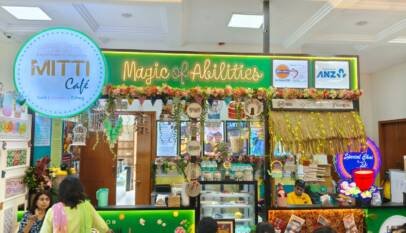
More Than a Café: How MITTI Café is Brewing Hope, Dignity and Dreams at Rashtrapati Nilayam
Hyderabad, July 2026 : Tucked away inside the serene campus of Rashtrapati Nilayam in …