‘e-Trans 2025’ Workshop Showcases India’s Digital Transformation in Transport Sector

Two-day workshop organized in Chandigarh concludes
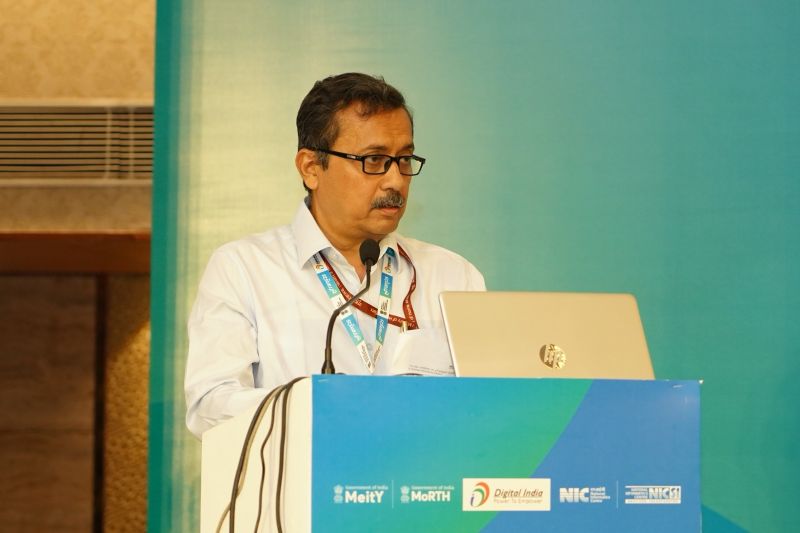
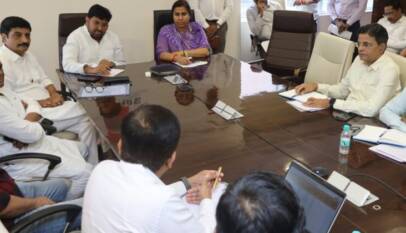
Chandigarh – The second day of the two-day workshop “e-Trans 2025” on the eTransport Project, organized by the Union Ministry of Road Transport and Highways and the National Informatics Centre (NIC) in Chandigarh, saw presentations from key officials of the NIC, Union Ministry of Road Transport and Highways, National Health Authority, BHASHINI along with address by officials of various states on the new initiatives, achievements and suggestions in the transport sector in their respective states.
Participants from the Union Ministry of Road Transport and Highways, along with representatives from 12 states and UT, took part in this workshop. These states include Haryana, Himachal Pradesh, Uttarakhand, Uttar Pradesh, Punjab, Rajasthan, Gujarat, Madhya Pradesh, Jammu & Kashmir, Ladakh, Delhi, and Chandigarh.
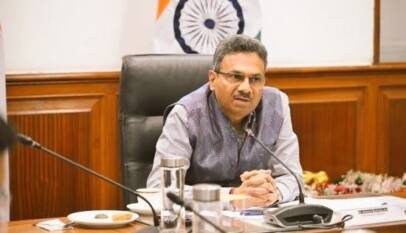
Sh. Joydeep Shome, DDG and Head of Group (HOG) for the e-Transport Project, delivered the welcome address and provided an overview of the evolving digital landscape in the transport sector. Major digital applications such as Vahan, Sarathi, eChallan, PUCC, and VLTeAs were discussed, highlighting their successful implementation across the country and their contributions to enhanced service delivery, transparency, and enforcement.
During the presentations, the Vahan platform—used for vehicle registration services—was discussed in detail along with its recent developments and expansion. The Sarathi application, which serves as a one-stop solution for driving licence issuance and management, was also highlighted. Emphasis was placed on its 31 faceless services that simplify public interactions with the transport department and make licensing processes more accessible and efficient.
One of the key presentations was by Sh. Prashant Kumar Nayak of NIC Odisha, who demonstrated an AI-powered e-detection system developed to enhance document verification. This system uses toll plaza data to automatically check motor vehicle documents, and if any are found expired or invalid, an e-challan is automatically generated. He also showcased an innovative AI-based self-proctoring system for licence examinations that locks the screen to prevent malpractice and verifies the authenticity of uploaded documents.
Another critical area covered was road safety through the Integrated Road Accident Database (IRAD) and e-Detailed Accident Report (eDAR) systems, developed by the Ministry of Road Transport and Highways. These systems record road accidents and facilitate coordination between key stakeholders such as police, transport, highways, insurance, health, and legal bodies. Integrated with platforms like Vahan, Sarathi, CCTNS, NHAI, PM Gati Shakti, and the e-court system for MACT claims, IRAD/eDAR has documented nearly 19 lakh road accidents across India.
The eChallan ecosystem was discussed extensively, including its mechanisms for on-the-spot challans and AI-driven e-detection challans. The presentation also touched upon the latest enhancements and upcoming features in the next-generation mParivahan app, which aims to make enforcement and compliance more citizen-friendly.
Additionally, the e-Transport Analytics Division presented its new Business Intelligence (BI) portal, designed to provide comprehensive dashboards and MIS reports. This portal supports a diverse user base, including officials from central and state transport departments, RTOs, police, enforcement teams, automobile industry stakeholders, and citizens. It serves as a decision-support tool for improving road safety, pollution control, and enforcement measures while enhancing service delivery across the board.
The CEO of BHASHINI, Sh. Amitabh Nag delivered a compelling presentation on India’s multilingual AI revolution. The address underlined BHASHINI’s national impact—spanning 42 AI services in 36 languages—and its transformative role in e-governance, healthcare, and education. He emphasized scalable AI solutions, inclusive datasets, and the “Voice First” vision driving language accessibility. The session also highlighted BHASHINI’s growing footprint across central ministries, states, startups, and academic institutions.

Parliament Paralysed for Second Day as Opposition Protests Over NEET Leak, Student Crackdown
New Delhi, July 2026 : Parliament remained deadlocked for the second consecutive day of th…
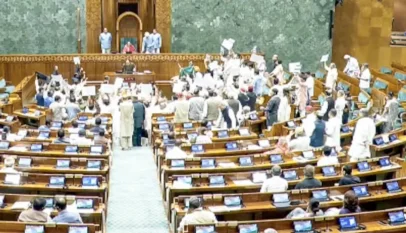
Parliament Paralysed for Second Day as Opposition Protests Over NEET Leak, Student Crackdown
New Delhi, July 2026 : Parliament remained deadlocked for the second consecutive day of …