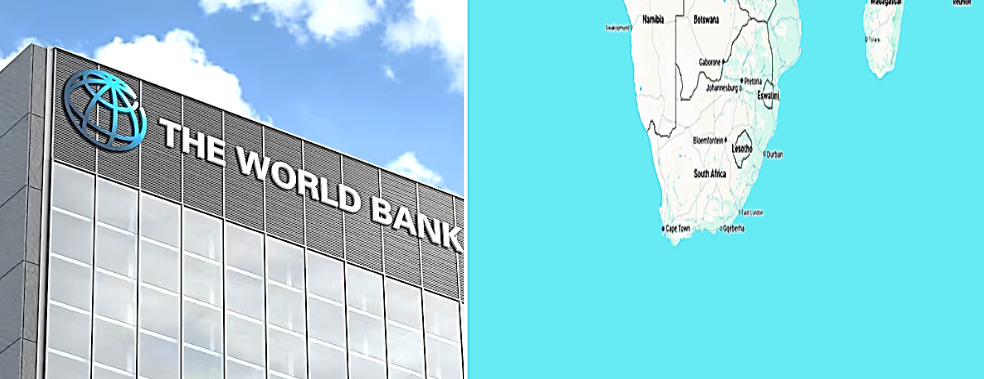
World Bank grants South Africa USD 1.5 Billion loan for infrastructure upgrade, green energy transition.

The World Bank have granted South Africa a USD 1.5 billion loan to upgrade transportation infrastructure and help it transition toward a low-carbon economy, the country’s National Treasury said Monday. Deteriorating rail systems, jammed ports and frequent blackouts have hindered vital industries like mining and auto manufacturing in South Africa, contributing to slow economic growth over the last decade in Africa’s most developed economy.
South African President Cyril Ramaphosa and his coalition government have pledged to tackle corruption and decades of poor management as well as pursue reforms to get the country out of its economic rut and ease its extremely high unemployment rate. While it did not give specifics, the South African government said it expects the World Bank loan will enable inclusive economic growth and job creation by assisting in the removal of important infrastructure bottlenecks, especially in the energy and freight transportation sectors.
The National Treasury have reiterated that, “This agreement reinforces the strong and constructive collaboration between the World Bank and the government of South Africa. This partnership marks a significant step toward addressing South Africa’s pressing economic challenges of low growth and high unemployment“. Additionally, because the financing has better conditions than conventional borrowing, such as a three-year grace period, it should reduce escalating debt-service expenses, it added.
South Africa’s 2025-26 budget has allocated over R1 trillion over the next three years toward critical transportation, energy, water and sanitation infrastructure while improving access to basic services.
However, real gross domestic product was revised downward to 1.4% in 2025 from 1.9% previously projected by the Finance Ministry projected in March because of the worsening global outlook and the persistence of logistics constraints and higher borrowing costs. Finance Minister Enoch Godongwana said government debt is projected to stabilize at 77.4 per cent of GDP in 2025/26.
Earlier this year, the dismantling of USAID by the Trump administration cut around USD 436 million in annual funding to South Africa for HIV treatment and prevention, putting the program and thousands of health care jobs on the line. Godongwana said the country doesn’t have the funds to cover the more than USD 430 million shortfall caused by the Trump administration’s cuts in foreign aid, which have threatened the vast network of support for one of the world’s largest HIV-positive populations.
DEBT TRANSPERANCY PRACTICES –
More developing economies are turning to off-budget and more complex borrowing arrangements in response to a tighter financing environment, making it harder to fully assess public debt exposures, according to a new World Bank report on debt transparency.
The report shows that while the proportion of low-income countries publishing some debt data has grown from below 60% to more than 75% since 2020, only 25% disclose loan-level information on newly contracted debt. The rise of complex and often opaque financing arrangements such as private placements, central bank swaps, and collateralized transactions has further complicated reporting.
“Recent cases of unreported debt have highlighted the vicious cycle that a lack of transparency can set off”, said World Bank’s Senior Managing Director Axel van Trotsenburg. “When hidden debt surfaces, financing dries up and terms worsen. Countries turn to opaque, collateralized deals. Radical debt transparency, which makes timely and reliable information accessible, is fundamental to break the cycle”.
According to the report, debt issued domestically is also increasing, but disclosure standards are inadequate. Countries are also turning to “silent” partial and confidential debt restructurings with select creditors, depriving markets of critical information. The report recommends debtors and creditors undertake urgent steps to improve transparency practices. These include legal and regulatory reforms mandating transparency in loan contracts and disclosure of lending terms, full participation by creditor countries in comprehensive debt reconciliation processes, more regular audits and national better oversight, and the public release of debt restructuring terms once agreements are finalized.
“Debt transparency is not just a technical issue—it’s a strategic public policy that that builds trust, reduces borrowing costs, and attracts investment”, said Pablo Saavedra, World Bank’s Vice President for Prosperity. “Radical debt transparency not only supports debt sustainability but also unlocks private sector investment to drive job creation”.
At the heart of World Bank efforts to promote debt transparency are its technical assistance program, which promotes country-specific transparency reforms, and the global Debtor Reporting System, the single most important source of verifiable data on the external debt of low- and middle-income countries. Efforts are underway to expand the System to include domestic debts and further enhance data quality.
Team Maverick







HAL Begins Production of 12 Indigenous-Enhanced Su-30MKI Fighters for Indian Air Force
New Delhi, July 2026 : Hindustan Aeronautics Limited (HAL) has commenced the construction …

HAL Begins Production of 12 Indigenous-Enhanced Su-30MKI Fighters for Indian Air Force
New Delhi, July 2026 : Hindustan Aeronautics Limited (HAL) has commenced the construction of …