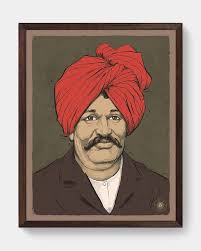
Chhatrapati Shahu Maharaj – The Benevolent King of the Masses

Chhatrapati Shahu Maharaj was born on June 26, and throughout his life, he worked relentlessly for public welfare and social upliftment. Due to his far-reaching and progressive efforts, he is revered as a people’s king. The Government of Maharashtra commemorates his birth anniversary as Social Justice Day across the state. His contributions in social, political, economic, and educational fields stand as testimony to why he is honoured as a king of the people.
Born as Yashwantrao Jaysingrao Ghatge on June 26, 1874, in the noble Ghatge family of Kagal, he was adopted into the Kolhapur royal family on March 17, 1884, after the untimely demise of the fourth Shivaji.
Shahu Maharaj was deeply influenced by Mahatma Phule and the Satyashodhak Samaj. He truly embodied Mahatma Phule’s legacy in the realm of social reform. Advocating for compulsory and free education, Shahu Maharaj introduced various educational concessions in the Kolhapur princely state. Maharashtra recognizes him as the true champion of farmers. He is also honoured as the pioneer of the hostel system in India. In April 1919, at the 13th session of the All India Kshatriya Mahasabha in Kanpur, he was conferred the title “Rajarshi” (Royal Sage) for his relentless social efforts.
To assist poor students from rural areas pursuing education in cities, he established hostels for various castes and communities. In 1901, he founded the Victoria Maratha Boarding School in Kolhapur and the Udoji Boarding Hostel in Nashik, providing accommodation and access to education for underprivileged students.
In 1902, Shahu Maharaj reserved 50% of administrative positions for the backward classes, a groundbreaking step in India. On November 15, 1906, he established the King Edward Mohammedan Education Society. In 1907, he founded the Miss Clarke Boarding House for students from the so-called “untouchable” communities. In 1911, he issued a public declaration ensuring 15% of poor students would be provided scholarships in the Kolhapur State.
That same year, he launched a merit-based promotion policy for teachers and began a teacher training programme. In 1917, he made secondary education free and compulsory, thus encouraging children from impoverished families to pursue schooling. On February 14, 1919, he announced the establishment of Patil schools and Talathi classes to boost local administrative education.
Believing that education was the key to eradicating poverty, ignorance, and superstition among the marginalised, Shahu Maharaj passed a law making primary education free and mandatory in his state and ensured every village had a primary school, despite the high cost to the state treasury.
He also opened doors to military and technical education by setting up the Infantry School, the Shree Shivaji Preparatory Military School in Pune, and the Jaysingrao Ghatge Technical Institute.
In 1917, he legalised widow remarriage and in 1918, he passed a law recognising inter-caste marriages, directly challenging regressive social norms. That same year, he abolished hereditary Mahar land rights, granted land to cultivators, and passed a law to end forced labour (vetti). In 1920, he organised the Mangaon Untouchability Eradication Conference.
By removing occupational restrictions and giving the so-called untouchables the freedom to choose their livelihoods, he took firm steps against caste-based discrimination. Through his progressive policies, Chhatrapati Shahu Maharaj truly became a welfare-oriented king, dedicated to the upliftment of the oppressed and marginalised.
He passionately declared that “There is no solution but education”, and affirmed, “Even if I must give up my throne, I will not abandon the mission of serving the backward classes.” He urged workers to organise and demand their rights.
The great reformer Bhai Madhavrao Bagal fittingly described him as,
“He was a king, but a democratic king.”
Another prominent social reformer, Vitthal Ramji Shinde, said of him,
“Shahu was not just a Maratha, nor merely a Brahmin – he was a complete nationalist of a new era, a natural wave of Maharashtra’s progress.”




Trump Ties US-Saudi Civil Nuclear Deal to Israel Normalisation Under Abraham Accords
Washington, July 2026 : US President Donald Trump has made Saudi Arabia’s participation in…
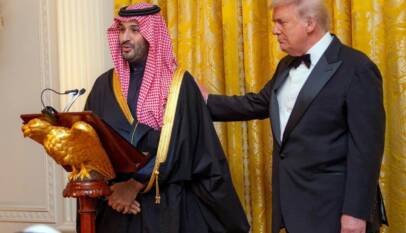
Trump Ties US-Saudi Civil Nuclear Deal to Israel Normalisation Under Abraham Accords
Washington, July 2026 : US President Donald Trump has made Saudi Arabia’s participation in …