How will the Dalai Lama’s successor be chosen?

The choice of a successor to the Dalai Lama, the spiritual head of Tibetan Buddhists, is a matter of riveting interest not only for followers of his religion, but also China, India, and the United States, for strategic reasons.
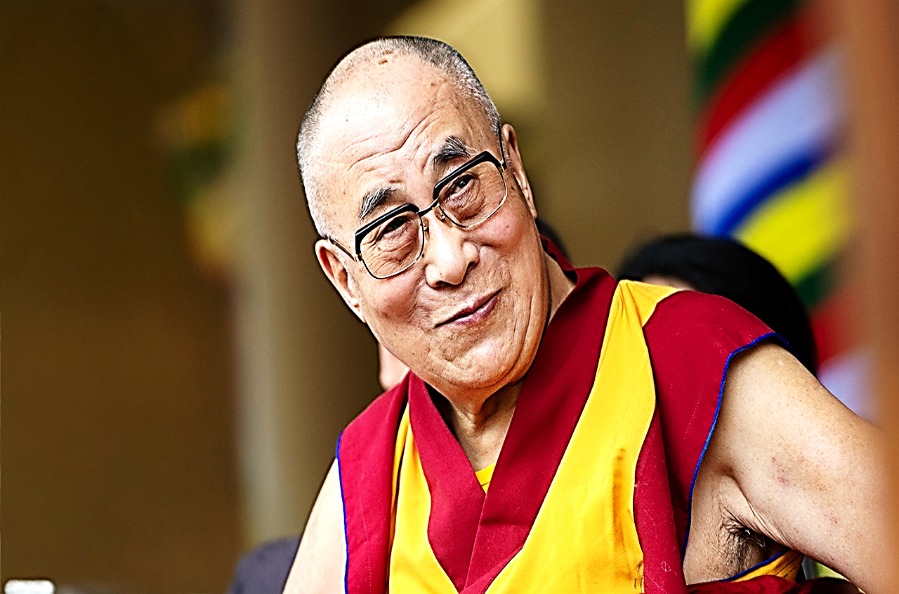
The Nobel peace laureate, who would turn 90 on 06th. July, 2025 (Sunday), is regarded as one of the world’s most influential figures, with a following extending well beyond Buddhism. Born in a family of buckwheat and barley farmers in what is now the north-western Chinese province of Qinghai
HOW WAS HE CHOSEN –
Tibetan tradition holds that the soul of a senior Buddhist monk is reincarnated after his death.
The 14th Dalai Lama, born as Lhamo Dhondup on July 6, 1935, to a farming family in what is now Qinghai province, was identified as such a reincarnation when he was just two years old.
A constituted team sent by the Tibetan government concluded the decision on the basis of several signs, such as a vision revealed to a senior monk, the Dalai Lama’s website says. The searchers were convinced when the innate toddler identified belongings of the 13th Dalai Lama with the phrase, “It’s mine, it’s mine”.
In the winter of 1940, Lhamo Thondup was taken to the Potala Palace in Lhasa, the capital of today’s Tibet Autonomous Region, and officially installed as the spiritual leader of Tibetans.
HOW WILL HIS SUCCESSOR BE CHOSEN –
In his book “Voice for the Voiceless”, released in March 2025, the Dalai Lama said his successor would be born outside China. It is mention worthy that Dalai Lama has lived in exile in northern India since 1959, after fleeing a failed uprising against the rule of Mao Zedong’s Communists.
He wrote that he would release details about his succession around the time of his 90th birthday. On Monday, addressing a gathering in Dharamshala, he said: “There will be some kind of a framework within which we can talk about the continuation of the institution of the Dalai Lamas“. He did not elaborate.
The Tibetan parliament remaining in exile, in the Himalayan town of Dharamshala, like the Dalai Lama, says a system has been established for the exiled government to continue its work while officers of the Gaden Phodrang Foundation will be charged with finding and recognising his successor.
The current Dalai Lama set up the foundation in 2015 to “maintain and support the tradition and institution of the Dalai Lama” with regard to his religious and spiritual duties, it says on its website. Its senior officers include several of his aides.
FLIGHT INTO EXILE –
China took control of Tibet in 1950 in what it called “a peaceful liberation” and the teenage Dalai Lama assumed a political role shortly after, travelling to Beijing to meet Mao Zedong and other Chinese leaders. Nine years later, fears that the Dalai Lama could be kidnapped fuelled a major rebellion.
The subsequent crackdown by the Chinese army forced him to escape disguised as a common soldier from the palace in Lhasa where his predecessors had held absolute power.
He fled to India, settling in Dharamshala, a Himalayan town where he lives in a compound next to a temple ringed by green hills and snow-capped mountains. There, he opened up his government-in-exile to ordinary Tibetans with an elected parliament.
Disillusioned with how little he had gained from his efforts to engage with Beijing, he announced in 1988 that he had given up on seeking full independence from China, and instead would be seeking cultural and religious autonomy within China.
In 2011, the Dalai Lama announced he would relinquish his political role, handing over those responsibilities to an elected leader for the Tibetan government-in-exile. However, he remains active and these days, the Dalai Lama, clad in his customary maroon and saffron robes, continues to receive a constant stream of visitors.
Although ailing from the trauma of a knee surgery and walking with difficulty, still aspires to remain alive till the age of 110; “According to my dream, I may live 110 years”, as expressed while speaking with journalists.
CHINA’S CONCERN –
China has strongly argued that its leaders have the right to approve the Dalai Lama’s successor, as a legacy from imperial times. A selection ritual, in which the names of possible reincarnations are drawn from a golden urn, dates to 1793, during the Qing dynasty. Chinese officials have repeatedly said the reincarnation of the Dalai Lama should be decided by following national laws that decree use of the golden urn and the birth of reincarnations within China’s borders. But many Tibetans suspect any Chinese role in the selection as being a ploy to exert influence on the community.
It is inappropriate for Chinese Communists, who reject religion, “to meddle in the generation old system of reincarnation of lamas, let alone that of the Dalai Lama“, the Buddhist leader has said.
In his book, he has urged the Tibetans to abhor the predilection of the Chinese; “a candidate chosen for political ends by anyone, including those in the People’s Republic of China“, referring to the country by its official name.
Beijing brands the Dalai Lama, who won the Nobel Peace Prize in 1989 for keeping alive the Tibetan cause, as a “separatist” and prohibits displays of his picture or any public show of devotion towards him.
In March 2025, a Chinese foreign ministry spokesperson said the Dalai Lama was a political exile with “no right to represent the Tibetan people at all“. China denies suppressing the rights of the Tibetan people, and says its rule ended serfdom in, and brought prosperity to, a backward region.
ROLE OF INDIA AND THE UNITED STATES –
Apart from the Dalai Lama, India is the home to more than 100,000 Tibetan Buddhists who are free to study and work there. Many Indians revere him, and international relations experts say his presence in India gives New Delhi some kind of leverage with rival China.
The United States, which faces rising competition from China for global dominance, has repeatedly said it is committed to advancing the human rights of Tibetans. U.S. lawmakers have previously said they would not allow China to influence the choice of the Dalai Lama’s successor.
In 2024, then U.S. President Joe Biden signed a law that presses Beijing to resolve a dispute over Tibet’s demands for greater autonomy.
Team Maverick


PM congratulates Major Abhilasha Barak on being conferred the UN Military Gender Advocate of the Year Award
Prime Minister Shri Narendra Modi today congratulated Major Abhilasha Barak on being confe…
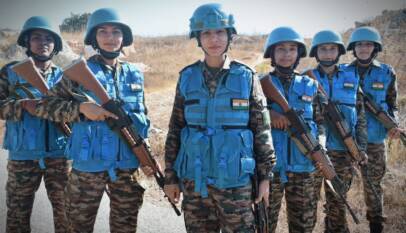
PM congratulates Major Abhilasha Barak on being conferred the UN Military Gender Advocate of the Year Award
Prime Minister Shri Narendra Modi today congratulated Major Abhilasha Barak on being conferred the …