Japan has been reprimanded of tariff stacking relief for 15% rate by the United States

A White House official said Wednesday that imports from Japan already subject to tariffs of 15% or higher will still face a “reciprocal” duty of 15% set for the country by U.S. President Donald Trump, creating new confusion about his trade approach. This is supposedly a clear contrast to the Japanese government’s explanation of the terms of a recent bilateral trade deal, the official, who spoke on condition of anonymity, stating that the 15% rate will stack on top of pre-existing tariff rates applied to imports from the key U.S. ally, unlike in the case of the European Union. The official’s confirmation to Kyodo News came just hours before Trump’s country-specific tariffs ranging from 10% – 41% are set to take effect, a week after their original start date.
Although Trump has insisted that his “America First” trade policies are revitalising U.S. industries, the new rates of his so-called reciprocal tariffs are expected to cost the average U.S. household about $2,400 this year, according to estimates from the Yale Budget Lab. This non-partisan research group’s calculations also found that the overall average effective tariff rate on imports to the world’s largest economy will reach 18.3%, the highest since 1934.
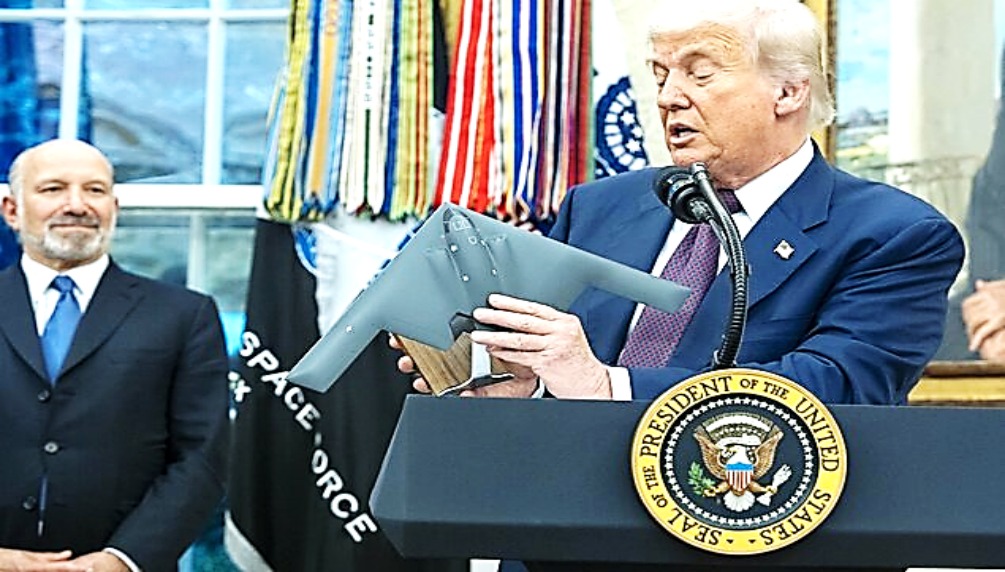
Trump, who has shown no sign of easing pressure on businesses to manufacture in the United States, told reporters in the Oval Office on Wednesday evening that he will impose a tariff of about 100% on semiconductor imports. Among major trading partners with which the United States runs trade deficits, Japan is one of the few that managed to reach a deal before the Aug. 1 expiration of Trump’s monthslong pause on country-specific tariffs. But the White House official’s statement suggested that the terms of the deal are being interpreted differently by Japan and the United States.
Under the deal, the Trump administration committed to lowering the tariff rate on Japanese goods, due to take effect on Thursday, to 15% from a threatened 25%. Since July 22, when the two countries reached a compromise, Japanese officials have explained that goods to be shipped to the United States from Japan facing tariffs of less than 15% will be subject to a uniform 15% duty, while levies on those with higher rates will remain unchanged. They have said beef exports from Japan, for example, would continue to be taxed at 26.4% as before, without the new 15% tariff being imposed.
Since the Trump administration already introduced a baseline tariff of 10% for nearly all countries, the beef rate has been temporarily raised to 36.4%. Instead of going back to the original rate, it will increase to 41.4%. Formal U.S. documents, including an executive order signed last week by Trump to modify tariff rates for dozens of countries, mention the “no stacking” condition only for the EU, which reached a similar trade deal with the administration a few days after Japan.
Given the absence of a written agreement between Japan and the United States, Japanese opposition lawmakers have accused the government of failing to minimise the risk of differing interpretations of tariff implementation between the two countries. Japan’s chief tariff negotiator Ryosei Akazawa arrived in Washington on Tuesday night to ensure the United States honors the terms of the bilateral deal.
Akazawa has repeatedly said he confirmed with the United States that there were “no discrepancies” in their understanding of the verbal accord between the two countries.
On Wednesday, Akazawa held talks with U.S. Commerce Secretary Howard Lutnick, urging him to implement as early as possible an agreed tariff cut on Japanese car and auto part imports, according to the government. During the meeting, which lasted about 90 minutes, Akazawa and Lutnick confirmed the importance of the bilateral deal and efforts to steadily carry out initiatives that serve the “interests of both countries” the government said. Akazawa had strucked the trade deal with Trump during his last visit to Washington, with the U.S. president also agreeing to cut auto tariffs to 15% from the current 27.5% for Japan in exchange for a promise of massive investment in the United States.
However, unlike the country-specific tariff rate, it remains unclear when the Trump administration plans to implement the lowered auto tariffs. Akazawa, Japan’s minister for economic revitalisation, is scheduled to stay in the U.S. capital through Friday and may also hold talks with Treasury Secretary Scott Bessent.
Team Maverick



Parliament Paralysed for Second Day as Opposition Protests Over NEET Leak, Student Crackdown
New Delhi, July 2026 : Parliament remained deadlocked for the second consecutive day of th…
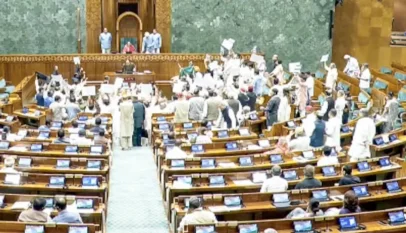
Parliament Paralysed for Second Day as Opposition Protests Over NEET Leak, Student Crackdown
New Delhi, July 2026 : Parliament remained deadlocked for the second consecutive day of …