Is Venezuela missing from the regional and global agenda?

One year ago, opposition candidate Edmundo Gonzalez Urrutia won a landslide victory in Venezuela’s presidential election, defeating President Nicolas Maduro by over 40 percentage points according to voting receipts independently collected from over 80% of the precincts in the country. Gonzalez took a majority of votes in every state in the country as well as in neighborhoods that had long been ruling party strongholds. Venezuela’s population turned out in force to demonstrate its disappointment with the ruling Chavista party that has been in office since the late 1990s and express its anger over the corruption, mismanagement and economic ruin the country has experienced in that time.
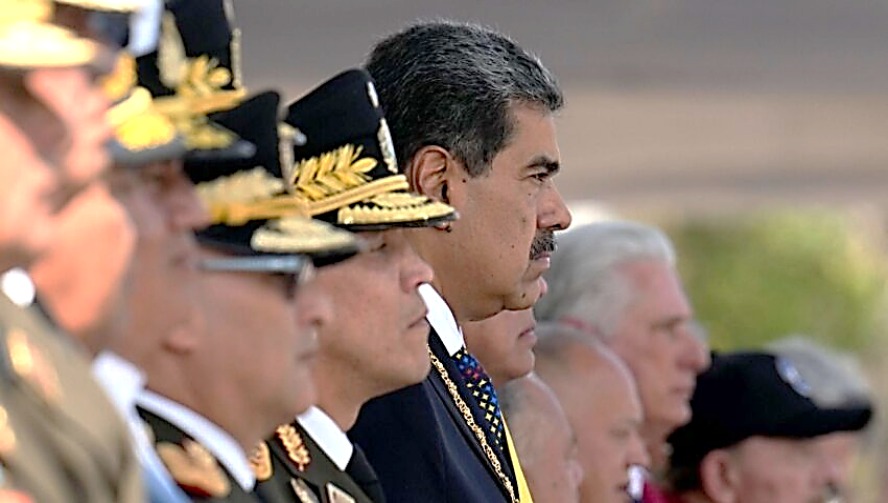
Despite that overwhelming electoral defeat, Maduro remains the de facto president of the country. In the hours following the closing of the polls, Venezuela’s national electoral council, known by its Spanish-language acronym CNE, announced fraudulent results showing a narrow victory for the president. Violating its own rules, the CNE never followed up by publishing the precinct-level voter data to support its claim, because the data would simply have been further proof of the government’s defeat. Ignoring international condemnations of the election, including from Colombia and Brazil, the ruling United Socialist Party of Venezuela, or PSUV, rallied around Maduro, as did the Chavista-controlled military, with government security forces and paramilitaries violently repressing attempts to protest the electoral fraud. In early January 2025, Maduro was installed as the reelected president in a brief 30-minute ceremony in a tiny room with just a few allies in attendance.
In the months that followed, Gonzalez was forced to flee the country to Spain, where he remains in exile. Maria Corina Machado, the popular opposition leader who was prevented from running as a candidate but spearheaded support for Gonzalez as her replacement, has gone into hiding in Venezuela. Waves of detentions and threats have decimated the opposition’s political organization in the country. And Venezuela’s citizens have gone back to their lives with a level of disillusionment about whether and how change may be in effect.
Reflecting the resignation that has taken hold within the country, the topic of Venezuela and its slide into all-out dictatorship has disappeared from the hemispheric agenda. It was found missing from the declaration released by the Organisation of American States’ General Assembly in June.
The recent Democracy Summit of leftwing leaders in Santiago, which was hosted by Chilean President Gabriel Boric and focused on strengthening democracy in the hemisphere, didn’t even bother to mention Venezuela. That is quite a contrast from recent decades, when so much of the hemispheric debate centered around Venezuela, its regional influence and its declining conditions. The international community has backed away from the Venezuela question because, like Venezuelan voters, they don’t see a path forward.
Trump administration has turned its back on Venezuela’s repression by granting a license allowing Chevron to do business in the oil-rich country, exactly what the Biden administration has done earlier.
Noting that Secretary of State Marco Rubio recently announced the return of 10 Americans held in Venezuela, which is considered to be Rubio’s attempt in rescuing Trump’s reputation among liberty-loving Americans last month by designating Venezuela’s drug-trafficking Cartel de Los Soles, headed by Maduro, as a foreign terrorist organisation. Although, a good decision, it hardly makes up for the harm that the Chevron license will cause.
Team Maverick




PM Modi Shares Video of Japan PM Sanae Takaichi Playing Santoor, Highlights Growing India-Japan Partnership
New Delhi, July 2026 : Prime Minister Narendra Modi on Thursday shared a heartwarming vide…
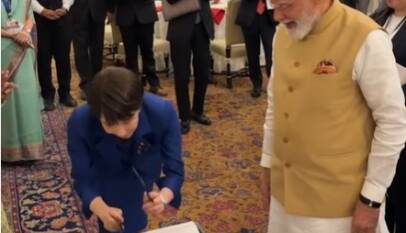
PM Modi Shares Video of Japan PM Sanae Takaichi Playing Santoor, Highlights Growing India-Japan Partnership
New Delhi, July 2026 : Prime Minister Narendra Modi on Thursday shared a heartwarming …