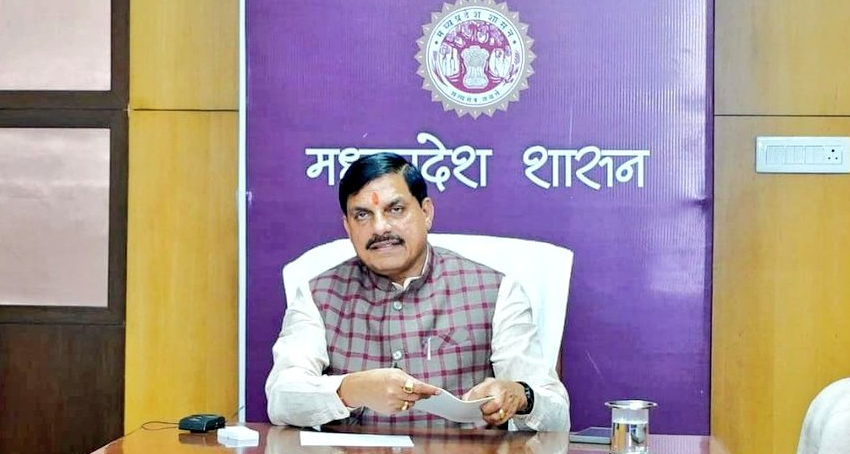
MP to Become a Critical Minerals Hub: CM Dr. Yadav

Chief Minister Dr. Mohan Yadav has said that Madhya Pradesh is poised to become a hub for critical minerals. The energy capital Singrauli district is having rich deposit of Rare Earth Elements (REEs) adding immensely to voluminous deposit of minerals in Madhya Pradesh. With a vast mineral reserve, Madhya Pradesh will help India to do away with the dependence on countries like China. India will emerge as a leading nation in global competition.
It may be recalled that Union Minister for Coal and Mines, Shri G. Kishan Reddy, had informed the Parliament that this is the first time such a massive deposit of rare earth elements has been found in India. This achievement will prove a milestone in making India self-reliant in green energy, electronics, and defense technologies.
A Major Step toward a Self-Reliant India
Rare Earth Elements are considered the foundation of modern technology. Until now, India has been dependent on China and other countries for these minerals. The discovery in Singrauli will free India from this import dependency and place it at the forefront of global competition. In the coming years, this discovery will not only advance the Atmanirbhar Bharat (Self-Reliant India) initiative but also accelerate industrial development.
Singrauli: The Future Critical Mineral Hub
A study by Coal India Limited found promising concentrations of REEs (such as Scandium, Yttrium, etc.) in the coal mines and rocks of Singrauli. The average concentration is estimated at 250 ppm in coal and around 400 ppm in non-coal strata. The official announcement of this discovery was made in July 2025. Experts believe that in the future, coal ash and overburden could also serve as secondary sources of critical minerals.
Collaboration with IREL
Given the discovery of Rare Earth Elements, the state government is now working on developing the necessary infrastructure for their processing, research and exploration. A delegation from the Mineral Resources Department recently visited the Bhopal unit of Indian Rare Earths Limited (IREL) to discuss potential collaboration. The department is also exploring the possibility of establishing a Center of Excellence for Rare Earth Elements to provide a world-class platform for research training, and industry.
India on the Path to Global Leadership
With the newfound treasure in Singrauli district, India will become self-reliant in green energy, electric vehicles and high-tech industries. In the coming years, Madhya Pradesh will not only be known as the energy capital but also as the capital of critical minerals. Dependence on China will end, and India will establish itself as a powerful nation on the global stage.
Major Sources and Geological Structures
Rare Earth Elements naturally occur in several mineral structures, including Bastnaesite, Xenotime, Loparite and Monazite. Coastal sands and weathered granite soils in India are also considered rich in these elements.
Uses of Rare Earth Elements
Rare Earth Elements are used in numerous modern industries:
- Defense and Space Technology: Samarium-Cobalt and Neodymium magnets are essential in high-performance weapons, satellite communications and defense electronics.
- Petroleum Industry: Lanthanum and Cerium are used in automotive catalytic converters and refining to reduce emissions.
- Permanent Magnets: Neodymium-Iron-Boron and Samarium-Cobalt magnets are crucial for electric vehicles and wind energy plants.
- Display and Lighting Devices: Europium, Terbium and Yttrium are used in LEDs, LCDs, and flat-panel displays. Up to 50% of camera and smartphone lenses are made with Lanthanum.
- Automobile Sector: Lanthanum-based alloys are used in hybrid vehicle batteries.
- Steel and Alloys: Mischmetal (a mixture of Cerium, Lanthanum, Neodymium, and Praseodymium) improves the quality of steel.
- Healthcare: Gadolinium is used as a contrast agent in MRI scans, while Lutetium and Yttrium isotopes assist in cancer treatment and PET imaging.







Yamal Unfazed by Goal Drought as Spain March into World Cup Semi-finals
Los Angeles, July 2026 : Spain’s teenage sensation Lamine Yamal has dismissed concerns ove…

Yamal Unfazed by Goal Drought as Spain March into World Cup Semi-finals
Los Angeles, July 2026 : Spain’s teenage sensation Lamine Yamal has dismissed concerns over …