Recent Embraer C-390 Transport Aircraft Successes Could Sway India’s Future Airlift Program.

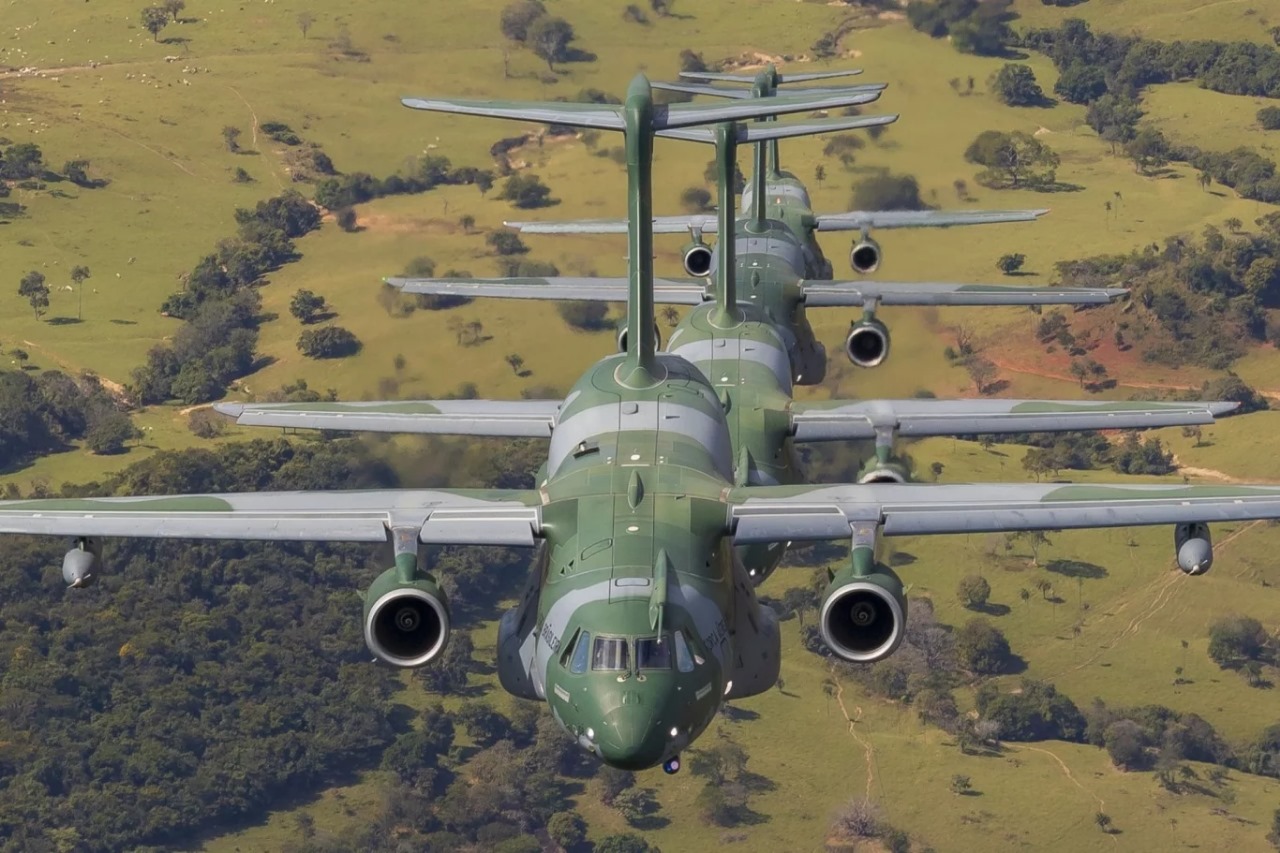
On the 06th October, 2025, Sweden has confirmed that it will buy four Embraer C-390s under a European framework with the Netherlands and Austria. The decision strengthens the platform’s momentum as India narrows its Medium Transport Aircraft (MTA) choice between Embraer’s C-390, Airbus’s A400M, and Lockheed Martin’s C-130J. Sweden’s purchase of four C-390 Millennium transports in Uppsala also involves the Netherlands and Austria; the package includes options for additional aircraft. The deal follows recent selections by other European customers, including Lithuania in June, and adds real-world fleet effects around training and support.
India’s MTA program, seeking roughly 40–80 medium airlifters, has a live shortlist of the C-390, A400M, and C-130J, and industrial proposals include Embraer’s “Make in India” tie-up with Mahindra.
India is preparing to decide on its Medium Transport Aircraft (MTA) program, launched vide a request for information in 2023. Three offers shape the shortlist: Embraer with the C-390, Airbus with the A400M Atlas, and Lockheed Martin with the C-130J Super Hercules. The goal is to replace aging capabilities and secure around eighty airframes, a threshold sufficient to feed the local ecosystem from sustainment to know-how transfer, consistent with the “Self Sustained India” policy. But, on the industrial side, Embraer has set out a partnership with Mahindra for local production if selected.
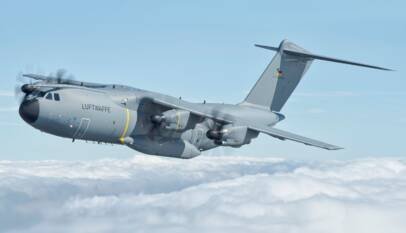
Technically, the A400M sits at the upper end of the range. A four-engine turboprop with TP400-D6 powerplants, it offers a maximum payload of 37 tons, a cruise speed around 780–800 kilometres per hour, and a large cargo hold suitable for outsized loads. Its airframe and landing gear are designed for tactical use, with STOL capability, low-level operations, and landings on unpaved strips. The aircraft includes an integrated handling system operable by a single loadmaster, a full self-protection suite, and a multi-role air-to-air refuelling capability, enabling it to bridge strategic and tactical transport. In practice, it can move heavy loads close to the point of need while keeping the reach compatible with Indian distances and mountainous terrain.
The C-390 Millennium positions itself as a lighter and faster alternative. Powered by two IAE V2500-E5 turbofans, it reaches about 870 kilometres per hour with a ceiling of 36,000 feet. Its maximum payload is 26 tons, and its hold, approximately 18.5 metres long by 3.45 metres wide and 2.95 metres high, accepts NATO pallets, 8×8 vehicles, light helicopters, up to 80 equipped troops, or 66 paratroopers. The rear ramp and cargo-handling system accelerate loading of pallets and outsized cargo. The aircraft is certified for operations from semi-prepared runways of about 1,300 metres, opening access to remote sites.
Recent avionics, full fly-by-wire flight controls, and task automation reduce workload during low-level tactical flight. The KC variant adds air-to-air refuelling via NATO-compatible pods for both aircraft and helicopters. The electronic warfare suite combines radar warning, missile approach warning, and countermeasures dispensers, providing survivability in contested environments. The maintenance architecture is designed to limit cost per flight hour, a key factor for achieving high availability in a large fleet.
The C-130J Super Hercules remains the reference for austere operations. A four-engine turboprop with six-blade composite propellers, it carries about 19–20 tons depending on version and configuration, cruises around 650–670 kilometres per hour, and retains strong performance on rough and short strips. Its global sustainment network, mission kits, and wide user base make it a continuity choice for mass airdrop, medical evacuation, special operations support, and operations from constrained sites. While it is slower and carries less than the A400M and the C-390, it offsets this with operational maturity and an extensive support network.
Beyond the figures, India’s decision includes ownership and integration factors. The A400M provides capacity and reach with a heavier industrial and financial footprint. The C-130J leverages a mature logistics chain and robust field employment. The C-390 offers a mix of speed, payload, and logistical footprint, with an industrial lever through potential local production.
If the Indian Air Force prioritizes transit speed, NATO interoperability, and sufficient useful capacity with controlled operating costs, the Brazilian option appears competitive. A requirement driven primarily by very high payload and long range would favour the A400M, while a logic of continuity and austere support would favour the C-130J. The decision will indicate how India ranks performance, operating cost, and industrial sovereignty for the coming decade.
Team Maverick




Adani group visits Hon’ble Deputy Chief Minister and Energy Department, Govt. of Odisha
Bhubaneswar, July, 2026 : Kharavel Bhawan, representatives from the Adani Group delivered …
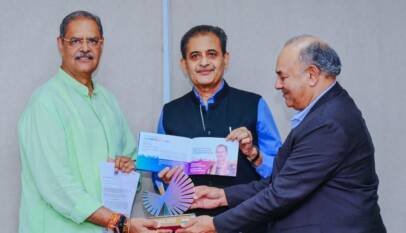
Adani group visits Hon’ble Deputy Chief Minister and Energy Department, Govt. of Odisha
Bhubaneswar, July, 2026 : Kharavel Bhawan, representatives from the Adani Group delivered a comprehensive …