Pakistan Faces Strategic Reversal as Afghanistan Tilts Toward India

New Delhi, Oct 2025 : Pakistan is finding itself in a deeply uncomfortable position — a country once proud of cultivating militant groups to shape regional politics now faces the reality that one such force, the Taliban, governs Afghanistan and no longer dances to Islamabad’s tune. The irony is bitter: the very group Pakistan helped rise to power has begun to assert its independence, engaging diplomatically with New Delhi while rejecting Islamabad’s dominance.
This reversal came into sharp focus after Pakistan’s Defence Minister Khawaja Asif declared that Islamabad had “run out of patience” over the use of Afghan soil by “terrorists targeting Pakistan.” His remarks, made in frustration, were accompanied by an unusual statement claiming that Afghans have “always stood beside India — yesterday, today, and tomorrow.”
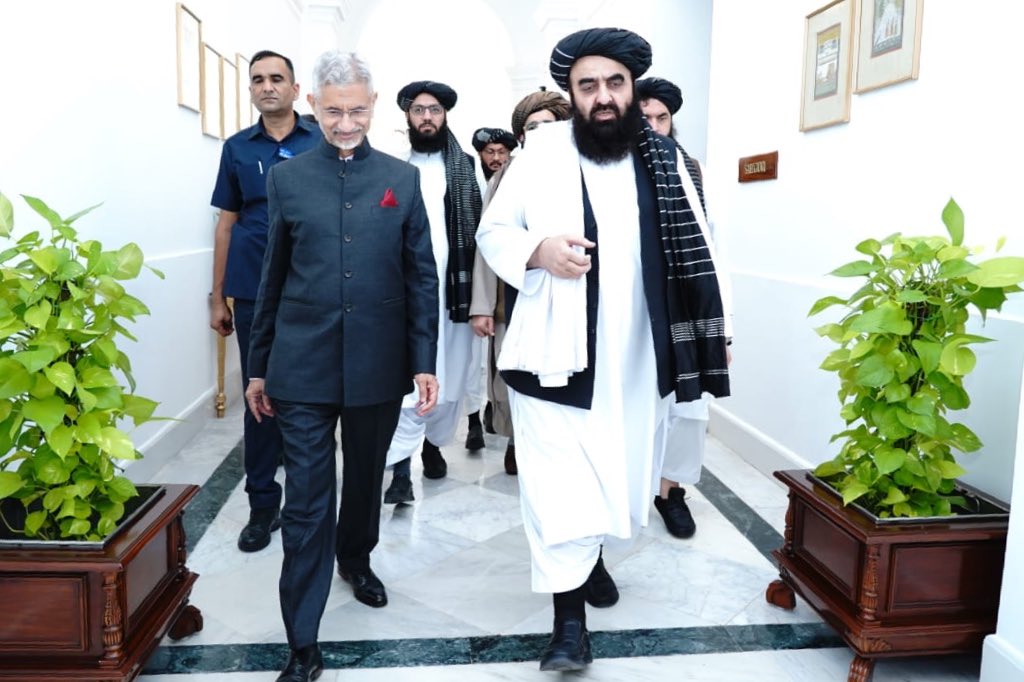
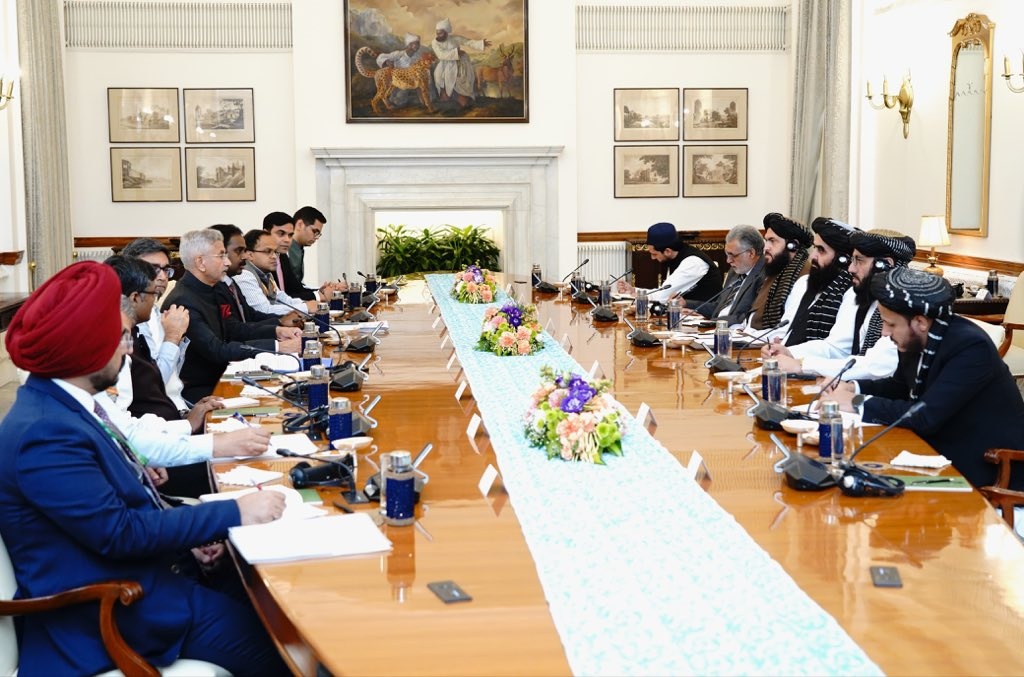
Such rhetoric coincides with Afghan Foreign Minister Amir Khan Muttaqi’s visit to India, a development that Pakistan views with growing unease. Islamabad’s relationship with the Taliban regime has soured, marked by cross-border skirmishes, aerial bombings, and the forced deportation of thousands of Afghan refugees. What Pakistan once imagined as a subservient ally has become an unpredictable neighbour.
At the heart of their tensions lies the Durand Line, the colonial-era border that Kabul refuses to recognise as legitimate. The porous frontier, long a conduit for trade, smuggling, and militancy, has become a flashpoint for conflict. Pakistan’s expectation that the Taliban would be eternally grateful for its past support has been met instead with assertive diplomacy and outreach to India.
India, while refraining from formally recognising the Taliban government, has pursued pragmatic engagement aimed at maintaining stability and protecting its regional interests. For Pakistan, this shift represents both a strategic loss and a geopolitical warning. Kabul’s willingness to host Indian envoys, discuss trade, and receive humanitarian aid from New Delhi underscores its desire for diversified partnerships beyond Pakistan’s shadow.
Further compounding Islamabad’s anxiety is India’s growing cooperation with Iran, particularly through the Chabahar Port project and the International North–South Transport Corridor (INSTC) — initiatives that bypass Pakistan altogether. Although international sanctions have slowed Chabahar’s expansion, India continues to operate the port, using it to deliver relief supplies to Afghanistan and strengthen regional connectivity.
Meanwhile, Pakistan’s own economic and political relationship with Afghanistan has deteriorated. Repeated border closures, trade disruptions, and mass deportations of refugees have damaged trust. Transit routes once vital to Pakistan’s commerce are now uncertain, and the Taliban’s growing confidence has left Islamabad with fewer levers of influence.
Muttaqi’s India visit highlights this strategic shift. Pakistan fears that as New Delhi deepens engagement with Afghanistan, Iran, and Central Asian states, Islamabad risks diplomatic isolation. Increased Indian presence could also restrict Pakistan’s intelligence operations and weaken its regional influence.
The Taliban’s refusal to act as a Pakistani proxy and India’s patient, soft-power diplomacy have reshaped South Asia’s strategic map. Where Islamabad once saw Afghanistan as a zone of influence, it now perceives a zone of insecurity.
India’s investments in infrastructure, education, and humanitarian projects have strengthened its goodwill among Afghans — all without a military footprint. This contrasts sharply with Pakistan’s increasingly militarised and coercive approach, which has eroded its image and influence.
Today, Islamabad faces a twofold challenge: repairing its strained relationship with the Taliban and countering India’s growing strategic footprint in the region. Yet, given the tone of Asif’s statements and Pakistan’s internal instability, both objectives appear distant.
As the regional chessboard evolves, Afghanistan remains the critical square. The Taliban’s diplomatic independence, India’s steady engagement, and Pakistan’s waning leverage together mark a strategic reversal — one that underscores how drastically South Asia’s balance of power is shifting.







ISRO Successfully Tests Indigenous Ship-Borne Tracking System for Gaganyaan Mission
New Delhi, July 2026 : The Indian Space Research Organisation (ISRO) has successfully vali…
ISRO Successfully Tests Indigenous Ship-Borne Tracking System for Gaganyaan Mission
New Delhi, July 2026 : The Indian Space Research Organisation (ISRO) has successfully validated …