BARC Plans 3,000-Acre Nuclear R&D Campus in Andhra Pradesh to Boost Advanced Reactor Research

New Delhi, Dec 2025 : The Bhabha Atomic Research Centre (BARC) is preparing to establish a major new research and development campus in Andhra Pradesh, marking a significant step in India’s efforts to strengthen its nuclear science ecosystem and advance next-generation reactor technologies. The proposed facility is planned in Anakapalli district and will span close to 3,000 acres, making it one of BARC’s largest research initiatives in recent years.
According to official documents examined by the Ministry of Environment, Forest and Climate Change, BARC has approached the Andhra Pradesh government seeking permission to divert 148.15 hectares of forest land for the project. The proposal was recently reviewed by an Expert Appraisal Committee under the ministry, which has recommended it for “in-principle” approval. This clearance would allow the diversion of the first tranche of forest land needed to move the project forward.
Officials familiar with the plan said that the bulk of the land requirement has already been met, with more than 1,200 hectares—approximately 3,000 acres—of revenue land acquired for the campus. The forest land identified for diversion is adjacent to this acquired area and lies between the proposed site and the coastline. Its inclusion is considered essential to ensure continuity and optimal layout of the expansive research campus.
The proposed Anakapalli facility is expected to play a key role in supporting BARC’s growing mandate in nuclear research, advanced reactor development and emerging energy technologies. It aligns with the central government’s renewed focus on strengthening indigenous nuclear capabilities as part of India’s clean energy transition and long-term energy security strategy.
The move comes as BARC intensifies work on small modular reactors (SMRs) and other advanced reactor concepts. Earlier this month, the government informed Parliament that BARC has initiated the design and development of multiple reactor systems, including the 200 MWe Bharat Small Modular Reactor, a 55 MWe SMR, and a high-temperature gas-cooled reactor intended for hydrogen production. These reactors are proposed to be constructed initially at Department of Atomic Energy sites for technology demonstration, with construction to begin after obtaining statutory approvals.
At the same time, India is expanding international cooperation in the nuclear sector. The Centre has indicated that discussions are underway between the Department of Atomic Energy and Russia’s Rosatom to explore collaboration on large and small nuclear power projects. These talks also include the potential construction of Russian-designed SMRs in India and the localisation of equipment manufacturing, further strengthening India’s nuclear technology base.





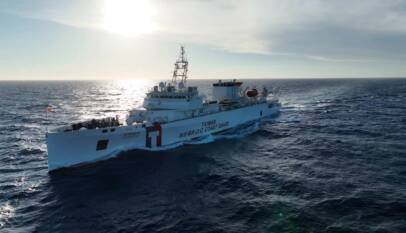
Taiwan Reaffirms South China Sea Claims After Philippines Submits Scarborough Shoal Chart to UN
Taipei, Aug 2026 : Taiwan on Sunday reaffirmed its sovereignty claims over islands in the …
Taiwan Reaffirms South China Sea Claims After Philippines Submits Scarborough Shoal Chart to UN
Taipei, Aug 2026 : Taiwan on Sunday reaffirmed its sovereignty claims over islands in …