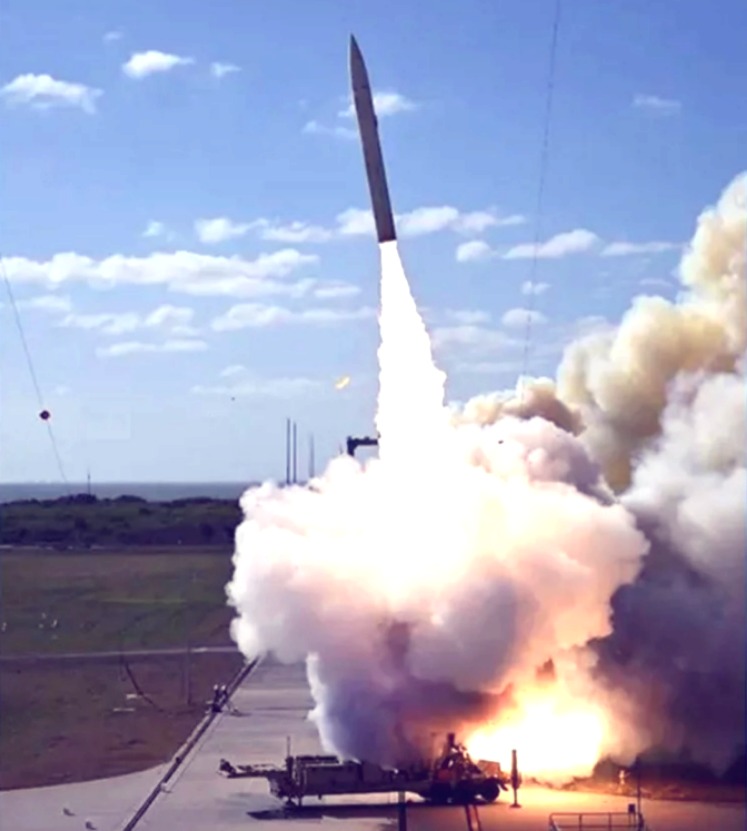
US Congress Focused View Of How Lawmakers Are Being Briefed On Military Technologies.

January 2026: Congress is receiving a January 2026 briefing from the Congressional Research Service on emerging military technologies senior defence and intelligence officials see as disruptive to US National Security. The briefing matters less for futuristic promise than for how it signals where oversight, funding, and operational debates are likely to intensify across the US Military.
Senior US defence and intelligence officials have identified a number of emerging technologies that could have a disruptive impact on US national security in the years to come.
These technologies include
• artificial intelligence,
• lethal autonomous weapon systems,
• hypersonic weapons,
• directed energy weapons,
• biotechnology,
• quantum technology.
As these technologies continue to mature, they could hold significant implications for congressional oversight, US defence authorizations and appropriations, military concepts of operations, and the future of war.
Artificial Intelligence –
Although the US government has no official definition of artificial intelligence, policymakers generally use the term AI to refer to a computer system capable of human-level cognition. AI is further divided into three categories: narrow AI, artificial general intelligence (AGI), and artificial superintelligence. Narrow AI systems can perform only the specific task that they were trained to perform, while AGI systems would be capable of performing a broad range of tasks, including those for which they were not specifically trained. Artificial superintelligence refers to a system that could exceed human-level cognition across most tasks. AGI systems and artificial superintelligence do not yet—and may never—exist.
Narrow AI is currently being incorporated into a number of military applications by both the United States and its competitors. Such applications include but are not limited to intelligence, surveillance, and reconnaissance; logistics; cyber operations; command and control; and semi-autonomous and autonomous vehicles. These technologies are intended in part to augment or replace human operators, freeing them to perform more complex and cognitively demanding work.
In addition, AI-enabled systems could:
(1) react significantly faster than systems that rely on operator input,
(2) cope with an exponential increase in the amount of data available for analysis, and
(3) enable new concepts of operations, such as swarming.
Swarming is a cooperative behaviour in which uncrewed vehicles autonomously coordinate to achieve a task) that could confer a war fighting advantage by overwhelming adversary defensive systems.
Narrow AI could, however, introduce a number of challenges. For example, such systems may be subject to algorithmic bias as a result of their training data or models. Researchers have repeatedly discovered instances of racial bias in AI facial recognition programs due to the lack of diversity in the images on which the systems were trained, while some natural language processing programs have developed gender bias. Such biases could hold significant implications for AI applications in a military context. A number of US government documents, including the Pentagon’s Responsible Artificial Intelligence Strategy and Implementation Pathway, provide guidance on these applications.
Lethal Autonomous Weapon Systems –
Lethal Autonomous Weapon Systems (LAWS) are a class of weapon systems capable of independently identifying a target and employing an onboard weapon system to engage and destroy the target without manual human control. LAWS require computer algorithms and sensor suites to classify an object as hostile, make an engagement decision, and guide a weapon to the target. This capability would enable the system to operate in communications, degraded or denied environments where traditional systems may not be able to operate. LAWS are not yet in widespread development, and some senior military and defence leaders have expressed concerns about the ethics of ever fielding such systems. For example, in 2017 testimony before the Senate Armed Services Committee, then-Vice Chairman of the Joint Chiefs of Staff General Paul Selva stated, “I do not think it is reasonable for us to put robots in charge of whether or not we take a human life.” Currently, there are no domestic or international legal prohibitions on the development of LAWS. However, approximately 30 countries have called for a pre emptive ban on the systems due to ethical considerations, while others have called for formal regulation or guidelines for development and use. DOD Directive 3000.09 establishes department guidelines for the development and fielding of LAWS to ensure that they comply with “the law of war, applicable treaties, weapon system safety rules, and applicable rules of engagement”.
Hypersonic Weapons –
Hypersonic weapons, which fly at speeds of at least Mach5, are in development in a number of countries, including the United States. There are two categories of hypersonic weapons:
• Hypersonic glide vehicles (HGV) are launched from a rocket before gliding to a target. (When HGVs are mated with their rocket booster, the resulting weapon system is often referred to as a hypersonic boost-glide weapon)
• Hypersonic cruise missiles (HCM) are powered by high-speed engines throughout the duration of their flight. In contrast to ballistic missiles, hypersonic weapons do not follow a ballistic trajectory and can manoeuvre en route to their destination, making defence against them difficult. Currently, no defence against hypersonic weapons exists
According to open-source reporting, Russia fielded its first HGV—the Avangard—in December 2019 and its first HCM—the Tsirkon—in 2023. China has also reportedly fielded operational HGVs and HCMs. In contrast, the United States has not fielded an operational hypersonic weapon.
Analysts disagree about the strategic implications of hypersonic weapons. Some have identified two factors that could hold significant implications for strategic stability:(1) the weapon’s short time-of-flight, which, in turn, compresses the timeline for response, and (2) its unpredictable flight path, which could generate uncertainty about the weapon’s intended target and therefore heighten the risk of miscalculation or unintended escalation in the event of a conflict. Other analysts have argued that the strategic implications of hypersonic weapons are minimal because US competitors such as China and Russia already possess the ability to strike the United States with intercontinental ballistic missiles (ICBM), which, when launched in salvos, could overwhelm US missile defences.
Directed Energy Weapons –
The Pentagon defines directed energy (DE) weapons as those using concentrated electromagnetic energy, rather than kinetic energy, to “incapacitate, damage, disable, or destroy enemy equipment, facilities, and/or personnel.” DE weapons, often colloquially referred to as “lasers” could be used by ground forces in counter rocket, artillery, and mortar (C-RAM) or short-range air defence (SHORAD) missions. They could offer low costs per shot and nearly limitless magazines that, in contrast to existing conventional systems, could enable an efficient and effective means of defending against missile salvos and swarms of uncrewed vehicles. Theoretically, DE weapons could also provide options for boost-phase missile intercept, given their speed-of-light travel time; however, as in the case of hypersonic missile defence, experts disagree on the affordability and technological feasibility of this application. High-powered microwave (HPM) weapons, a subset of DE weapons, could be used as a nonkinetic means of disabling electronics, communications systems, and improvised explosive devices (IED) in the event of a conflict. In addition, the US military has explored using HPM in a nonlethal “heat-ray” system for crowd control; however, the system was recalled—likely due to ethical and operational considerations.
Biotechnology –
Biotechnology leverages life sciences for technological applications. A number of developments in biotechnology hold potential implications for national security. As a 2018Government Accountability Office (GAO) report notes, the Departments of Defence (DOD) which is “using a secondary Department of War designation” under Executive Order 14347 dated September 5, 2025; State(State); and Homeland Security (DHS); and the Office of the Director of National Intelligence (ODNI), all assess that biotechnologies, such as the low-cost gene-editing toolCRISPR-Cas9, have the potential to “alter genes or create DNA to modify plants, animals, and humans. Such biotechnologies could be used to enhance [or degrade] the performance of military personnel. The proliferation of synthetic biology used to create genetic code that does not exist in nature may increase the number of actors that can create chemical and biological weapons” and could additionally enable the creation of adaptive camouflage, cloaking devices, or lighter, stronger, and, potentially self-healing body and vehicle armour.
US adversaries maybe less restrained in both researching and applying biotechnology, particularly as it relates to human performance modification and biological weapons.
Quantum Technology –
Quantum technology, which employs the principles of quantum physics, has not yet reached maturity for most military applications; however, it could hold significant implications for the future of encryption and stealth technologies.
GAO reports that DOD, State, DHS, and the ODNI have assessed that “quantum communications could enable adversaries to develop secure communications that US personnel would not be able to intercept or decrypt. Quantum computing may allow adversaries to decrypt [unclassified, classified, or sensitive] information, which could enable them to target US personnel and military operations”.
Quantum sensing, a more technologically advanced application, could provide alternative positioning, navigation, and timing options that could allow militaries to continue to operate at full performance in GPS-degraded or GPS-denied environments. Military application of quantum technologies could be constrained, however, by the fragility of quantum states, which can be disrupted by minute movements, changes in temperature, or other environmental factors.
Team Maverick.







Israel, Lebanon Agree on Ceasefire Framework Amid Continued Cross-Border Hostilities
Washington/Beirut, June 2026 : Israel and Lebanon on Wednesday agreed to move forward with…

Israel, Lebanon Agree on Ceasefire Framework Amid Continued Cross-Border Hostilities
Washington/Beirut, June 2026 : Israel and Lebanon on Wednesday agreed to move forward with …