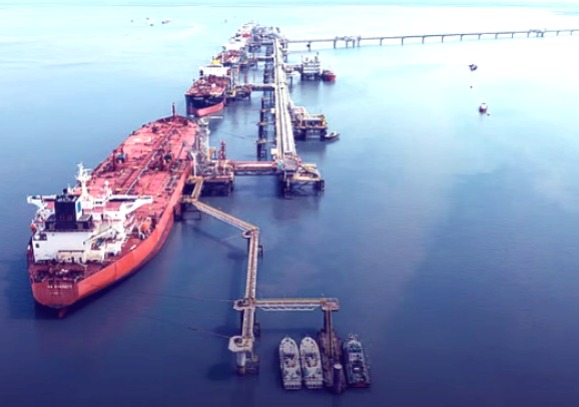
India’s Reliance Industries Seek US Approval For Venezuelan Oil Purchase.

Mumbai, January 2026: India’s Reliance Industries is seeking approval from the US to resume purchases of Venezuelan crude, two sources familiar with the matter said on Friday. The private refiner looks to secure oil amid Western pressure on India to cut Russian oil purchases. Reliance have reiterated on 09th January, that it would consider resuming purchases of Venezuelan crude if sales to non-US buyers are permitted under US regulations.
Reliance’s representatives are in discussions with the US State and Treasury departments to obtain the authorisation. This comes as Washington and Caracas progress in negotiations to ship 50 million barrels of oil in the aftermath of the US capture of President Nicolas Maduro. The Indian conglomerate had received licences from Washington in past years to import crude from US-sanctioned Venezuela for its refining complex, the worlds largest. Venezuela’s oil company PDVSA delivered Reliance 04 crude cargoes, or some 63,000 barrels per day, in the first four months of 2025 under those authorisations.
Earlier during March 2025 and April 2025, Washington suspended most licences to PDVSA’s business partners and had threatened Venezuela’s oil buyers with tariffs as it increased pressure on Maduro. Reliance’s last cargo of Venezuelan oil arrived in India in May 2025.
Oil major Chevron, global trading houses Vitol and Trafigura, and other firms are competing for US Government deals to export crude oil from Venezuela, according to sources familiar with the matter.
The competition reflects a desire by many in the oil industry to access the South American country’s crude stocks and production, with US officials seeking to control Venezuelan oil sales indefinitely.
US President Donald Trump has demanded that Venezuela give the United States full access to its oil sector just days after the US captured the South American country’s illegitimate president Nicolas Maduro on Saturday. Furthermore, the United States officials had said that Washington will control the country’s oil sales and revenues indefinitely. The companies have been lobbying the US government hard to secure a share of what are expected to be lucrative oil export agreements from Venezuela.
The companies are contesting initial deals to market the up to 50 million barrels of oil that state-run oil company PDVSA has accumulated in inventories amid a severe oil embargo that has involved four tanker seizures, two of the sources said.
This week, PDVSA said negotiations were progressing, but provided no details. Its main joint venture partner, Chevron, is well placed to negotiate an expansion of its license to operate in Venezuela as the only major oil company still in the country.
Chevron could also trade at least a portion of PDVSA’s own production, three sources said. However, for the first time in years, the US oil major must compete with other foreign companies. PDVSA wants to make sure that joint venture partners and former customers are part of the deal so it can complete debt repayment, expand output and secure fair prices for crude grades bound for specific destinations, two of the sources said.
On 07th January 2026, the US Department of Energy said it was engaging with commodity marketers and banks to execute and provide financial support for Venezuelan crude and fuel sales. It did not specify which companies. The sources requested anonymity to discuss confidential information. Vitol and Trafigura declined to comment. Chevron, PDVSA, and the White House did not immediately reply to requests for comment.
Geneva-headquartered Vitol has already received a preliminary license from the US Government to begin negotiations for the import and export of oil from Venezuela for 18 months. Vitol and Trafigura had traded Venezuelan oil prior to US sanctions in 2019 and marketed cargoes initially received by some of PDVSA’s partners in recent years. Their capacity to have tanker fleets in Venezuela quickly and trade barrels exceeds that of others currently operating in Venezuela.
“US majors are central to production, but large international trading houses bring global reach and optionality the majors lack. It therefore makes clear sense for these traders to engage proactively with the US Government to discuss next steps”, Jean-Francois Lambert of consultancy Lambert Commodities said.
The Trump administration set its sights on Venezuela’s oil industry soon after US forces captured Maduro on January 03rd. Washington has said it wants to control Venezuela’s oil sales and revenue indefinitely. Trump has said he wants US companies to invest in Venezuela and rebuild its oil industry to produce more oil and bring global energy costs down. Some oil executives have begun arranging trips to Caracas to do initial assessments.
Analysts and industry executives have expressed skepticism, noting Venezuela’s degraded infrastructure, poor quality crude, and political uncertainty. US oil majors have said they want “serious guarantees” before they make investments in Venezuela.
Years of under-investment and sanctions have led Venezuela’s output to fall to around one million barrels per day, or just one per cent of global supply, from 3.5 million bpd in the 1970s when it accounted for 07% of global oil. Since 2019, the only companies authorized by the U.S. to receive oil from Venezuela are Chevron, India’s Reliance, Italy’s Eni, Spain’s Repsol and France’s Maurel Prom.
In recent years, China has taken the lion’s share of Venezuela’s oil exports through little known intermediaries. Since last month when the US began a naval blockade of Venezuelan waters, China has been unable to import Venezuelan oil.
Meanwhile President Donald Trump has said that China, the largest buyer of Venezuelan oil, will not be deprived of barrels. Reliance is willing to buy Venezuelan oil from US companies and others with drilling rights in Venezuela if crude is offered at attractive rates. Venezuelan oil supplies could help replace some Russian supplies to India. Reliance was the biggest Indian buyer of Russian oil but has said it would not receive any cargo of Russian crude this month.
India is under pressure from Trump to stop importing Russian barrels. Reliance’s two refineries in western Gujarat state have a combined capacity of about 1.4 million bpd of crude oil. This allows it to process cheaper and heavier crudes such as Venezuela’s Merey. Reliance and PDVSA have a long -standing relationship, and India was the third most important market for Venezuela’s crude before the US imposed sanctions.
Team Maverick.






Australia Calls India a Top-Tier Security Partner, Unveils Landmark Defence and Energy Agreements
Canberra, July 2026 : Australia on Thursday described India as one of its most important s…
Australia Calls India a Top-Tier Security Partner, Unveils Landmark Defence and Energy Agreements
Canberra, July 2026 : Australia on Thursday described India as one of its most …