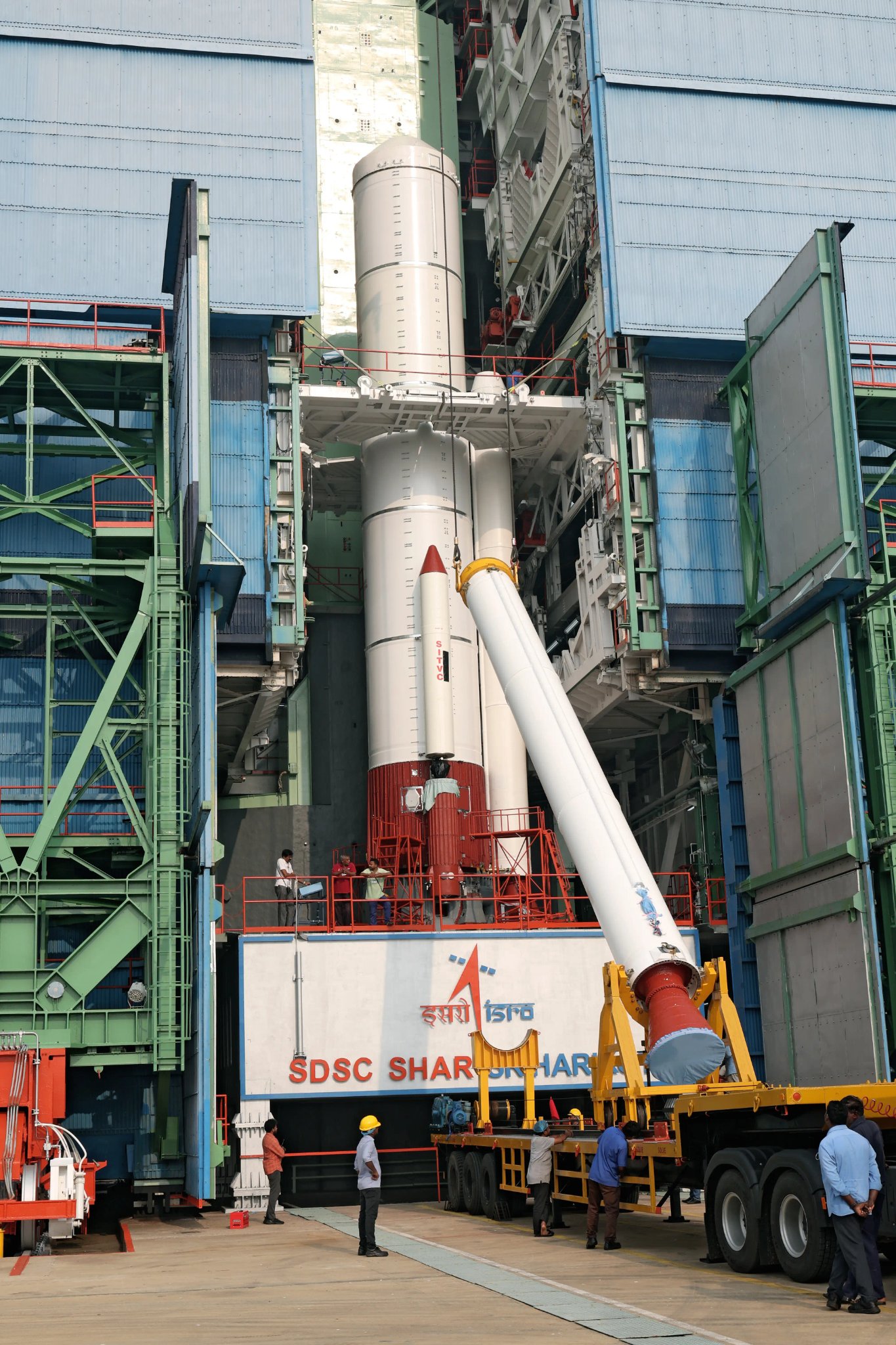
PSLV-C62 Mission Suffers Third-Stage Anomaly, ISRO Launches Probe

New Delhi, Jan 2026 : The Indian Space Research Organisation’s (ISRO) first launch of 2026, the PSLV-C62 mission, encountered an anomaly during the third stage of flight, prompting the space agency to initiate a detailed technical investigation, ISRO Chairman V. Narayanan said on Sunday.
The Polar Satellite Launch Vehicle (PSLV-C62) lifted off at 10:17 am IST from the First Launch Pad at the Satish Dhawan Space Centre, Sriharikota. The mission was intended to place the EOS-N1 Earth Observation Satellite, along with 15 co-passenger satellites, into a 505-km Sun-Synchronous Polar Orbit. However, the mission could not be completed as planned due to a deviation detected toward the end of the third stage of the launch sequence.
Addressing reporters after the launch, Narayanan explained that the vehicle performed nominally through most phases of flight. “We attempted the PSLV-C62 EOS-N1 mission. The PSLV is a four-stage launch vehicle, comprising a solid first stage with strap-ons, a liquid second stage, a solid third stage, and a liquid fourth stage. The vehicle’s performance was as expected up to and near the third stage,” he said.
He added that a disturbance was observed toward the completion of the third stage, resulting in a deviation from the intended flight path. “Because of this deviation, the mission could not proceed further as expected. We are analysing data received from all ground stations, and once the assessment is complete, we will share detailed findings,” Narayanan stated.
The setback recalls a similar issue encountered during the PSLV-C61 mission in May 2025, which also experienced a technical anomaly in the third stage, preventing the satellite from achieving its targeted orbit. ISRO officials have indicated that lessons from earlier missions will be factored into the ongoing analysis of PSLV-C62.
The EOS-N1 satellite, also known as Anwesha, was designed to significantly enhance India’s Earth observation and remote-sensing capabilities. It was expected to support applications in agriculture monitoring, urban planning, disaster management, and environmental surveillance. The mission also aimed to demonstrate the Kestrel Initial Technology Demonstrator (KID), a prototype re-entry vehicle developed by a Spanish startup, marking an important step in international commercial collaboration.
PSLV-C62 was the 64th flight of the PSLV launch vehicle and the ninth dedicated commercial mission undertaken by NewSpace India Limited (NSIL), ISRO’s commercial arm. The launch used the PSLV-DL configuration, featuring two solid strap-on motors, marking the fifth flight of this variant.
Despite the anomaly, ISRO officials emphasised the overall reliability and legacy of the PSLV programme. Since its debut, PSLV has completed 63 missions successfully, playing a key role in landmark achievements such as Chandrayaan-1, the Mars Orbiter Mission, Aditya-L1, and AstroSat. In 2017, the launcher set a global record by placing 104 satellites into orbit on a single mission.
ISRO has assured that a comprehensive review of telemetry and ground data is underway to identify the root cause of the deviation. The findings are expected to guide corrective measures and ensure mission readiness for upcoming launches, reinforcing India’s commitment to safe, reliable, and commercially competitive space operations.
(The content of this article is sourced from a news agency and has not been edited by the Mavericknews30 team.)



US Ends Maritime Blockade Around Iranian Ports Following New Agreement with Tehran
Washington, June 2026 : The United States has officially lifted its blockade on maritime t…
US Ends Maritime Blockade Around Iranian Ports Following New Agreement with Tehran
Washington, June 2026 : The United States has officially lifted its blockade on maritime …