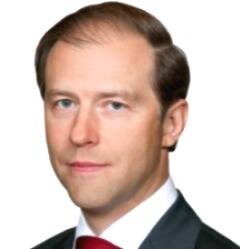
Russia Continues Prioritising Its Defence Industrial Base.

Kremlin; January 2026: After a meeting with Russian President Vladimir Putin on 12th January 2026, Russian First Deputy Prime Minister Denis Manturov highlighted Russia’s industrial development growth in 2025, primarily within the Russian Defence Industrial Base (DIB).
Manturov have claimed that investment in the manufacturing sector grew 23% or roughly five trillion rubles (roughly $64 billion) in the first 09 months of 2025 and that manufacturing industries were growing at the rate of about 03% at the end of 2025 despite recent plummeting Russian economy.
Manturov said that the Russian government’s Industrial Development Fund, which provides low-interest loans to Russian manufacturers, was the main driver of growth in the manufacturing sector. He stated that the Russian DIB employs 3.8 million people, having added an additional 800,000 workers over the last three years. The Russian government has struggled to find financing for its DIB amidst heavy Western sanctions and restrictions and has introduced a series of measures to increase the capital available to the Russian DIB, including through the Industrial Development Fund, off-budget subsidies, and policies strongarming banks into providing preferential lending to defence industrial enterprises.
The Russian Central Bank have also lowered its key interest rate four times in 2025, likely as part of the Russian government’s efforts to make more capital available for the Russian DIB and to lower the price of borrowing money for DIB producers.
Putin’s prioritisation of the Russian DIB is costing the Russian people as Russian banks pass lending pressures from the Russian DIB onto consumers. Russian labour shortages and competition between Russia’s defence and civilian sectors have raised average wages across Russian industries, fueling inflation and causing price spikes.
Several major Russian civilian manufacturers have introduced a four-day work week and announced layoffs in the second half of 2025 due to falling demand, while Russian civilians are struggling to afford homes, with most Russian commercial housing rates estimated at 20% or higher in January 2026.
President Vladimir Putin also signed a law in November 2025 increasing the Value-Added Tax (VAT), a federal tax imposed on most Russian goods and services domestically, from 20% to 22%, placing more of the burden of Russia’s costly war in Ukraine on the Russian people.
The increased Western economic pressure on Russia, along with helping Ukraine maintain and even increase pressure on the battlefield, remains critical to changing Putin’s calculus and forcing Putin to face more serious tradeoffs between continuing to pursue his maximalist war aims and sacrificing the quality of life of the Russian people.
The Russian Ministry of Defence (MoD) stated that the Russian Oreshnik intermediate-range ballistic missile (IRBM) launched on the night of January 08th to 09th struck a Ukrainian defence industrial enterprise in Lviv City, which is consistent with the available visual evidence. The Russian MoD claimed on January 12th that the Oreshnik IRBM strike against the Lviv State Aircraft Repair Plant in Lviv City halted operations at the plant. The Russian MoD further claimed that the strike damaged production workshops, drone warehouses, and infrastructure at the plant’s airfield.
Geolocated footage published on January 09th of the Oreshnik attack indicated that Russian forces struck in the vicinity of southwestern Lviv City, and OSINT analysts on X and Russian milbloggers assessed that the geolocated footage indicated that Russian forces were targeting the Lviv State Aircraft Repair Plant.
Dozens of shadow fleet tankers off the coast of Venezuela have reportedly switched to using Russian flags in recent months. On 11th January, Lloyd’s List Intelligence identified more than 15 tankers involved in shipping sanctioned oil that re-registered as Russian-flagged in the past two weeks (since roughly December 29), and Lloyd’s List editor-in-chief Richard Meade noted that changing flags is likely an attempt to gain protection against raids.
Most of the shadow fleet had sailed until recently under “obscure”, “convenient”, or “bogus” flags from countries like Gabon, Liberia, East Timor, and Malawi. The S&P Global Market Intelligence reported that 25 tankers switched to the Russian flag from October to December 2025, with 18 switching in December 2025 alone. 16 of the tankers are under US or UK sanctions. UK has identified legal mechanisms to enable the UK military to board and detain vessels transporting sanctioned oil in the shadow fleet that are not legitimately flagged. Ukrainian President Volodymyr Zelensky applauded the approach that governments are taking against elements of the shadow fleet.
Meanwhile, Ukraine’s Western partners continue to provide weapons and military equipment to Ukraine. German arms manufacturer Rheinmetall reported on January 12 that Ukraine will receive its first five Lynx KF41 infantry fighting vehicles from a December 2025 contract as early as the beginning of 2026.
The UK Ministry of Defence (MoD) reported on January 11 that the UK is developing the Nightfall short-range ballistic missile, with a likely range of more than 500 kilometres, a 200-kilogram warhead, and the ability to operate in areas with heavy electromagnetic interference. The UK MoD reported that Ukrainian forces will be able to launch the missile from a range of vehicles, fire multiple missiles in quick succession, and withdraw quickly.
The UK MoD noted that the UK will produce 10 missile systems per month at a maximum price of £800,000 (roughly $1 million) per missile. The UK will award contracts to 03 enterprises in March 2026 to design, develop, and deliver their first missiles within a year for Ukrainian forces to then test.
Ukrainian President Volodymyr Zelensky stated on January 11 that he met with Ukrainian Ground Forces Commander Colonel General Oleksandr Syrskyi to discuss air defence supplies from Ukraine’s partners. Zelensky noted that Ukraine’s first priority is procuring more missiles for air defence, including through the Prioritized Ukrainian Requirements List (PURL) initiative, which funds NATO states’ purchases of US-made weapons for Ukraine.
Russia’s long-range drone strikes seek to exploit Ukraine’s scarcity of air defence systems, underscoring Ukraine’s urgent need for point-defence air defence systems to defend frontline areas and critical infrastructure in the rear in the face of such a geographically pervasive threat.
Team Maverick.







Ukraine Signs Agreement With Sweden For The Procurement Of 16 Gripen Fighter Jets.
Stockholm; July 2026: President of Ukraine Volodymyr Zelenskyy held a meeting with Ministe…
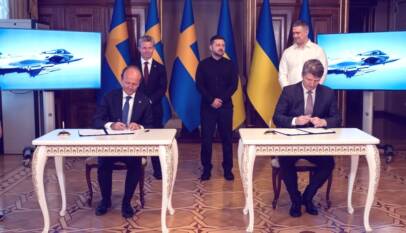
Ukraine Signs Agreement With Sweden For The Procurement Of 16 Gripen Fighter Jets.
Stockholm; July 2026: President of Ukraine Volodymyr Zelenskyy held a meeting with Minister for …