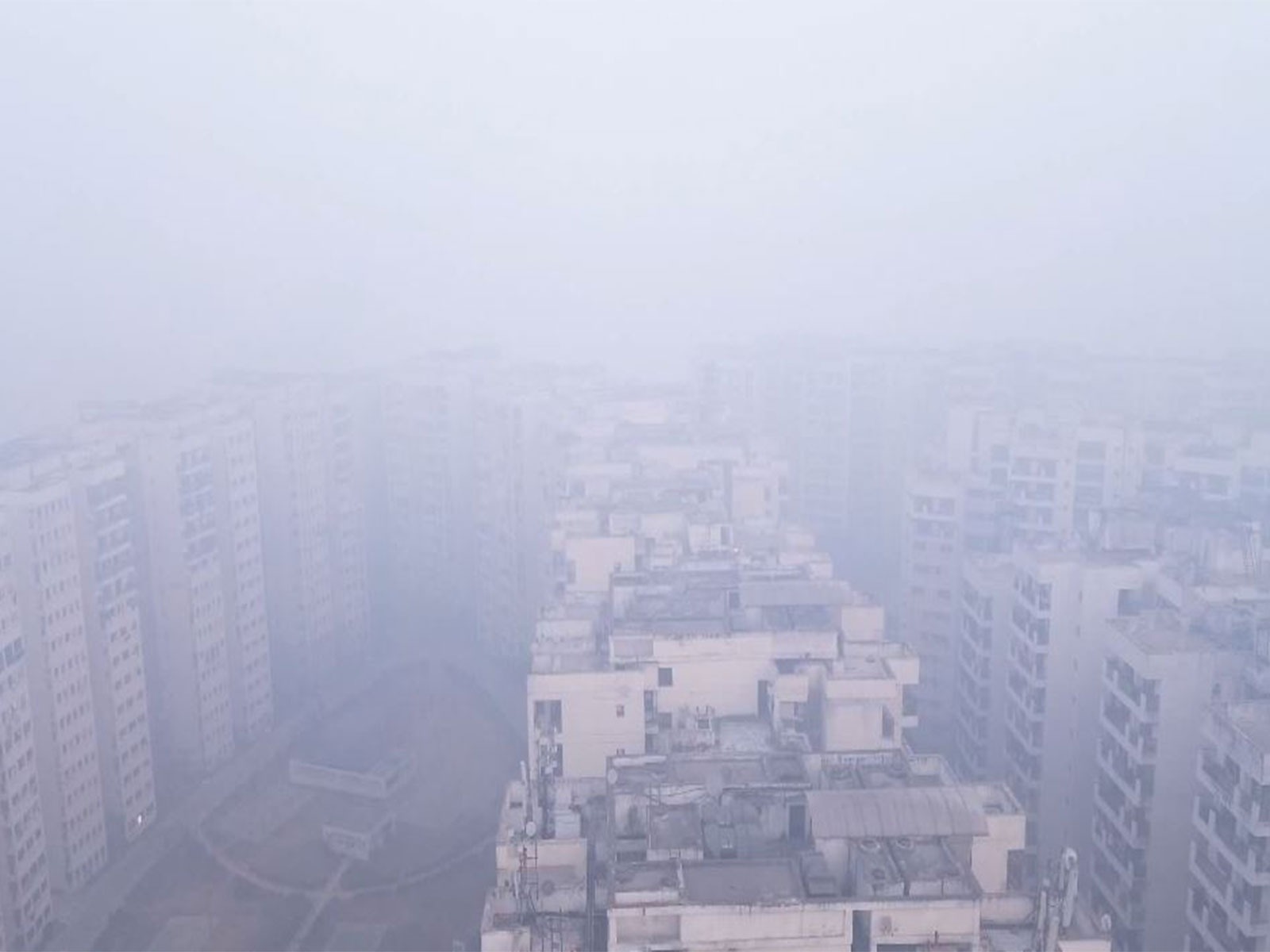
Delhi’s AQI In ‘Severe’ Category At 439 As Cold Wave And Fog Persists.

New Delhi; January 2026: Delhi continued to grapple with a severe air pollution crisis on Sunday morning as air quality in the national capital remained in the ‘severe’ category, with the Air Quality Index (AQI) recorded at 439 at 07:00 hours, according to data released by the Central Pollution Control Board (CPCB).
The situation worsened overnight, with the AQI recorded at 432 at 22:00 hours yesterday, placing it in the ‘severe’ category, before deteriorating further by early Sunday morning. The persistent high pollution levels have raised serious health concerns, particularly for children, the elderly and people suffering from respiratory and cardiovascular ailments.
Several areas across the city reported alarmingly high pollution levels, reflecting the widespread nature of the pollution crisis. Anand Vihar recorded an AQI of 489, Ashok Vihar 463, Bawana 467, Chandni Chowk 464, Dwarka Sector 8 469, ITO 448, Narela 412, Punjabi Bagh 476, RK Puram 467 and Wazirpur 478. All these locations fell under the ‘severe’ category, indicating extremely poor air quality and heightened health risks.
As per AQI classification, a reading between 0 and 50 is ‘good’, 51 to 100 ‘satisfactory’, 101 to 200 ‘moderate’, 201 to 300 ‘poor’, 301 to 400 ‘very poor’ and 401 to 500 ‘severe’. Furthermore, visibility across the city remained poor as cold wave conditions continued and dense fog covered large parts
of Delhi. The India Meteorological Department (IMD) reported that dense fog persisted in the morning hours, with moderate fog observed at several locations and dense fog at isolated spots. Minimum temperatures on Sunday hovered between 050 and 070 Celsius, remaining below normal by 1.60 to 30
Celsius.
In response to the deteriorating air quality, the Commission for Air Quality Management (CAQM) on Saturday reinvoked Stage-IV measures under the Graded Response Action Plan (GRAP) across Delhi and the National Capital Region (NCR).
“Keeping in view the prevailing trend of air quality and relevant factors and in an effort to prevent further deterioration of air quality in the region, the CAQM Sub Committee on GRAP unanimously decides to invoke all actions as envisaged under Stage-IV of the extant GRAP ‘Severe+’ Air Quality (DELHI AQI) > 450), with immediate effect, in the entire NCR, as a proactive measure. This is in addition to the actions under Stages I, II & III of the extant GRAP already in force in NCR”, the order from the CAQM read.
The order further added, “NCR Pollution Control Boards and other agencies concerned have been asked to escalate the preventive measures to prevent further deterioration of air quality in the region”. With severe pollution, cold wave and dense fog persisting, authorities have urged citizens to limit outdoor activities, follow health advisories, and take precautions against the hazardous air quality.
The persistent environmental degradation in the National Capital indemnifies a stark contrast of the claims by the Rekha Gupta administration. On 05th December, 2025 she had affirmed that the government is working on a “war footing” to tackle pollution in the national capital and stressed that public participation is essential to achieving effective, lasting results. The Chief Minister claimed to have inspected the mist spray system installed at ITO and directed officials to ensure its efficient functioning in accordance with the prescribed schedule. She said the government is committed to addressing all sources and aspects contributing to pollution.
Cabinet Minister Ashish Sood and senior officials from various departments accompanied the Chief Minister during the inspection. She reviewed the technical features of the mist spray system and assessed its effectiveness in suppressing dust and airborne pollutants.
The Chief Minister said a comprehensive plan is being prepared to keep all roads in Delhi permanently free from dust and waste. She has noted that pilot projects using mist spray systems in the NDMC area have shown positive results, leading the government to prepare a broader plan for their installation across the city. She said an electric mist spray system has been set up on electricity poles at ITO, and its initial performance has been encouraging.
The Chief Minister said that similar mist spray systems are being installed at nine major pollution hotspots across Delhi, with plans to expand the initiative citywide. She added that all relevant agencies, including the MCD, NHAI and PWD, have been instructed to take prompt action within their jurisdictions. Gupta also urged citizens to actively use the MCD-311 app to report issues such as potholes, dust accumulation, waste dumping, or any pollution-related concerns. All complaints received through the app must be resolved within 72 hours.
Furthermore, the Chief Minister said the government is installing more than 300 mist spray units across major pollution hotspots, and the successful implementation at ITO will guide wider deployment. The mist spray system, mounted on electric poles and equipped with high-pressure pumps and fine nozzles, uses water to control road dust and particulate matter. The government believes the technology will significantly aid in reducing pollution levels in dense and high-traffic areas.
Team Maverick.








Rahul Gandhi Calls Dharmendra Pradhan’s Resignation a Victory for Students, Demands Further Action
New Delhi, July 2026 : Leader of the Opposition in the Lok Sabha Rahul Gandhi on Saturday …

Rahul Gandhi Calls Dharmendra Pradhan’s Resignation a Victory for Students, Demands Further Action
New Delhi, July 2026 : Leader of the Opposition in the Lok Sabha Rahul …