The government has signed an agreement with space-tech startup Agnikul Cosmos for Rs 200 crore in financial support under the Research Development and Innovation Fund. The funding will support development of the reusable Agnibaan RLV, aimed at advancing indigenous launch technology and enabling more frequent, cost-efficient space missions.
New Delhi, Sept 2026 : The government on Friday announced a Rs 200 crore financial support agreement with space-tech company Agnikul Cosmos under the Research Development and Innovation (RDI) Fund to develop a new generation of indigenous reusable space transportation systems.
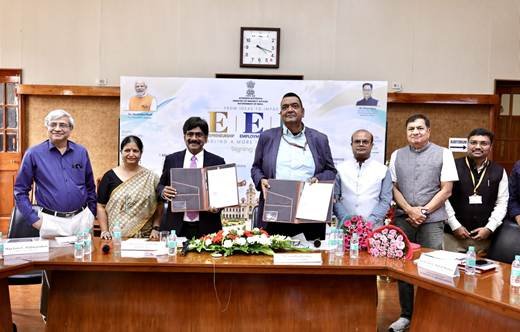
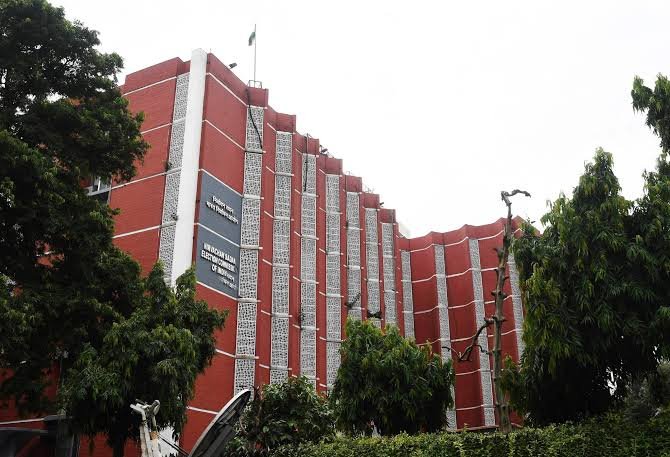
The agreement was signed by the Technology Development Board (TDB) under the Department of Science and Technology (DST). The funding will support development of the Agnibaan Reusable Launch Vehicle (RLV), with the project aiming to advance the technology from Technology Readiness Level (TRL) 4 and above to TRL-8.
The initiative is focused on developing a reusable launch system that can go beyond the conventional approach of recovering only the first stage of a rocket. The proposed architecture aims at achieving greater levels of system-wide reusability, potentially allowing launch vehicles to be used repeatedly for multiple missions.
According to the government, the proposed system is intended to support high-frequency and repeatable launches while reducing both launch and manufacturing costs. Greater reusability could also help reduce the amount of space debris generated through launch activities.
Rajesh Kumar Pathak, Secretary of the Technology Development Board, said the next phase of India's space programme would require technologies capable of reaching orbit with greater frequency, flexibility and efficiency.
“Reusability is an important technology frontier in this regard,” Pathak said, adding that the RDI Fund was being used to support ambitious indigenous technologies that require sustained investment to move from advanced development stages towards deployment.
He said the Agnibaan RLV programme reflects this approach by concentrating on reusable launch architecture and strengthening India's capabilities in advanced space transportation systems.
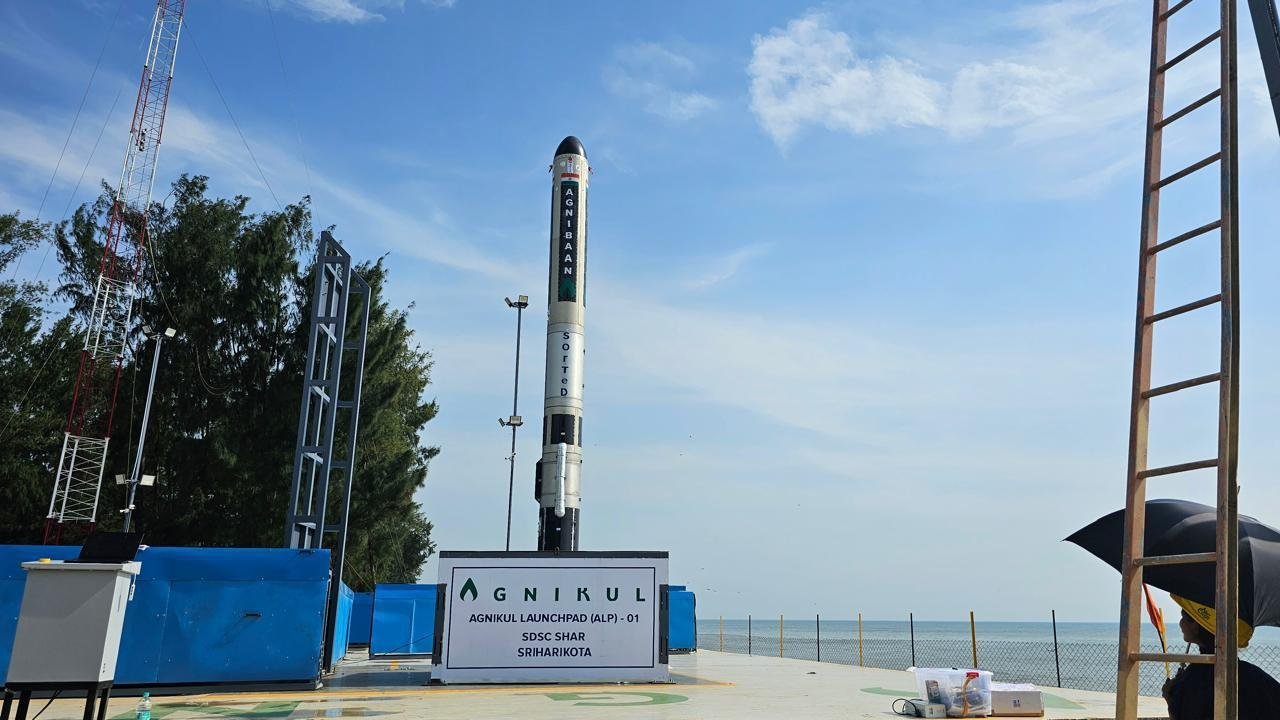
Agnikul Cosmos has already developed and tested several technologies relevant to the programme. Its earlier work includes Agnibaan, an indigenous orbital-class launch vehicle designed for satellite missions, and Agnilet, a single-piece, 3D-printed rocket engine developed and manufactured by the company.
The company has been working on technologies aimed at providing flexible launch options, particularly for small satellite missions. The development of Agnilet has also highlighted the company's focus on additive manufacturing in rocket propulsion.
The Technology Development Board had previously supported Agnikul's efforts to develop and commercialise a modular and configurable launch vehicle for small satellite missions.
The latest agreement represents a further expansion of government-backed support for indigenous private-sector space technology, with the focus now shifting towards reusable launch systems and the technological challenges associated with repeated missions.
Agnikul's promoters said the programme would require the integration of several complex technologies, including propulsion, vehicle design, guidance systems, recovery mechanisms and mission operations.
“Reusability requires the integration of propulsion, vehicle design, guidance, recovery and mission operations into a highly reliable system,” the company said.
The promoters described the TDB support as significant for the development of original technology in India, saying it demonstrated government backing for high-risk, technology-intensive projects.
The Agnibaan RLV programme is expected to focus on advancing the technologies required for reliable recovery and reuse of the launch vehicle. Moving from TRL-4 to TRL-8 would involve substantial development and validation work before the system can approach operational deployment.
The initiative comes as India's space sector increasingly expands beyond traditional government-led programmes, with private companies participating in launch vehicles, propulsion, satellite systems and other space technologies. The emphasis on reusability also reflects a broader global effort to lower the cost of access to space and increase launch frequency.
The Rs 200 crore support under the RDI Fund will therefore provide Agnikul with resources to take its reusable launch vehicle technology through advanced development and testing stages, with the larger objective of building indigenous and repeatable space transportation capabilities.