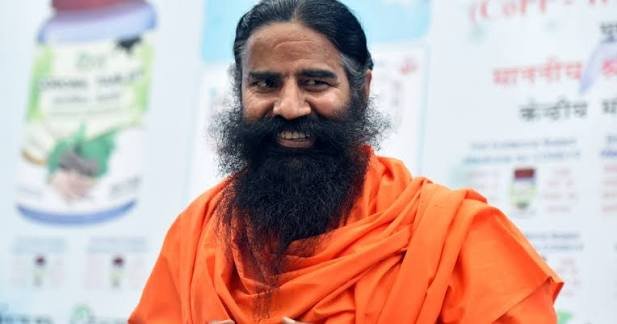
Haridwar, Aug 2026 : Yoga guru Baba Ramdev on Sunday said the full rendition of the national song Vande Mataram represents reverence for Bharat Mata and should not be interpreted as worship of Hindu deities. His remarks came amid an ongoing debate and controversy surrounding the singing of the complete version of the song.
Speaking to reporters during an event in Haridwar, Ramdev said Bharat Mata is regarded as a symbol of the country’s faith, knowledge, strength and cultural identity. He said references to Durga and Lakshmi in the song should be understood in the broader cultural context rather than as a direct invocation of Hindu goddesses.
“We regard Bharat Mata as Durga, as Lakshmi; she is our faith, our knowledge, our temple, and the one who protects and empowers us,” Ramdev said, describing Bharat Mata as the ultimate object of devotion and aspiration.
He criticised those who interpret references to goddesses, temples or religious imagery in Vande Mataram as evidence that the song promotes a particular religion. According to him, a proper understanding of Sanskrit and Indian cultural traditions is necessary to appreciate the meaning of the composition.
Ramdev said connecting the concept of Bharat Mata in Vande Mataram directly with the worship of Hindu deities and then portraying it as being against another religion amounted to “intellectual bankruptcy”. He maintained that the song symbolises devotion to the nation and its cultural heritage.
The yoga guru also commented on protests involving students, saying young people should have the freedom to raise their voices against injustice but minors should not be drawn into political demonstrations.
Ramdev alleged that children as young as five, seven or 10 years old were being brought into protests and encouraged to surround police stations and government offices. He said children should not be pushed into such activities.
At the same time, he said citizens above the age of 18 should speak up if they believe injustice is taking place. Such opposition, he said, should be irrespective of caste or social background and should extend to students, patients, farmers, Scheduled Castes, Scheduled Tribes and Brahmins.
Ramdev also stressed the importance of maintaining social harmony. He said insulting a person because of their caste should not be accepted, regardless of which community they belong to. He asserted that discrimination or abuse against Brahmins should also be viewed seriously, just as offences against members of SC and ST communities are dealt with under constitutional and legal provisions.
“I will not allow walls of hatred to exist in the country,” Ramdev said, while praising Uttarakhand Chief Minister Pushkar Singh Dhami for implementing the Uniform Civil Code in the state.
He called for equal access to healthcare, education and constitutional rights for citizens across the country, saying such equality was essential for national unity.
Ramdev was also asked about recent remarks involving BJP MP Kangana Ranaut, who had advised him against making comments about her youth or private life. In response, the yoga guru said the people of India were aware of his identity and contributions and declined to make further remarks about the actor-politician.
His comments come amid wider public discussions over nationalism, cultural identity, student protests and the interpretation of Vande Mataram, keeping the debate over the national song and its historical and cultural significance in the spotlight.