CM Yogi says Bapu’s mantras of cleanliness, Swadeshi, self-reliance and Gram Swaraj remain equally relevant even today
Says Charkha was not merely an object, but the foundation of India’s self-reliance; Gandhi Ashram textiles symbolized freedom and Swadeshi
UP carrying forward Bapu’s spirit of Swadeshi through ‘One District-One Product’ scheme, giving local products global recognition
Under PM Modi’s leadership, Bapu’s dreams taking shape from Swachh Bharat to Atmanirbhar Bharat, toilets built in the homes of more than 12 crore families
Government carrying forward Bapu’s vision of Gram Swaraj, employment being provided along with public facilities through Gram Sachivalayas
CM also pays homage to Lal Bahadur Shastri, says the mantra of ‘Jai Jawan-Jai Kisan’ laid the foundation for security and foodgrain self-reliance
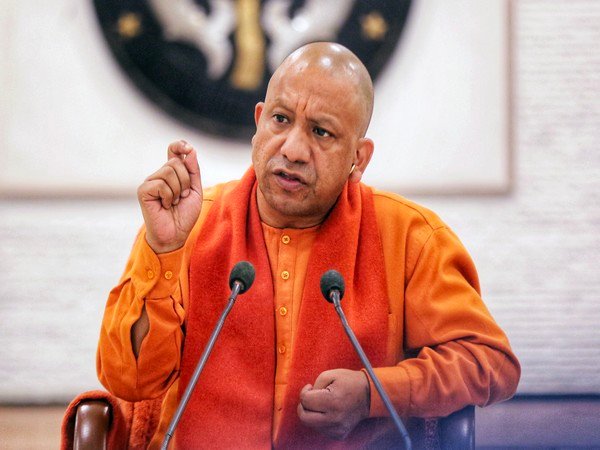
Lucknow, October 2026 : Chief Minister Yogi Adityanath, describing Mahatma Gandhi’s mantra of Swadeshi and self-reliance as the foundation of a self-reliant and developed India, said Bapu’s charkha was not merely an object but the foundation of India’s self-reliance and self-sufficiency. Uttar Pradesh’s ‘One District-One Product’ scheme is working towards making ‘local to global’ by carrying forward the same spirit of Swadeshi.
Prime Minister Narendra Modi is taking forward Bapu’s dream of self-reliance with the resolve of Atmanirbhar Bharat. The vision of a developed India will be fulfilled only when the country becomes self-reliant. For this, every citizen, family and village will have to move forward towards self-reliance.
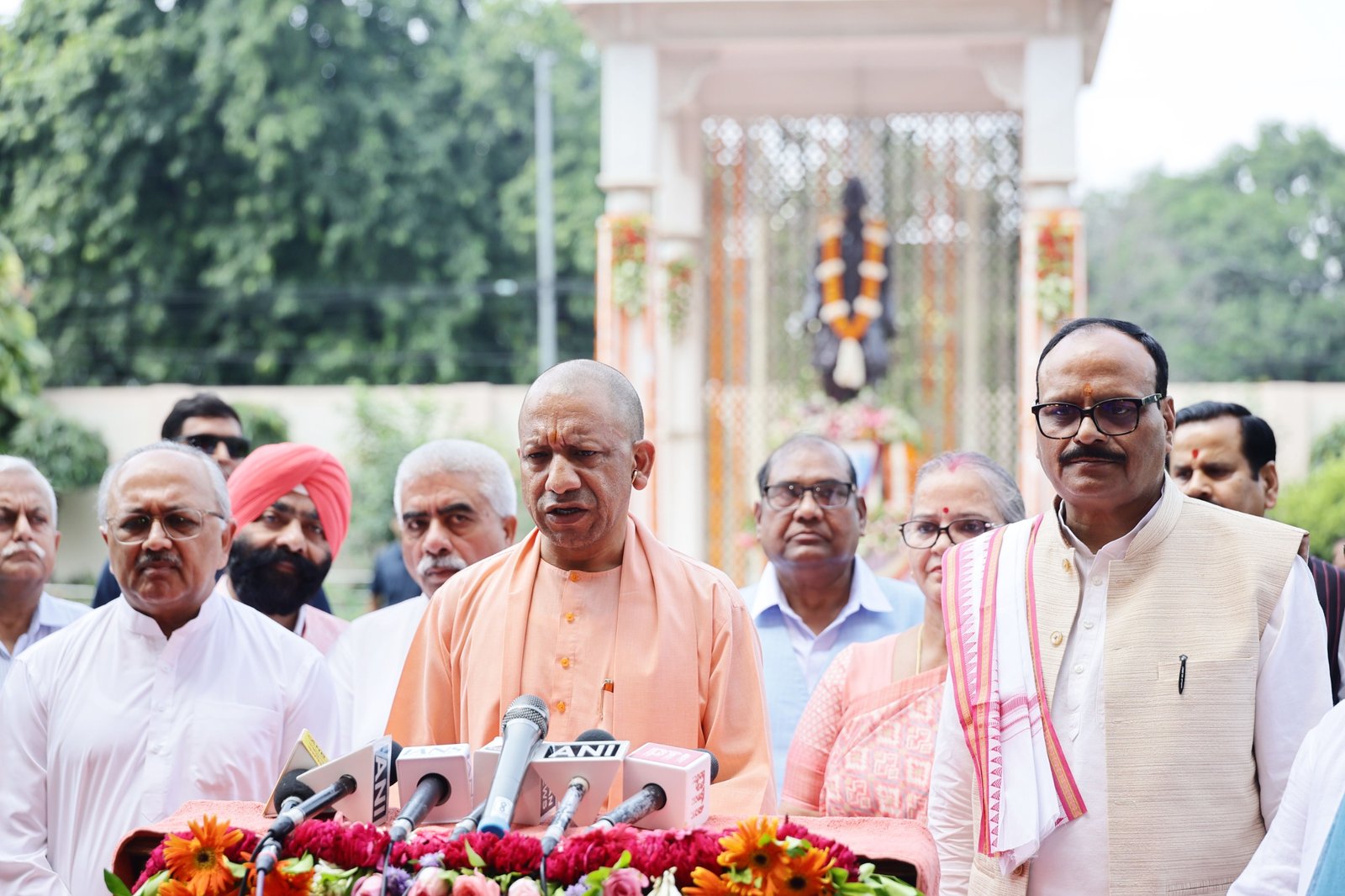
At a program organized on the occasion of the 157th birth anniversary of Rashtrapita Mahatma Gandhi, the CM paid tribute to Bapu’s memory and offered homage on behalf of the people of the state. During the program, CM listened to Bapu’s favorite bhajans and spun the charkha, conveying Mahatma Gandhi’s message of Swadeshi and self-reliance. He stated, “From cleanliness to Swadeshi, from Swadeshi to self-reliance and from self-reliance to Gram Swaraj, Bapu’s thoughts continue to guide the country even today.” New India is moving forward with complete commitment to realize these very dreams of Bapu.
CM Yogi, while discussing Swadeshi, also shared childhood memories. He stated, “In our childhood, we used to look at the clothes from Gandhi Ashram with great curiosity. People were especially enthusiastic about these textiles because they were not merely clothes. They were also symbols of mantra of India’s freedom. Bapu worked to connect them with the spirit of Swadeshi and take them forward. He conveyed the message of self-reliance to the country through the charkha. The charkha was not merely a means of spinning yarn. It became the foundation of India’s self-reliance and self-sufficiency. The charkha became a symbol of how a country can move forward by placing faith in its own labour, its own products and its own capabilities.”
Chief Minister stated, “Today, the ‘One District-One Product’ scheme is moving forward with the same spirit of Swadeshi. Through this, work is being undertaken to promote local products and take them to the global level.” Linking this with Prime Minister Narendra Modi’s mantra of ‘Local to Global’ and Atmanirbhar Bharat, he stated, “The dream of self-reliance that Bapu envisioned is being taken forward in a new form. Prime Minister repeatedly says that the vision of a 'Viksit Bharat' will be fulfilled only when we all work together to build an Atmanirbhar Bharat. This self-reliance begins with the spirit of Swadeshi and self-reliance.”
CM, referring to Mahatma Gandhi’s life journey, said that Bapu, born into a devout Vaishnav family in Porbandar, Gujarat, began practicing law in South Africa after receiving higher education. The values he received from his family were reflected in his life and struggle. He raised his voice against injustice and every form of exploitation. He carried forward the campaign against racial discrimination in South Africa and united people of Indian origin there. This struggle later played an important role in awakening the call for India’s independence.
Chief Minister stated, “In the true sense, when India’s freedom movement came into the hands of revered Bapu, he led it democratically and peacefully and transformed it into a broad-based mass movement. At that time, the country was filled with frustration and despair. People had begun to feel that India might never become independent.
Bapu’s leadership and guidance transformed this despair into hope and enthusiasm. Indian society joined the movement with full enthusiasm to witness the new dawn of freedom. The distinctive feature of Bapu’s leadership was that India’s freedom movement did not remain confined to just a few cities. It reached village after village and every man, woman and child became part of this campaign. This mass participation gave the freedom movement a broad form.”
CM stated, “For people across the world, it was a matter of curiosity and wonder as to what that miraculous force was that was connected with such a vast campaign for India’s freedom. Bapu, who led the movement wearing a half-dhoti, had only a stick in his hand for support, but the world witnessed the strength of his leadership and that miracle. Today, that very India is moving forward by realizing the dreams of revered Bapu. The values that Bapu connected with the consciousness of the people during the freedom movement remain equally relevant for the country and society even today.”
Chief Minister stated, “The mantras given by Bapu to transform the freedom movement into a mass movement remain relevant even today. Every citizen should make cleanliness a part of their life, every citizen should make Swadeshi the mantra of their life and every family should become self-reliant and move forward towards self-reliance. These messages of Bapu continue to work as mantras for the country even today. Cleanliness is not merely a matter of keeping surroundings clean, and Swadeshi is not merely an idea limited to using a particular product. At the heart of these ideas is the spirit of strengthening the nation by making the individual, family and society self-reliant.”
CM Yogi stated, “The resolve that Bapu had taken at the time of India’s independence has been realised in independent India by Prime Minister Narendra Modi ji through the Swachh Bharat Abhiyan. Toilets have been built in the homes of more than 12 crore families across the country. The Swachh Bharat Abhiyan not only laid the foundation for a clean and healthy India, but also, while creating awareness among people, taught the lesson of protecting women's dignity. Making cleanliness a part of every citizen’s life is the real way of taking forward Bapu’s message.”
Chief Minister, linking Mahatma Gandhi’s vision of Gram Swaraj with present-day rural development, stated, “Villages are the basic units of India. For a long time, we made big claims about development, but the truth was that the village, which should have been the basic unit of development, was left neglected. Today, to realize the dream of revered Bapu’s Gram Swaraj, the village is also being made the foundation of self-reliance. Keeping this objective in mind, government has established Gram Sachivalayas in every village. Through these, various facilities are being provided to citizens within the village itself by using technology. Gram Sachivalayas are also becoming a means of providing local employment. Through these, employment opportunities are being made available to four to seven people in every village.”
Paying homage to the memory of Lal Bahadur Shastri on his 122nd birth anniversary, the Chief Minister offered his humble tribute on behalf of the people of the state as well. He stated, “October 02 is extremely important for another reason as well. Along with the birth anniversary of revered Bapu, it is also the sacred birth anniversary of India’s second Prime Minister, great freedom fighter and an unwavering follower of Bapu, Lal Bahadur Shastri. The entire life and character of Gandhi ji and Shastri ji inspire all of us greatly. A person’s speech has power only when their conduct and thoughts are in harmony. Both these great personalities practiced in their lives what they said and spoke only as much as they did.”
CM Yogi stated, “Mahatma Gandhi’s Swadeshi awakened India’s national consciousness and worked to become the mantra of freedom. Lal Bahadur Shastri’s life was marked by simplicity, imbued with Indianness and completely dedicated to the nation. When the country faced a crisis, Shastri ji showed how India’s security could be protected with the force of a thunderbolt and how the goal of self-reliance could be taken forward. His call of ‘Jai Jawan-Jai Kisan’ became the mantra of entire India.”
CM stated, “At that time, on the one hand, India’s soldiers were giving a tough time to enemy countries on the borders, while on the other hand, Annadata Kisan were taking the country towards foodgrain self-reliance in the fields. ‘Jai Jawan-Jai Kisan’ was not merely a slogan. It linked both national security and foodgrain self-reliance with the country’s resolve at the same time. This mantra, given to the people of country by Lal Bahadur Shastri in 1965, later became a strong foundation for India’s self-reliance.”
CM Yogi stated, “There was a time when India had to depend on other countries even for wheat. Several developed countries even supplied foodgrains to India that were not fit for consumption. Today, India has moved far beyond that situation. The country has not only achieved self-reliance in foodgrains, but has also become a source of foodgrain supply to many countries around the world. Revered Lal Bahadur Shastri laid the foundation of this self-reliance.”
Chief Minister stated, “A society that respects its ancestors and expresses gratitude towards them, follows their ideals and inspires its future generations to move forward through those very ideals, will certainly have a bright future. Today’s new India is moving forward with complete commitment to realize Bapu's dream. Work is being undertaken to connect cleanliness with public participation, take Swadeshi from ‘Local to Global’, make families self-reliant and make villages the foundation of self-reliance.”
On the occasion, Deputy Chief Minister Brajesh Pathak, Minister for Khadi and Textiles Industry Rakesh Sachan, Lucknow Mayor Sushma Kharkwal, State President of the Minority Commission Mohsin Raza, Regional Gandhi Ashram Secretary Devi Prasad Sharma, Manager Akhilesh Kumar Upadhyay, Sarojit Tiwari, prominent social worker and litterateur Akhilesh Dwivedi, other office-bearers associated with the Regional Gandhi Ashram and MLAs were present.