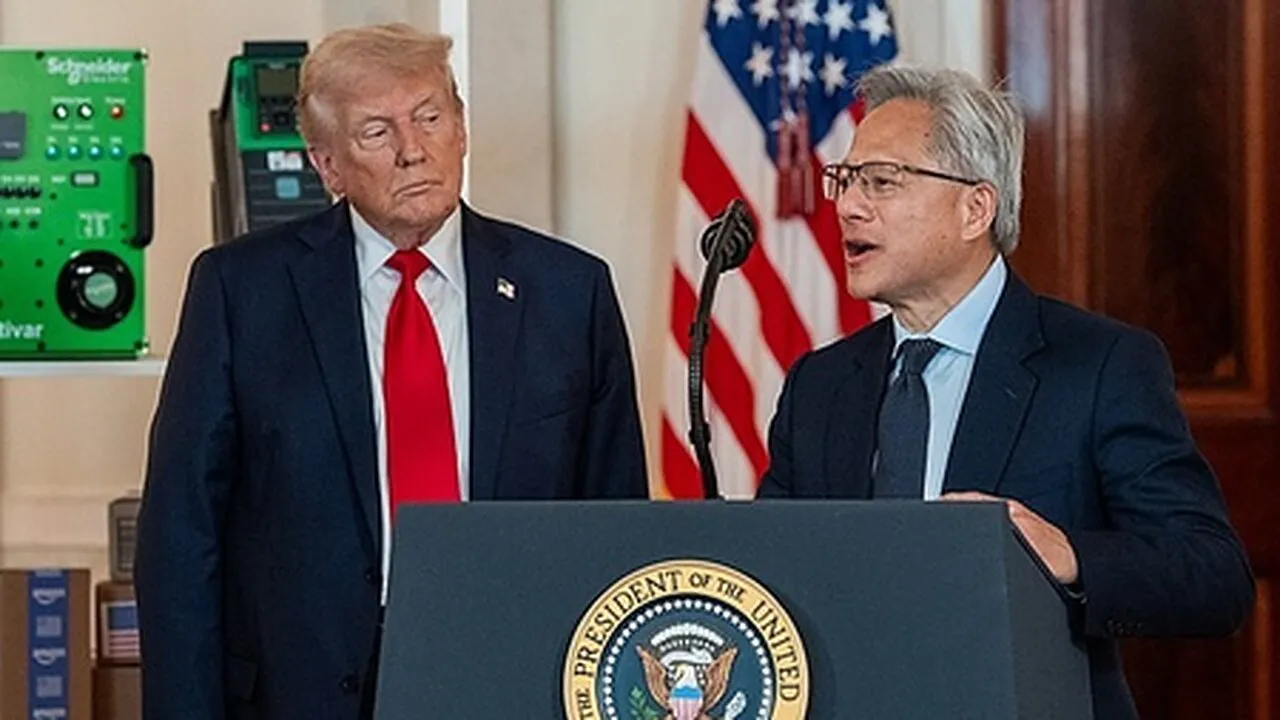
Washington, November 2026: US President Donald Trump has said he would welcome the possible return of Jensen Huang as chief executive of semiconductor giant Nvidia, days after suggesting Apple CEO Tim Cook for the position. Trump indicated that Huang may have learnt important lessons and said several people had expressed support for his return to the company.
Speaking to reporters ahead of his scheduled trip to Asia, Trump said he would not object to Huang being reinstated as Nvidia's chief executive. He also addressed allegations involving a woman reportedly linked to Huang, who had been described as a possible Chinese spy, saying that no evidence had established the claim.
“I would, I would not mind, I would not mind that,” Trump said when asked whether he wanted Huang back as Nvidia CEO.
Recalling his earlier suggestion of Tim Cook for the position, Trump said, “I like, you know, I threw out the name of Tim Cook, but I would say that the Jensen’s reinstatement, I think he learned a big lesson. I guess maybe one lesson’s more important than another, but I would certainly not mind seeing that.”
He added that several people wanted Huang to return to the semiconductor company. “And getting to that, I think having Jensen go back, a lot of people are asking Jensen. They think Jensen should go back. That certainly isn’t a bad idea,” Trump said.
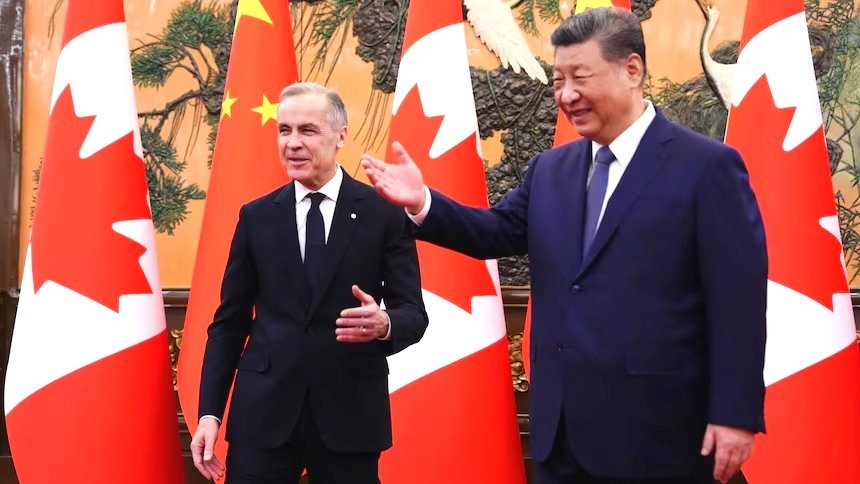
The comments came as the US President prepared for his visit to China, where he is scheduled to meet Chinese President Xi Jinping. Asked whether he intended to raise the alleged spying issue involving Huang and Nvidia with Xi, Trump said he might discuss it.
“I may. I may talk,” he said.
Trump repeatedly maintained that he did not know whether the woman identified in questions from reporters was a Chinese spy. “I don’t know that she’s a Chinese spy,” he said, adding, “We’ll determine that.”
When asked again about the allegation towards the end of the interaction, Trump said, “Well, I don’t know that she’s a spy at all. Nobody’s proven that.”
He also dismissed suggestions that US national security had been compromised, stating that the country's security had not been put at risk. “It was not put at risk and, and our country is now stronger than ever before,” he said, without providing further details to support the assessment.
The President also discussed restrictions on Nvidia's advanced semiconductor sales to China. He said Huang had wanted to sell chips in the Chinese market but had been prevented from selling the company's more advanced products, including its Blackwell processors.
“He wasn’t allowed to sell the Blackwell or any of that,” Trump said. However, he indicated that he considered the sale of other Nvidia chips to China beneficial.
Trump acknowledged that the issue had exposed differing views within his administration on how the United States should deal with Beijing. He described one approach as avoiding actions that could offend China, particularly given the importance of maintaining good bilateral relations.
“One view is you don’t wanna insult China. We have a very good relationship with China,” he said.
He also referred to another, more confrontational approach towards Beijing, but did not indicate which position he would ultimately adopt. “Both can’t say either is wrong or right. We’ll, we’ll let you know,” he added.
Emphasising the importance of diplomatic relations ahead of his visit, Trump said the United States should avoid unnecessary tensions with China immediately before the meeting. “We’re heading to China and I don’t think you wanna insult China just before you get there,” he said.
Trump had earlier mentioned Tim Cook as a possible candidate for the Nvidia leadership position. However, he did not disclose whether he had discussed the matter with either Cook or Huang.
Nvidia, co-founded by Huang, is one of the world's leading designers of semiconductors used to train and operate artificial intelligence systems. Its processors have become central to the global technology industry's efforts to develop and deploy AI products.
The United States has imposed restrictions on exports of advanced semiconductors and related technologies to China, citing national security concerns. Beijing has criticised these controls, which have become a significant point of friction in US-China technology and trade relations.
Trump's latest remarks highlight the intersection of Nvidia's leadership, semiconductor export policy and the broader diplomatic relationship between Washington and Beijing.
(Disclaimer :The content of this article is sourced from a news agency and has not been edited by the Mavericknews30 team.)