Development action plan worth ₹187 crore covers infrastructure, healthcare, education and cultural heritage
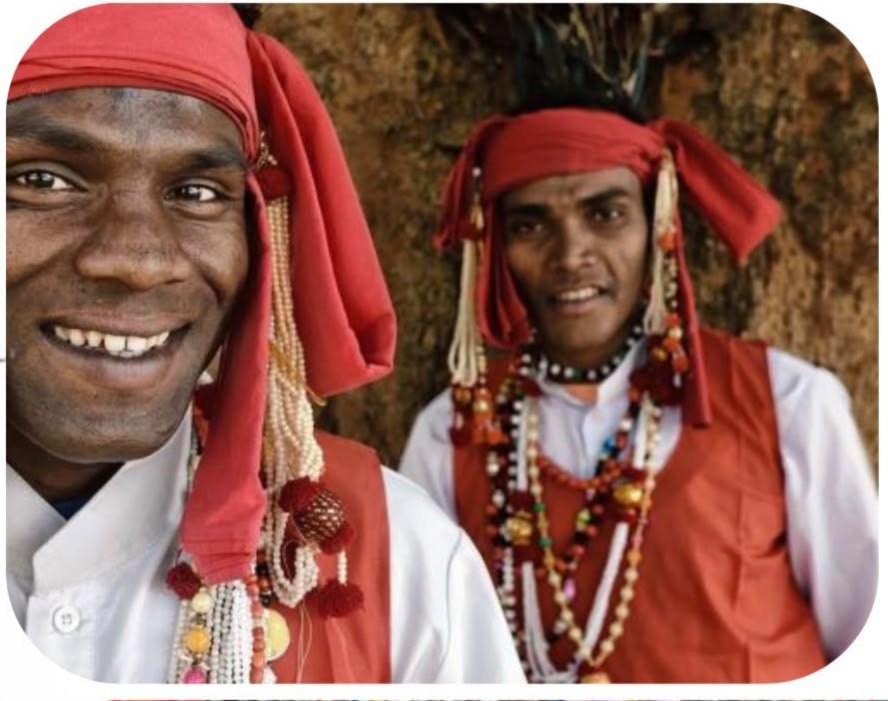
Jagdalpur, November 2026: A comprehensive roadmap of development and welfare schemes has been prepared to transform the Bastar Division of Chhattisgarh into a model tribal region. Of the total proposed action plan worth ₹187.43 crore for the overall development of the division’s seven districts — Bastar, Kanker, Kondagaon, Narayanpur, Dantewada, Bijapur and Sukma — projects worth ₹126.55 crore have already received approval. The primary objective of this initiative is to improve the living standards of the region’s tribal population, which accounts for 66.95 per cent of its total population, or more than 20.69 lakh people, while preserving its rich cultural identity.
Expansion of Basic Infrastructure and Strengthening of Forest Rights
As part of efforts to expand basic facilities and strengthen forest rights, the Public Accounts Committee has approved a ₹435 crore project to connect 461 villages in the Bastar Division to on-grid electricity. The first phase, for the financial year 2026–27, will involve an allocation of ₹85 crore.
In addition, ₹16 crore has been approved and transferred to the state for implementing Community Forest Resource Management Plans in 160 villages across the division. A further ₹1.65 crore has been released for recognising habitat rights of the Abujhmadia community, a Particularly Vulnerable Tribal Group (PVTG) residing in the Bastar-Narayanpur region.
Focus on Healthcare and Education
Concrete steps are also being taken in healthcare and education. An amount of ₹7.15 crore has been sanctioned for setting up community-managed crèches in malnutrition-affected PVTG areas to provide care for children aged between six months and three years.
Plans are also underway to establish a Centre of Competence for sickle cell disease at the Jagdalpur Medical College at a cost of ₹5 crore. In collaboration with the Indian Council of Medical Research – National Institute of Health Research, a mission to eliminate malaria and tuberculosis is also planned.
In the education sector, a proposal worth ₹6.75 crore has received in-principle approval for developing multilingual educational materials in local tribal languages such as Gondi, Halbi, Bhatri, Dhurvi and Dorli for primary schools and Balwadis. Additionally, a proposal of ₹1 crore has been put forward under the ULLAS programme to provide digital and financial literacy to adults.
Boost to Local Livelihoods and Entrepreneurship
Forest-produce and agriculture-based clusters are being developed to promote local livelihoods and entrepreneurship. These include a tamarind processing cluster in Bastar and Narayanpur at a cost of ₹2.50 crore; a mahua cluster in Bijapur and Bastar, also worth ₹2.50 crore; and a mango and Chhind-palm toddy jaggery cluster in Sukma, along with a chironji cluster in Bijapur, at a combined cost of ₹3.20 crore.
Besides these initiatives, ₹5 crore has been proposed for a TRI-FOOD Park in Jagdalpur. Another ₹3 crore has been earmarked for clusters promoting Dhokra, bamboo, wood and terracotta crafts. A further ₹5 crore has been proposed to promote eco-tourism and homestays along the Jagdalpur-Chitrakote-Kanger Valley corridor.
Under the Tribal Entrepreneurship Promotion Programme, with an allocation of ₹4.58 crore, seed funding of ₹75,000 each will be provided to 144 enterprises to encourage tribal youth to become entrepreneurs. IIM Calcutta is also extending support for startup incubation under the initiative.
Preservation of Cultural Heritage
As part of efforts to preserve cultural heritage, ₹10 crore has been sanctioned for GIS mapping and restoration of Devgudis — centres of tribal faith — and sacred groves. Mapping of 22 such sites in Bastar district has already begun.
A proposal worth ₹1 crore has been prepared to include the world-famous Bastar Dussehra in the National List of Intangible Cultural Heritage and pursue its nomination for UNESCO recognition.
Preparations are also underway to secure Geographical Indication (GI) tags for 10 tribal products, including Dhokra craft, Bastar Pata textiles, Aal-dyed fabrics and Chapda (red ant chutney), at a cost of ₹20 lakh. The plan also includes setting up mini-museums in six Eklavya Model Residential Schools at a cost of ₹6 crore.
Through the strengthening of the Badal Academy, the initiative aims to take Bastar’s art, culture and pride to new heights.