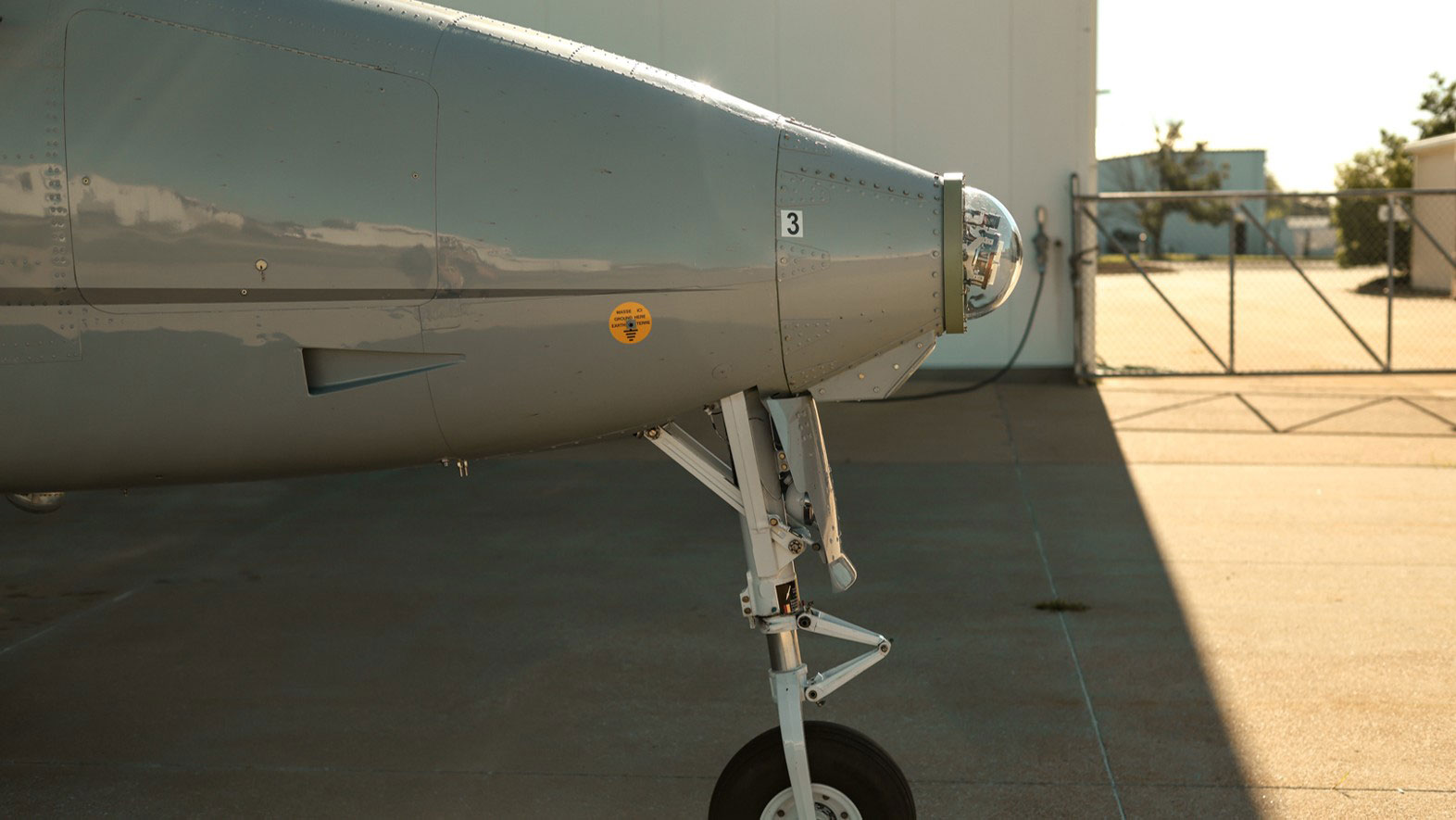
New Mexico, August 2026: Boeing is advancing development of its Ultra-Low-Cost Seeker (ULCS) through a series of testing milestones aimed at creating an affordable radar seeker for a range of offensive and defensive weapon programmes.
The Boeing team has successfully tested the ULCS sensor design in an anechoic chamber to minimise signal reflections, conducted captive-carry trials and demonstrated the technology during high-speed flight on a scaled-down rocket.
ULCS represents a new approach to seeker architecture, manufacturing and affordability. The technology is designed to significantly reduce the per-unit cost of seekers while enabling precision munitions to be produced and deployed at scale across multiple programmes.
Modular Design for High-Volume Production
In line with the Department of War’s priorities, ULCS incorporates a modular open-systems design intended to support rapid integration, production and future upgrades.
Boeing is evaluating the seeker technology for potential applications across its integrated air and missile defence, direct-attack and cruise missile portfolios.
Earlier in June 2026, Boeing completed multiple ULCS test events, ranging from captive-carry trials aboard a passenger aircraft to representative-environment testing.
A Beechcraft 1900 aircraft carried the ULCS over both land and maritime environments to verify baseline target detection and tracking capabilities. At Spaceport America in New Mexico, the system tracked an unmanned aerial vehicle from the ground and was subsequently mounted on a surrogate rocket to track a reflector-equipped drone.
According to Boeing, ULCS successfully withstood acceleration and vibration during the trials while detecting and tracking designated targets.
Commercial Technology Adapted for Military Use
The system incorporates commercial off-the-shelf components that Boeing has adapted for military applications. Rapid prototyping and testing demonstrated that the seeker could withstand demanding conditions associated with powered flight and high acceleration.
The ULCS is intended to support affordable, high-volume deployment for air, land and maritime strike missions, including operations in adverse weather and against moving targets.
Boeing is drawing on decades of experience in seeker development and production. The company said ULCS benefits from expertise gained through programmes such as the PAC-3 MSE, while offering a different seeker capability intended to provide lower-cost solutions for a wider range of defensive and offensive systems.
Bob Ciesla, Vice President of Boeing Precision Engagement Systems, said the company was developing ULCS with the objective of using a common sensor architecture across multiple programmes.
“We are developing ULCS with the goal of sharing a common sensor architecture across several of our programs. It is modular, producible and built with Weapons Open Systems Architecture to speed integration and future changes,” Ciesla said.
Steve Wright, Boeing Senior Manager for Weapon Sensors and Advanced Guidance, said additional development work remained, but the testing had demonstrated the viability of the technology.
He said the results could change how Boeing approaches seeker affordability across its weapons portfolio.
Further Flight Testing Planned for 2027
Following the initial testing campaign, Boeing teams are analysing the data and incorporating lessons learned into further development. Multiple flight tests are planned for 2027, with those trials expected to more closely replicate operational configurations.
The ULCS initiative comes as Boeing is simultaneously expanding production of established seeker technologies for US and allied missile-defence systems.
Boeing Expands PAC-3 Seeker Production
On April 1, 2026, Boeing and the US Department of War agreed to a seven-year framework aimed at tripling PAC-3 seeker production to meet growing global demand for air and missile defence capabilities.
The initiative forms part of the broader Arsenal of Freedom effort to strengthen the US defence industrial base and expand production capacity.
Boeing-built seekers enable US and allied PAC-3 interceptors to identify, track and engage advanced threats, including hostile aircraft, ballistic and cruise missiles and hypersonic threats.
The framework is designed to significantly increase the availability of seekers required to expand the protection provided by the PAC-3 air-defence system.
Boeing has invested more than $200 million since 2024 to expand PAC-3 seeker production capacity in Huntsville, Alabama. The investment includes a new 35,000-square-foot facility expansion and is expected to support further growth across the production network.
Steve Parker, President and CEO of Boeing Defense, Space & Security, said investments in people, facilities and production capabilities were being made to address the evolving security requirements of the United States and its allies.
Focus on Manufacturing, Workforce and Supply Chains
Boeing's Arsenal of Freedom investments are focused on three major areas: modernising manufacturing, developing the workforce and strengthening the domestic supply chain.
The company has invested more than $200 million since 2024 to upgrade and expand its Huntsville operations. The programme also supports the expansion of a highly skilled workforce through specialised jobs and partnerships with local communities.
Boeing said the framework would facilitate further investments throughout the production value chain while supporting a Made in America approach and greater reliance on domestic suppliers.
The company believes strengthening domestic production and supply networks will improve resilience and provide greater certainty as demand for advanced missile-defence technologies increases.
The development of ULCS, alongside the expansion of PAC-3 seeker production, reflects Boeing's broader effort to combine advanced technology, modular design and high-volume manufacturing to meet the evolving requirements of modern defence systems.
Team Maverick.