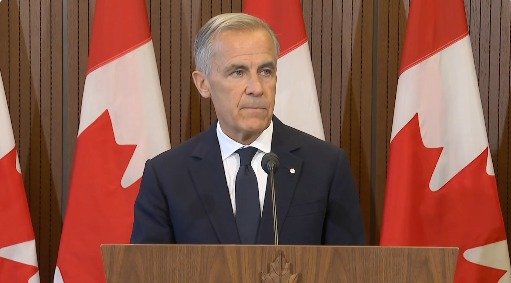
Ottawa, Aug 2026 : Canadian Prime Minister Mark Carney has announced retaliatory tariffs against the United States after negotiations between the two longtime allies collapsed, accusing Washington of putting forward an unacceptable and economically damaging trade proposal.
The breakdown in talks on Friday triggered the implementation of new US tariffs of up to 50 per cent on a range of Canadian products. The measures affect goods worth about $20 billion, representing roughly 5.5 per cent of Canada’s exports to the United States. Products covered by the new duties include items ranging from hockey sticks and cement to other manufactured and industrial goods.
Announcing Canada’s response on Saturday, Carney said the country had been effectively attacked economically and would therefore respond accordingly.
“You're at war when you get attacked. We got attacked,” he said, underlining the seriousness with which Ottawa views the latest escalation.
US President Donald Trump had earlier expressed optimism that Washington and Ottawa could still reach an agreement, pointing to what he described as his good relationship with Carney. However, the Canadian Prime Minister said the terms proposed by the US administration in the final stages of negotiations were unacceptable.
“In recent days, the United States proposed new terms that were uneconomic, unfair and undermined the net benefits for Canada,” Carney said. He added that the proposals also raised questions about the reliability of any future agreement.
“We cannot accept what they've offered, and we will not give what they've asked,” he said.
Canada’s new retaliatory tariffs will particularly target American steel and dairy products and are scheduled to take effect on September 8. Carney said Ottawa would provide further details on the measures next week.
US Trade Representative Jamieson Greer, however, placed the responsibility for the collapse of negotiations on Canada. Speaking to Fox News, Greer said Washington was moving ahead with measures responding to Canadian retaliation and indicated that no fresh negotiations with Canadian officials had been scheduled.
Economic Pressure Mounts
The dispute comes as Canada continues to seek relief from US tariffs on automobiles, steel and aluminium. Ottawa has warned that the measures have contributed to economic pressure, job losses and disruption across industries on both sides of the border.
The White House has accused Canada of discriminatory treatment of American alcohol, automobile and dairy products as justification for some of its trade measures. The latest tariffs had initially been scheduled to take effect earlier in the week, but Trump granted a three-day extension after citing progress in negotiations.
Carney said the discussions ultimately failed after US negotiators introduced additional demands at the last moment. Among them, he said, were restrictions affecting Canada’s trade agreements with other countries.
He also accused Washington of making unacceptable demands concerning French-language protections and Quebec’s cultural interests, issues that are particularly sensitive in Canada’s predominantly French-speaking province.
The escalating dispute has triggered criticism within the United States as well. Democratic lawmakers and governors from several northern border states have warned that higher tariffs could increase costs for American consumers and businesses while disrupting supply chains.
New York Governor Kathy Hochul criticised the administration, arguing that the trade confrontation was unnecessarily raising prices for American families.
The latest dispute also complicates negotiations over the future of the United States-Mexico-Canada Agreement (USMCA), the North American trade framework that replaced NAFTA.
Relations have been further strained by Trump’s repeated suggestions that Canada could become the 51st US state. Carney has said such remarks, along with the trade measures, have permanently changed Ottawa’s approach to Washington.
Canada currently sends roughly 70 per cent of its exports to the United States, making the American market central to its economy. Carney said Ottawa now needs to reduce that dependence and strengthen economic relationships with other countries.
“We've been under no illusions. We recognized from the start that America has changed,” he said, adding that Canada must recognise that Washington’s commitments cannot always be relied upon.
Carney has since held discussions with provincial leaders on the government’s next steps. Ontario Premier Doug Ford called for national unity, while sharply criticising Trump’s approach.
Meanwhile, the US Business Roundtable, representing around 200 major American companies, warned that the new tariffs could increase costs for US businesses and households. The group urged Washington and Ottawa to return to negotiations and seek a resolution to the growing trade conflict.
(Disclaimer :The content of this article is sourced from a news agency and has not been edited by the Mavericknews30 team.)