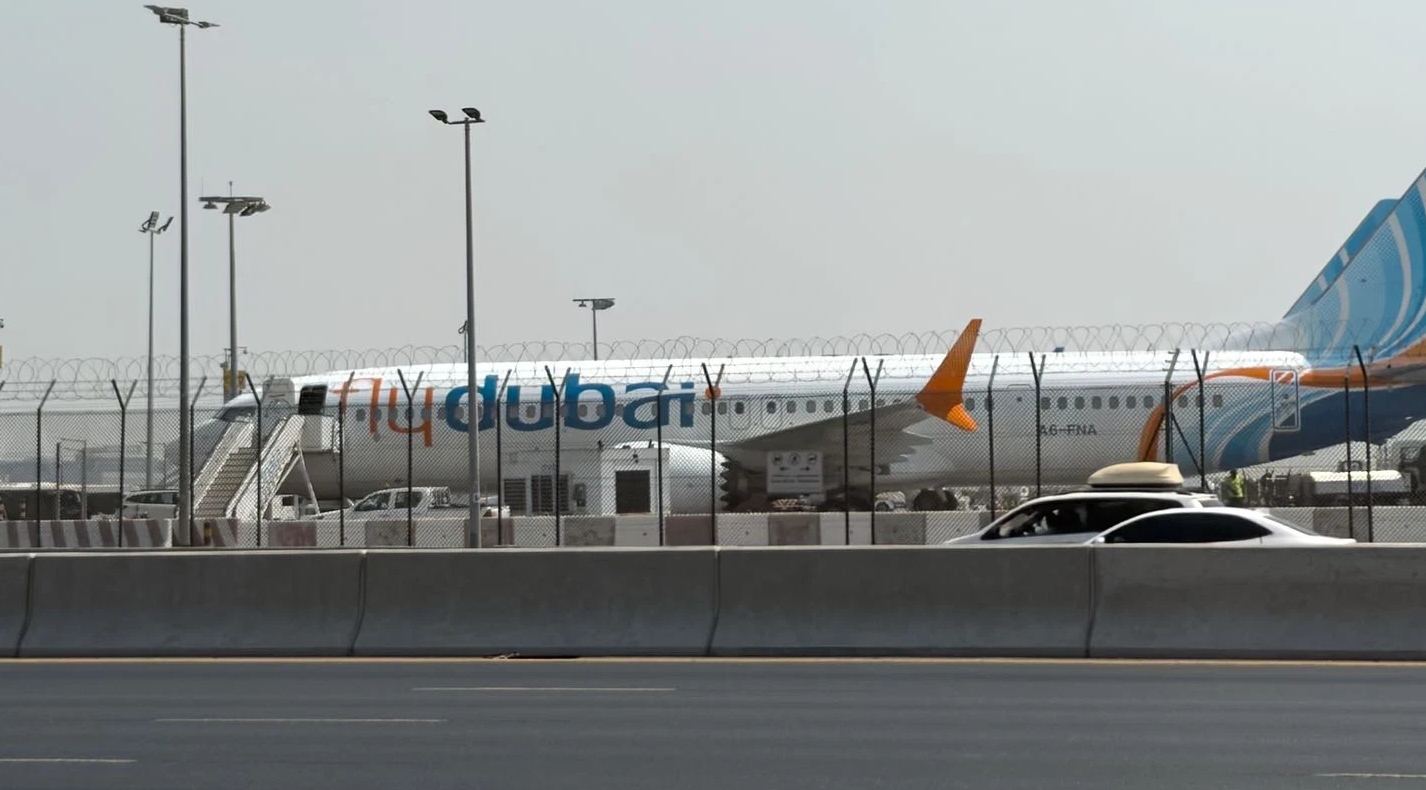
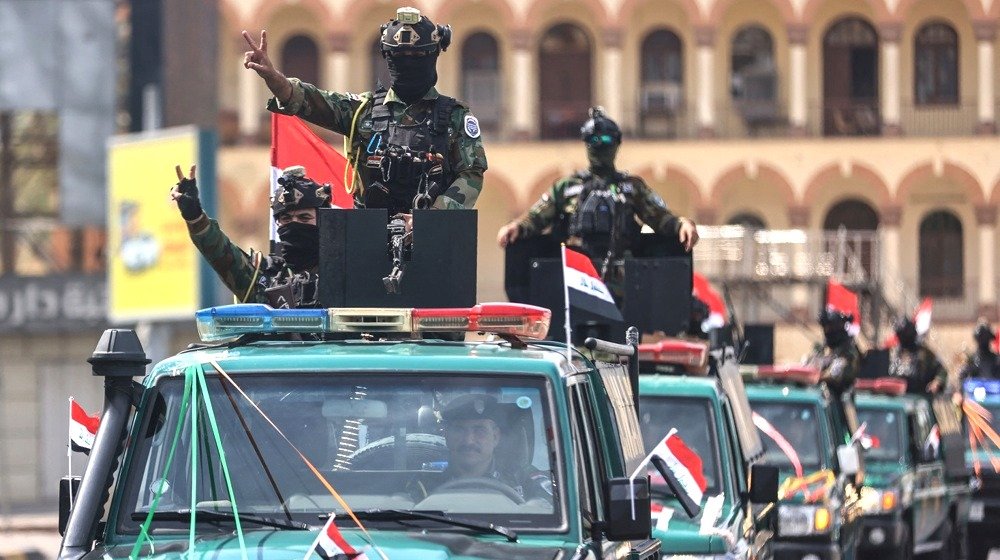
Baghdad; September 2026: First it was the dictatorship of Saddam Hussain in 2003 that had enticed the US government to perpetuate Iraq, and topple the ruthless dictator. That ended in 2011; but again, the rising extremism of the Daesh had compelled the Iraqi regime to allow the United States mitigate the terror acts.
Most importantly – the US force were not alone in the crusade against evils; the Italian forces had joined the salvo in curbing the Daeshi menace.However, today (Wednesday – 30th September 2026) the combined forces have left the Iraqi soil under an agreement between Iraq and the US to end the US-led military occupation.
Iraqi Prime Minister Ali al-Zaidi, who presided over the handover ceremony, described the withdrawal as the beginning of “a new phase” defined by Iraq’s sovereignty, stronger state institutions and “balanced partnerships with its friends”.
Iraqi National Security Adviser Qasim al-Araji described the end of the US-led coalition mission as “an important milestone,” saying it would “solidify sovereignty” and serve Iraq’s national interests and the aspirations of its people. He also credited Iraqi armed forces and resistance groups and the sacrifices of Iraqi people with defeating the Daesh terrorist group.
A Pentagon official said that while the US is ending official military operations, it will maintain regional capabilities such as intelligence, surveillance, and reconnaissance that can be utilized in the Arab country.
Jomaa al-Atwani, head of the “Ufuq” research centre in Iraq, said that the Americans are not friends of Iraq but rather a burden on the country, adding that Daesh was essentially an international conspiracy aimed at paving the way for the US return to the region. The final withdrawal came after US forces had already left most bases in Iraq, with a smaller contingent remaining at the Erbil facility.
Iraqi resistance movement Asa'ib Ahl al-Haq welcomed the end of the US military presence and said Iraq now needs to strengthen its own defense capabilities, particularly by obtaining advanced air-defense systems.
The movement said advanced air defences are necessary to protect Iraq and called for the withdrawal of Turkish forces from Iraqi territory. The movement emphasised the need to strengthen national unity, as well as country’s military and security capabilities. Iraq has also been pursuing new air-defense systems, with military spokesman Sabah al-Numan saying earlier this month that contracts had been finalized with suppliers from South Korea and Turkey. Al-Numan said the systems would be deployed across Iraq to protect vital infrastructure and national sovereignty.
As the US completed its 23rd year of occupations, the fellow Italians have completed the withdrawal of its final military contingent from Iraq, bringing an end to its 12-year military deployment in the Arab country, according to an official defense ministry statement.
The development, announced on Tuesday, comes after Rome had already withdrawn most of its personnel from Iraq by March 2026, following an overnight airstrike that targeted a military base in the semi-autonomous Kurdistan region. Italian forces were part of the US-led coalition purportedly formed to fight the Takfiri Daesh terrorist group, as well as the NATO Mission Iraq (NMI). Their role involved non-combat advisory and capacity-building activities.
Italian Defense Minister Guido Crosetto said the withdrawal marked a shift towards Iraq taking "greater responsibility" for its own security. Two Italian Carabinieri officers will continue their deployment in Iraq as part of the European Union’s EUAM Iraq mission.
A Deep Insight –
What the US war machine presented as a mission to liberate Iraq from the Ba’athist dictatorship more than two decades ago and eliminate the so-called “weapons of mass destruction” became a case study in imperial overreach, leaving behind a shattered country, millions dead, and a region destabilized for generations.
The US-led coalition military presence in the Arab country started in early 2003, before they were forced to leave in 2011. However, three years later, in 2014, they returned as part of the so-called international campaign against the Daesh terrorist group.
The brutal invasion launched on March 20, 2003, fundamentally rested on a false premise: that the Saddam Hussein-led regime possessed weapons of mass destruction and posed an imminent threat to global security. The George W. Bush administration presented it as a central reason for US military intervention in the Arab country.
This claim, promoted by the Bush administration with theatrical certainty – including Secretary of State Colin Powell's infamous presentation to the United Nations – was proven to be a hoax. No stockpiles of chemical or biological weapons were found. No active nuclear program was discovered.
The Iraq Survey Group concluded that Iraq had destroyed its undeclared chemical weapons stockpile in 1991 and found no credible evidence that it had resumed production of chemical weapons afterward. The post-war findings fundamentally undermined the intelligence assessments on which the WMD case had been built in the first place.
Saddam was a brutal dictator who had committed horrendous crimes against his own people and against neighbouring countries, including Iran during the devastating 1980-1988 war in which he used chemical weapons with Western complicity. The repression of Kurdish and Shi'a communities in Iraq was also one of the crimes he was proud of.
But the US military invasion was illegal, launched without UN Security Council authorization, and based on intelligence that was either fabricated or deliberately distorted. The US appointed itself judge, jury, and executioner, and ended up replacing one tyranny with a chaos far worse. Acknowledging Saddam's crimes does not mean the US war machine had the right to impose itself on the Iraqi people and replace Saddam’s regime through prolonged military occupation.
The cost of the US military invasion in human lives is staggering and unforgivable. During the 2003-2011 occupation alone, conservative estimates place Iraqi civilian killings at over 110,000, with some credible studies suggesting figures exceeding 650,000 from US military violence, while acknowledging that these figures represent only a fraction of the true toll.
Taken together, more than half a million Iraqi civilians were killed during this period. The United Nations estimated that 1.75 million Iraqis became refugees, either fleeing abroad or displaced within their own country. However, other independent studies have put the figure much higher. Brown University's Costs of War project estimated that the wars in Iraq and Syria from 2003 to 2023 incurred the financial cost of approximately $2.89 trillion.
These figures represent only the direct casualties of war. They do not account for the wounded, the orphaned, the widowed, or the millions whose lives were shattered by the destruction of Iraq's infrastructure, healthcare system, and social fabric due to US military invasion. They do not count the children who grew up without parents, the families who lost everything, or the generation of Iraqis whose futures were stolen by a war they never asked for.
The US record in Iraq is stained with the most horrendous war crimes that remain largely unaccounted for. The Abu Ghraib torture scandal exposed the systemic abuse of Iraqi and foreign detainees – physical beatings, sexual humiliation, psychological torture, and worse – yet accountability never reached senior officers and policymakers also escaped justice.
International human rights organizations documented unlawful killings and excessive or indiscriminate force against detainees. The abuses could not simply be dismissed as isolated misconduct by a handful of US soldiers. The ruthless interrogation and detention policies helped create the conditions in which abuse occurred and flourished.
The use of white phosphorus, depleted uranium, and cluster bombs in civilian areas caused lasting health and environmental damage, with birth defects and cancer rates skyrocketing in affected regions. The attacks on Fallujah in 2004 involved deliberate targeting of civilians and denial of access to hospitals for the wounded, leaving hundreds dead and the city in ruins.
Tens of thousands of Iraqis disappeared into detention facilities, many never to be seen again, their fates buried in secret graves or anonymous morgues. The Haditha massacre in 2005, in which US Marines killed 24 unarmed civilians, including women and children, was initially covered up before emerging as one of the most documented atrocities of the disastrous war.The list of crimes is too long to enumerate fully, but each represents a life destroyed, a family shattered, a community traumatised.
Perhaps the most damning indictment of the US occupation in Iraq was its role in creating the very threat it later claimed to fight. Before the invasion, Iraq had never experienced an insurgency of any significance. The US occupation changed this fundamentally.
The so-called Coalition Provisional Authority's decision to disband the Iraqi army and pursue de-Ba’athification left hundreds of thousands of soldiers unemployed, humiliated, and available for recruitment by extremist groups. The result was not simply the removal of Saddam, but the wanton destruction and reconstruction of the Iraqi state under foreign occupation, amid widespread insecurity, insurgency, violence and institutional collapse.
When US occupation forces initially withdrew in 2011, they left behind a hollow Iraqi military that collapsed rapidly when Daesh swept across the country in 2014, capturing Mosul and declaring a so-called caliphate.
Ironically, the United States returned in 2014, claiming to fight the very monster its occupation had helped create, prolonging its presence and perpetuating the cycle of violence. It is difficult to understand the rise of Daesh without understanding the environment produced by the American invasion, occupation, insurgency, polarization and collapse of Iraqi institutions.
As per many observers, the creation and rise of the Daesh terrorist group after the withdrawal of the US-led coalition forces in 2011 provided a pretext for them to return, which indicates that there was more to it than meets the eye. The CIA had a direct role in the creation of Daesh.
However, the turning point came on January 3, 2020, when a US drone strike assassinated General Qassem Soleimani, Iran's top anti-terror commander, and Abu Mahdi al-Muhandis, deputy commander of Iraq's Popular Mobilization Forces, as their convoy left Baghdad airport.
The terrorist strike was a gross violation of Iraqi sovereignty, conducted without Iraqi permission. Prime Minister Adil Abdul Mahdi stated that his government had denied Washington authorization for the attack, yet it proceeded anyway – an act of war against a sovereign nation that has been occupied for years.
The response was swift and unequivocal. On January 5, 2020, Iraq's parliament passed a resolution calling for the expulsion of all foreign troops from Iraqi soil and the cancellation of the request for military assistance from the US-led coalition. The resolution was supported by approximately 180 lawmakers, which was politically significant, although not legally binding.
At the time, Muqtada al-Sadr, the influential politician and cleric, called the parliamentary move insufficient and demanded that the US embassy be shut down and American troops expelled in a humiliating manner. His demand reflected the mood in the country.
For years afterward, Iraqi MPs, the Iraqi people, and resistance movements repeatedly demanded the implementation of this resolution. The delay reflected the complex political and security dynamics at play, but the demand never faded. Finally, in 2024, Iraq and the US agreed on a timetable, setting September 30, 2026, as the date for completing the coalition's military mission.
Team Maverick.