New Delhi, Oct 2026 : The Defence Research and Development Organisation (DRDO) has successfully conducted the flight trial of its indigenously developed High-Altitude Platform System (HAPS), reaching an altitude of 21 km and demonstrating its capability for long-endurance flight in the stratosphere.
The milestone is expected to strengthen India’s surveillance, communications and aerospace capabilities and represents another step towards achieving self-reliance in advanced aerospace technologies under the Aatmanirbhar Bharat initiative.
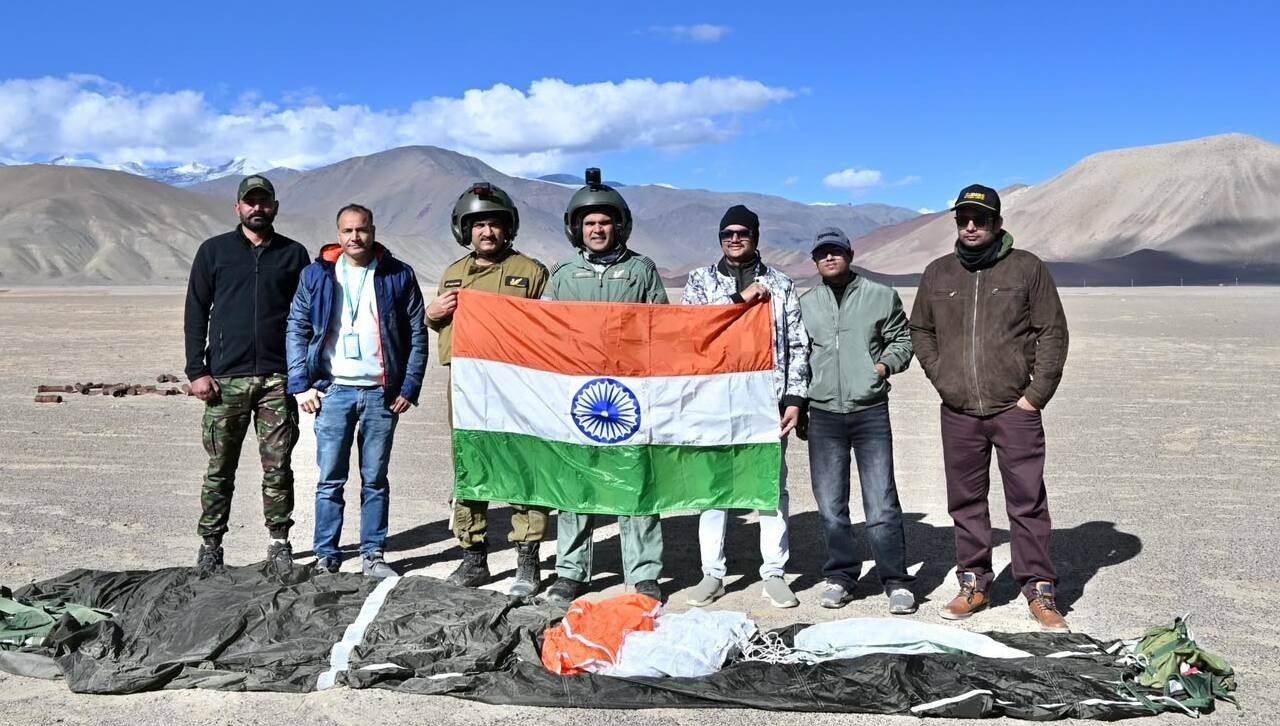
According to the Ministry of Defence, the experimental flight reached 21 km above mean sea level (AMSL) and remained at an altitude of around 20 km for more than 30 minutes before being commanded to descend. The platform was subsequently recovered safely, while flight performance data collected during the mission was analysed.
The trial demonstrated the system’s ability to operate in the stratosphere, a region that offers significant advantages for persistent surveillance, communications and monitoring missions. During the flight, real-time video as well as vehicle performance data was continuously transmitted from the airborne platform to the ground control station.
The platform carried several instrumentation and control systems during the mission. These included an inertial measurement unit, GPS receiver, onboard cameras and altitude-control mechanisms, along with other subsystems. According to the ministry, the systems functioned as intended throughout the flight.
The successful demonstration involved coordination among several defence and civil aviation agencies. The Indian Air Force (IAF), Centre for Military Airworthiness and Certification (CEMILAC), Directorate General of Civil Aviation (DGCA), Airports Authority of India (AAI) and other civil authorities contributed to the conduct of the trial.
The HAPS is being designed and developed by the Aerial Delivery Research and Development Establishment (ADRDE), Agra, a DRDO laboratory.
The system is a lighter-than-air aerial platform designed to remain in the stratosphere for extended periods. Its long-endurance capability is intended to support a range of applications, including persistent surveillance, monitoring and communications.
The latest trial marks an important demonstration of the platform’s ability to reach and sustain operations at high altitude, providing valuable data for further development and refinement of the system.
Defence Minister Rajnath Singh congratulated DRDO, the Indian Air Force, public sector undertakings and industry partners involved in the programme.
Singh described the successful flight trial as an important milestone in India’s pursuit of self-reliance in advanced aerospace technologies. He also highlighted the significance of developing a long-endurance stratospheric airship as part of the country’s efforts to strengthen indigenous aerospace capabilities.
The successful HAPS flight is expected to provide further impetus to the development of high-altitude, long-duration platforms for strategic and surveillance applications.