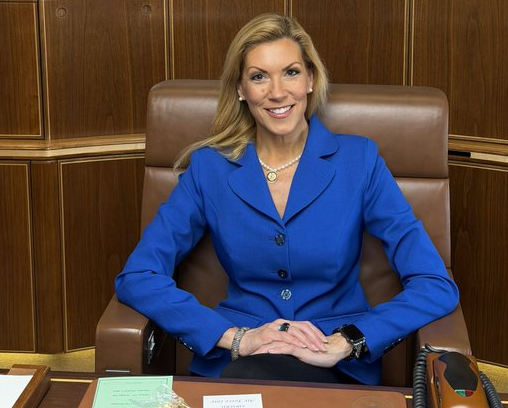
Washington, Oct 2026 : Republican US Representative Beth Van Duyne has introduced legislation seeking to significantly increase penalties for serious violations of the H-1B visa programme, including raising maximum fines to as much as $250,000 and extending certain employer bans on H-1B sponsorship to at least 10 years.
Van Duyne, who represents Texas, announced the H-1B Visa Fraud Crackdown Act, H.R. 10643, on Monday, arguing that existing penalties do not provide a sufficient deterrent against employers who misuse the visa programme.
The legislation is co-sponsored by Republican Representatives Brian Babin, Pat Fallon, Brandon Gill, Keith Self and Pete Sessions, all of Texas.
Van Duyne said employers should face substantially greater consequences when they deliberately violate H-1B rules at the expense of American workers.
“When a business can lie to the government and push American workers aside for cheaper labor, and the worst it faces is a $5,000 fine, many view that as the cost of doing business,” she said.
“The H-1B Visa Fraud Crackdown Act changes the penalties. American jobs should go to American workers, and fraudsters should face real accountability for their actions,” she added.
Under the proposed legislation, the maximum civil penalty for covered willful H-1B violations would increase from the current $5,000 to $100,000. According to Van Duyne’s office, such violations could include misrepresenting the job being performed by an H-1B worker or paying the worker less than required.
The legislation proposes an even steeper increase for violations involving the willful displacement of US workers. The maximum civil penalty in such cases would rise from $35,000 to $250,000.
The proposed changes are contained in the two-page bill introduced in the House of Representatives.
The measure would also impose longer restrictions on employers found responsible for serious willful violations. The minimum period during which such employers could be barred from sponsoring H-1B workers would increase from two years to five years.
In cases where the violations also involve the displacement of US workers, the minimum sponsorship ban would rise from three years to 10 years.
The bill separately proposes higher penalties for immigration document fraud. For covered violations, the existing penalties ranging from $250 to $2,000 per document would increase to between $1,000 and $10,000.
Where a violation occurs after a previous order, the proposed penalty would rise from the current range of $2,000 to $5,000 to between $20,000 and $50,000 per document.
Van Duyne linked the proposed legislation to allegations of H-1B fraud in North Texas. Her office said Homeland Security Secretary Mullin had confirmed that, as of June, nearly 60 per cent of H-1B employer fraud investigations nationwide were concentrated in the North Texas region.
Her office further said Labor Department Inspector General D’Esposito visited North Texas in August and identified nearly 500 instances of suspected H-1B visa fraud in a single building. It claimed that no one answered the door at some addresses where H-1B applications had been approved.
The figures cited by Van Duyne’s office are not contained in the text of the proposed legislation.
Van Duyne welcomed the administration’s response to the alleged violations and reiterated her argument that companies should not be able to gain an economic advantage by breaking immigration and labour rules.
“American workers should not lose opportunities because an employer is willing to break the law to get cheaper labor,” she said.
The legislation remains a proposal and has not become law. If enacted, it would need to pass both the House of Representatives and Senate before being signed by President Donald Trump. Only after completing that legislative process would the proposed higher penalties and longer sponsorship restrictions take effect.
(Disclaimer :The content of this article is sourced from a news agency and has not been edited by the Mavericknews30 team.)