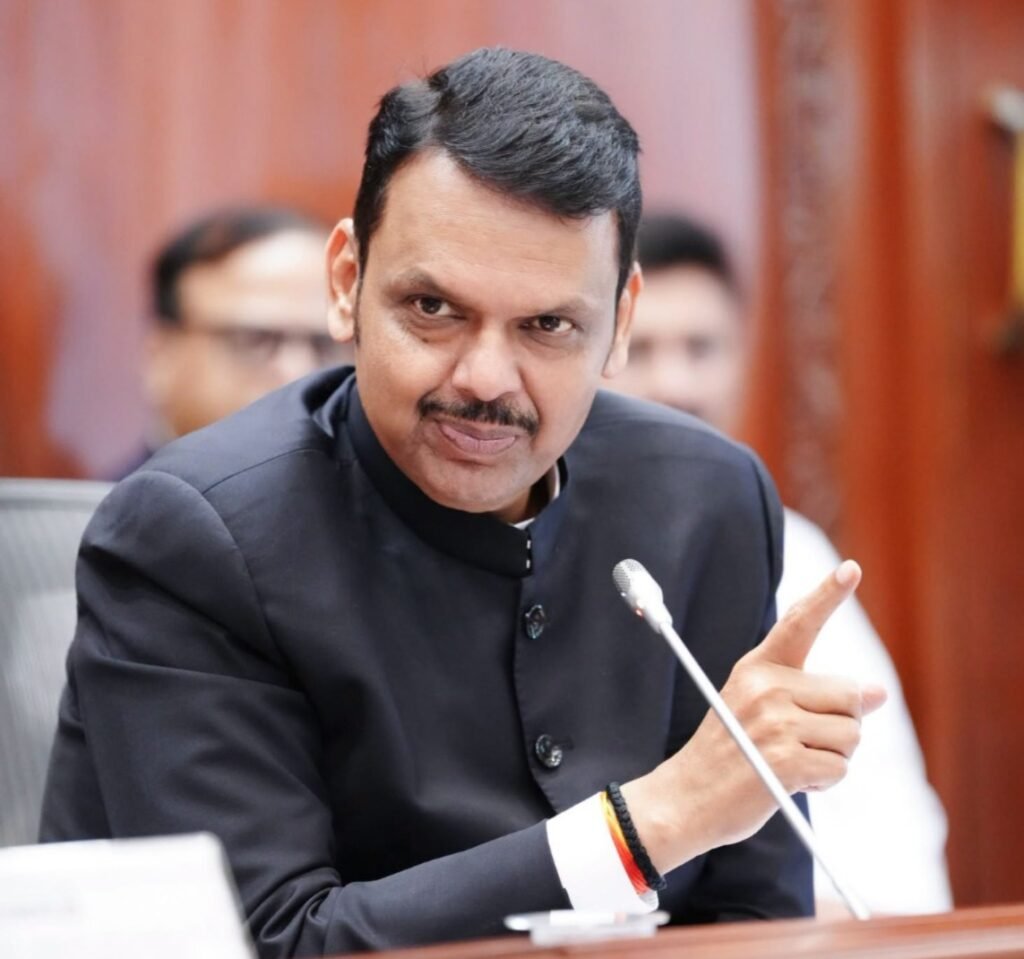
Mumbai, Nov 2026 : Maharashtra Chief Minister Devendra Fadnavis has opposed the proposed transfer of international flights from Mumbai airport to the upcoming Navi Mumbai International Airport from next summer, maintaining that flights should not be shifted out of the city. Instead, he has proposed a phased redevelopment of Mumbai airport's Terminal 1 (T1) to ensure uninterrupted operations while the existing facility is replaced.
Fadnavis said he had written to the airport operator recommending that a new section, Terminal 1B, be developed first. Once the facility is ready, operations currently handled by Terminal 1A could be transferred to it, allowing the existing structure to be demolished without shutting down the entire terminal in advance.
"I have written to them to first develop Terminal 1B, shift 1A to 1B and then take down the existing 1A terminal," Fadnavis said on Tuesday.
The Chief Minister's proposal seeks to avoid a prolonged reduction in Mumbai airport's capacity during the redevelopment process. It also challenges the airport operator's plan to move some international services to Navi Mumbai to accommodate domestic passengers affected by the proposed reconstruction of Terminal 1.
Sources indicated that Fadnavis would need to take up the matter with the Union Civil Aviation Ministry, which is examining the airport operator's proposal to reduce capacity at Mumbai airport during the redevelopment period.
The Airports Authority of India (AAI), a central government entity, holds a 26 per cent stake in Mumbai airport, while the remaining 74 per cent is owned by Adani Airport Holdings Ltd (AAHL).
Proposed Shift of International Flights to Navi Mumbai
The proposed transfer of international flights from Mumbai to Navi Mumbai has drawn objections from airlines, which have raised concerns over the impact on passengers, connectivity and airport operations.
Mumbai International Airport Ltd (MIAL) informed airlines last month that it planned to reduce international operations at Terminal 2 (T2) by approximately one-third from the Summer 2027 schedule, which begins in late March.
The proposed reduction is intended to create space for around five million passengers per annum (MPPA) of domestic traffic that would be displaced during the first phase of Terminal 1 redevelopment.
Last week, Adani Airport Holdings Ltd informed the Union Civil Aviation Ministry of its plan to shift flights connecting Mumbai with 14 international destinations to Navi Mumbai from next summer.
The destinations identified in the proposal include Bahrain, Dammam, Dhaka, Doha, Fujairah, Jakarta, Jeddah, Kathmandu, Kuwait City, Madinah, Muscat, Ras Al Khaimah, Riyadh and Sharjah.
The proposed list covers important international routes connecting Mumbai with destinations in the Gulf region, South Asia and Southeast Asia.
MIAL has also informed airlines that it would not be able to accommodate their requested slots for the Summer 2027 schedule. According to the airport operator, a temporary reduction in operations at Terminal 2 would be necessary to manage the passenger traffic affected by the redevelopment of Terminal 1.
The plan has prompted concerns among airlines about the availability of slots and the potential disruption to established international services from Mumbai.
Airlines Raise Concerns Over Airport Capacity
The International Air Transport Association (IATA), which represents airlines globally, has urged the Union Civil Aviation Ministry to consider an alternative approach to the redevelopment of Terminal 1.
IATA has recommended that the terminal be reconstructed in phases, with different sections demolished and rebuilt sequentially. Such an arrangement, according to the industry's proposal, could help avoid a substantial reduction in Mumbai airport's overall passenger-handling capacity.
Airline representatives have expressed concern that shutting down the existing Terminal 1 completely before its replacement is ready could create a significant capacity shortage for three years or more.
The proposed redevelopment is particularly important because Mumbai is one of India's major aviation hubs, handling substantial domestic and international passenger traffic. Any significant reduction in its operational capacity could affect airline schedules, passenger movement and the availability of airport slots.
The airlines' concerns have centred on the need to maintain adequate capacity during construction rather than shifting a large number of existing services to another airport.
Fadnavis's proposal for developing Terminal 1B before demolishing Terminal 1A is broadly aimed at addressing this concern by keeping operations running during the redevelopment process.
Mumbai Airport Terminal 1 Redevelopment Timeline
The existing Terminal 1 handles approximately 15 million passengers annually. Under the current redevelopment plan, the entire terminal is scheduled to be demolished by March 2028, with reconstruction planned thereafter.
The replacement terminal is expected to be ready by December 2030.
This timeline has raised questions about how the airport will accommodate the passenger traffic currently handled by Terminal 1 during the construction period.
The airport operator's proposal involves adjusting operations at Terminal 2 and shifting selected international flights to Navi Mumbai to make room for domestic passengers displaced by the closure of Terminal 1.
However, airline sources have argued that a complete shutdown could leave Mumbai airport facing a capacity gap for an extended period. They have called for a construction strategy that allows sections of the existing terminal to remain operational until replacement facilities are available.
The phased approach recommended by IATA would involve taking up redevelopment in stages rather than closing the entire terminal at once.
Fadnavis Seeks Continuity of Operations
Fadnavis's intervention has brought the redevelopment strategy and proposed flight transfers into focus. His position is that Mumbai should continue to retain its existing international flight operations and that the airport operator should explore alternatives to relocating services to Navi Mumbai.
Under his suggested arrangement, Terminal 1B would be constructed first. Once it becomes operational, passengers and services using Terminal 1A could be shifted to the new facility. The existing Terminal 1A structure could then be demolished and reconstructed without requiring the entire terminal to remain closed before replacement capacity is created.
The proposal is intended to reduce disruption for airlines and passengers while allowing the airport's infrastructure expansion to proceed.
The final decision will involve consultations between the airport operator, airlines and the Union Civil Aviation Ministry. The ministry is examining the proposed capacity-reduction plan, and Fadnavis is expected to take up his alternative proposal with the Centre.
The debate over Mumbai airport's Terminal 1 redevelopment highlights the challenge of expanding aviation infrastructure while maintaining existing passenger and airline operations.
With the Summer 2027 schedule approaching, the decision on international flight transfers, terminal capacity and the sequence of construction will be significant for Mumbai's aviation sector. The outcome will determine whether the redevelopment proceeds through the proposed capacity adjustments or through a phased model that seeks to keep more of the existing airport operational.