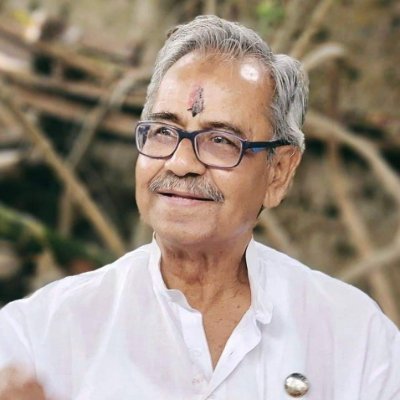
Kolkata, Aug 2026 : Former West Bengal Assembly Deputy Speaker and veteran Trinamool Congress leader Asish Banerjee was found dead at a room inside a TMC office at his Rampurhat residence in Birbhum district on Sunday, sending shockwaves through the state’s political circles. Police said his body was found hanging and a handwritten note was recovered from the spot.
Banerjee, a five-time MLA from Rampurhat, had been a prominent figure in the Trinamool Congress and had also served as a minister in an earlier Mamata Banerjee-led state government. He was also the Deputy Speaker of the West Bengal Assembly. His death has triggered questions about the circumstances that preceded the incident, particularly following his defeat in the 2026 Assembly election and reports of growing distance between him and the party leadership.
According to police, the one-page handwritten note, written in Bengali, will form an important part of the investigation. Authorities are also examining whether the note was genuinely written by Banerjee. His body has been sent for post-mortem examination as investigators seek to establish the circumstances surrounding his death.
In the note, Banerjee reportedly expressed regret over entering politics, describing it as a mistake. He also asserted that despite his long political career, he had never engaged in corruption or taken money in exchange for getting work done.
Banerjee recalled his involvement in politics dating back to his student days and referred to his tenure as general secretary of the students’ union at Burdwan University. He claimed that he had maintained the same record there and had not been involved in corrupt activities.
The note also referred to disagreements within the party. Banerjee reportedly wrote that although political differences had occurred in the past, they had not previously escalated into hostility. He said there were instances when he could not accept what he considered injustices within the party, but he had been unable to protest against them.
A significant portion of the note reportedly dealt with the Tarapith-Rampurhat Development Authority (TRDA). Banerjee alleged that he had been stripped of meaningful responsibilities within the organisation and claimed that several actions were taken to undermine or belittle him.
He stated that his only responsibility in the development authority was attending general body meetings. According to the note, he was not part of the tender committee, did not possess cheque-signing authority and was not involved in approving plans or issuing no-objection certificates for projects.
Banerjee reportedly said that decisions relating to these matters were never discussed with him and condemned what he described as attempts to malign him. He also advised his sons to stay away from politics and continue with their respective professions.
The contents of the note have raised questions about whether political pressures or internal differences contributed to Banerjee’s decision. However, police have not yet established a definitive motive and officials are expected to examine all possible angles before drawing conclusions.
The veteran politician’s death also comes after a major setback in the 2026 West Bengal Assembly election. Banerjee, who had represented Rampurhat for several terms, was defeated by BJP candidate Dhruba Saha. Official election data shows Saha secured 111,920 votes, while Banerjee received 87,687 votes, resulting in a margin of 24,233 votes.
The defeat marked a significant change in Banerjee’s political fortunes after years of representing Rampurhat. He had previously won the constituency in 2011, 2016 and 2021.
Banerjee was also an academic by profession and held a doctorate from Burdwan University. His 2026 election affidavit listed him as a retired associate professor.
The incident has prompted reactions across West Bengal’s political landscape, with attention now focused on the investigation and the circumstances surrounding the veteran leader’s final days.
Police are examining the recovered note, questioning people who were in contact with Banerjee and reviewing the circumstances at the Rampurhat office. The post-mortem examination is also expected to provide crucial evidence as investigators work to determine the exact cause and circumstances of his death.
For a politician who spent decades in public life, Banerjee’s death has raised difficult questions about the pressures associated with political careers, internal party dynamics and the personal consequences of electoral setbacks. Authorities have yet to establish whether any of these factors directly contributed to the tragedy, and the investigation remains ongoing.