August 2026, Barrackpore : In a significant push towards translating scientific innovations into market-ready solutions, the ICAR-Central Inland Fisheries Research Institute (ICAR-CIFRI), Barrackpore, organized a workshop on “Intellectual Property Rights (IPR) & Technology Transfer” at its campus as part of the 80th year celebration of ICAR-CIFRI. The programme brought together scientists, researchers, academicians, government officials, entrepreneurs and fisheries stakeholders to deliberate on intellectual property protection, technology commercialization and effective mechanisms for taking research innovations from the laboratory to farmers, entrepreneurs, industry and society.
Conducted in Hindi, the workshop highlighted the strategic importance of patents, copyrights, industrial designs, trademarks and institutional technology-transfer mechanisms in creating an enabling ecosystem for research commercialization.
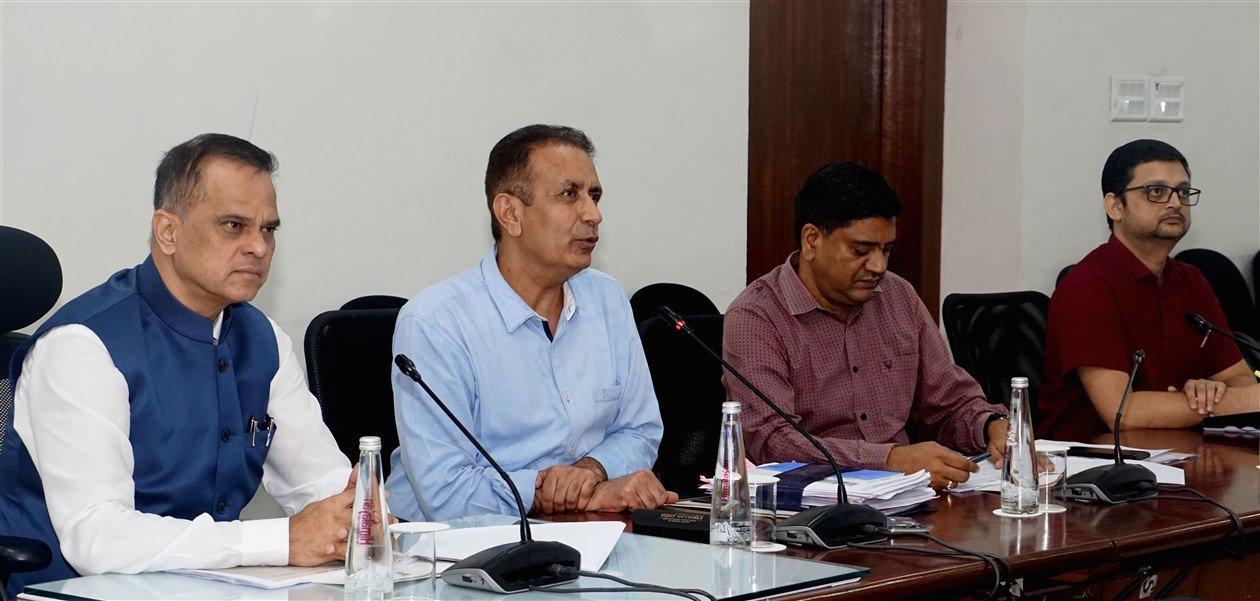
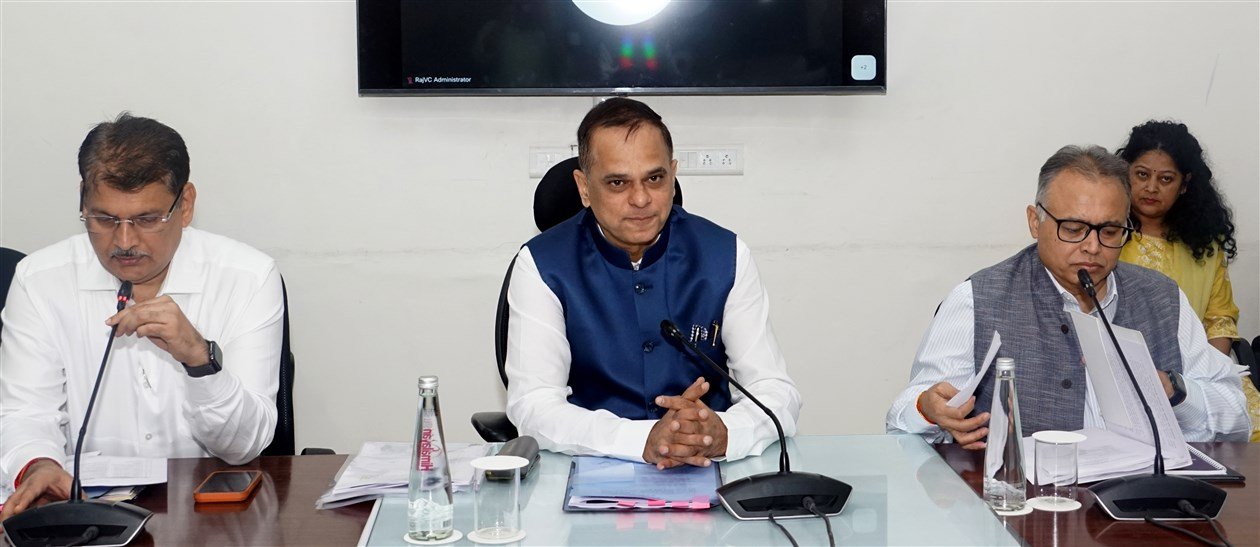
The programme was graced by Dr. Ashok Kumar Patra, Vice Chancellor, Bidhan Chandra Krishi Viswavidyalaya, Mohanpur, as Chief Guest. Prof.(Dr.) Kumaravel V., Joint Director(Admin) & HoD, Pathology & Microbiology, National Institute of Homoeopathy, Ministry of Ayush, Kolkata; Smt. A.S. Alvi, Joint Director, Department of Fisheries, Government of West Bengal.
Dr. Praveen Malik, CEO, Agrinnovate India Ltd., New Delhi, attended virtually as Guests of Honour. Delivering the lead lecture, Dr. Malik emphasized that protecting intellectual property is only the first step; the ultimate objective is to ensure that technologies reach end users through effective commercialization and technology-transfer pathways. He highlighted the role of Agrinnovate India Ltd. in facilitating commercialization and wider utilization of ICAR technologies.
In his address as Chief Guest, Dr. Patra stressed that robust IPR protection and efficient technology transfer are critical for converting scientific innovations into tangible benefits for farmers, entrepreneurs and society.
Dr. Pradip Dey, Director, ICAR-CIFRI, underscored the pivotal role of Intellectual Property Rights (IPR) in transforming scientific innovations into technologies with societal and economic impact. He emphasized that effective protection, management and commercialization of intellectual property are essential for creating a robust innovation ecosystem, fostering entrepreneurship and accelerating the transfer of indigenous technologies from the laboratory to the field. Dr. Dey further highlighted that strengthening research–industry–entrepreneur linkages and promoting a culture of innovation and technology ownership would contribute significantly to “Viksit Bharat @2047” by enabling India to harness its scientific and technological capabilities for inclusive growth, self-reliance and sustainable development, particularly in the fisheries sector.
Smt. Alvi said that such initiatives by ICAR-CIFRI will play a vital role in bridging the gap between scientific innovation and field-level application, fostering technology transfer, promoting entrepreneurship, and contributing to the sustainable development of the fisheries sector.
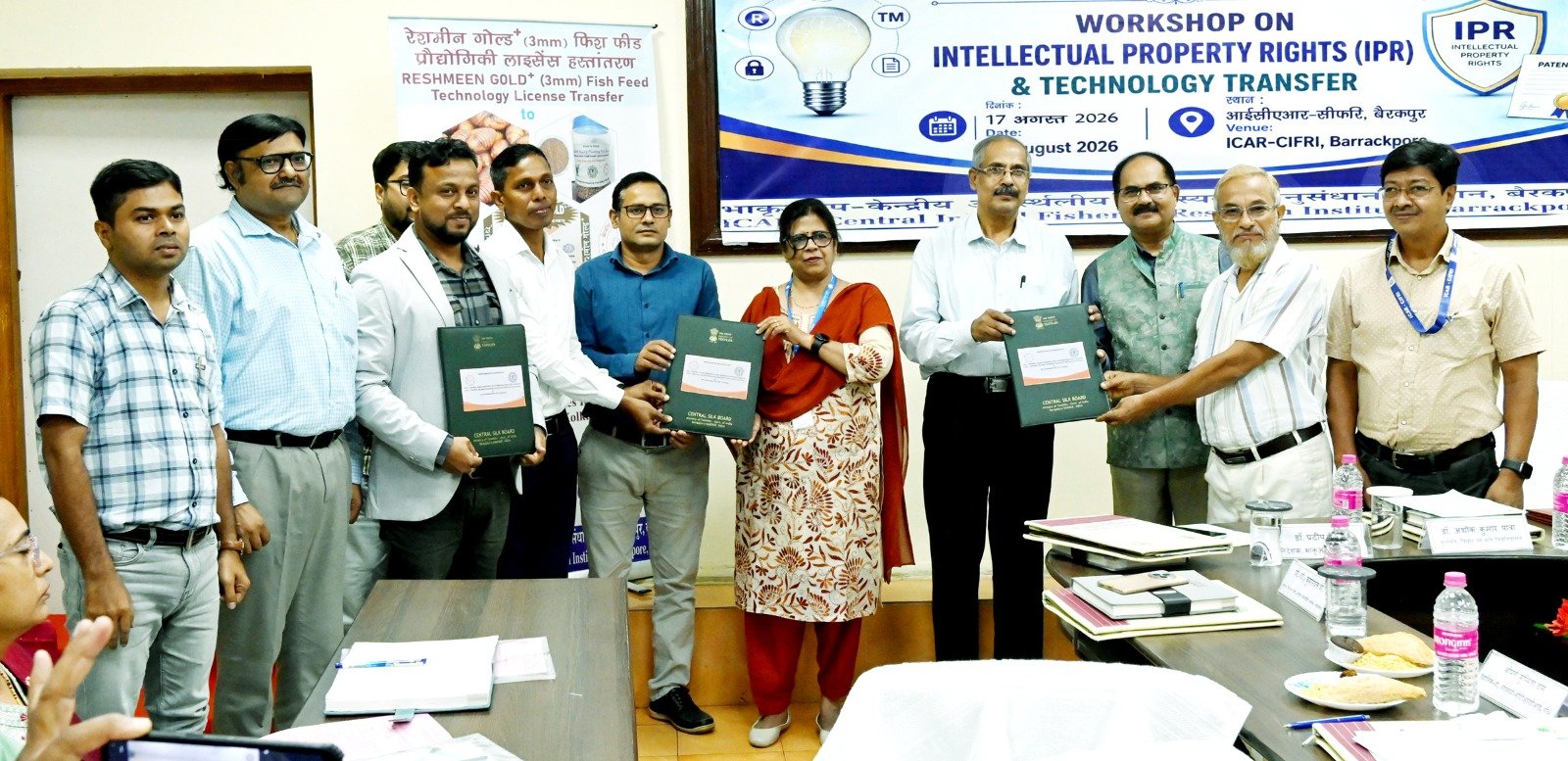
Technology Licensing from Innovation to Enterprise was a major highlight of the workshop, marked by the signing of a Licence Agreement for the transfer of Reshmeen Gold+ fish feed technology developed by ICAR-CIFRI in collaboration with CSB-CTRTI. The agreement represents a significant step towards commercializing this collaborative research innovation and expanding its adoption, while creating new opportunities for entrepreneurship and market-oriented utilization of fisheries technology.
Another important milestone was the signing of a Memorandum of Understanding (MoU) between ICAR-CIFRI and the National Institute of Homoeopathy (NIH). The MoU establishes a framework for institutional collaboration, knowledge exchange, joint research and exploration of innovative applications in mutually agreed areas, demonstrating the growing importance of interdisciplinary partnerships in addressing emerging scientific and societal challenges.
The occasion also witnessed the release of the commemorative publication 80 Years of CIFRI Technologies, showcasing the Institute’s eight-decade journey of research, technological innovation and contributions to the development of inland fisheries. Adding further significance to the event, the Wetland Health Card, developed by ICAR-CIFRI, was also released, marking an important step towards scientific assessment, monitoring and sustainable management of wetland ecosystems.
The workshop served as a strategic platform for enhancing awareness of IPR protection, technology management and commercialization of ICAR technologies. The proceedings reinforced the need for stronger institutional-industry linkages, entrepreneurship-driven technology adoption and efficient transfer mechanisms to ensure that research outcomes move beyond laboratories and create real-world impact.
The workshop, technology licensing agreement, institutional MoU and release of 80 Years of CIFRI Technologies collectively marked a significant milestone in ICAR-CIFRI’s journey towards building a stronger research-to-market ecosystem and accelerating innovation-led, sustainable fisheries development.