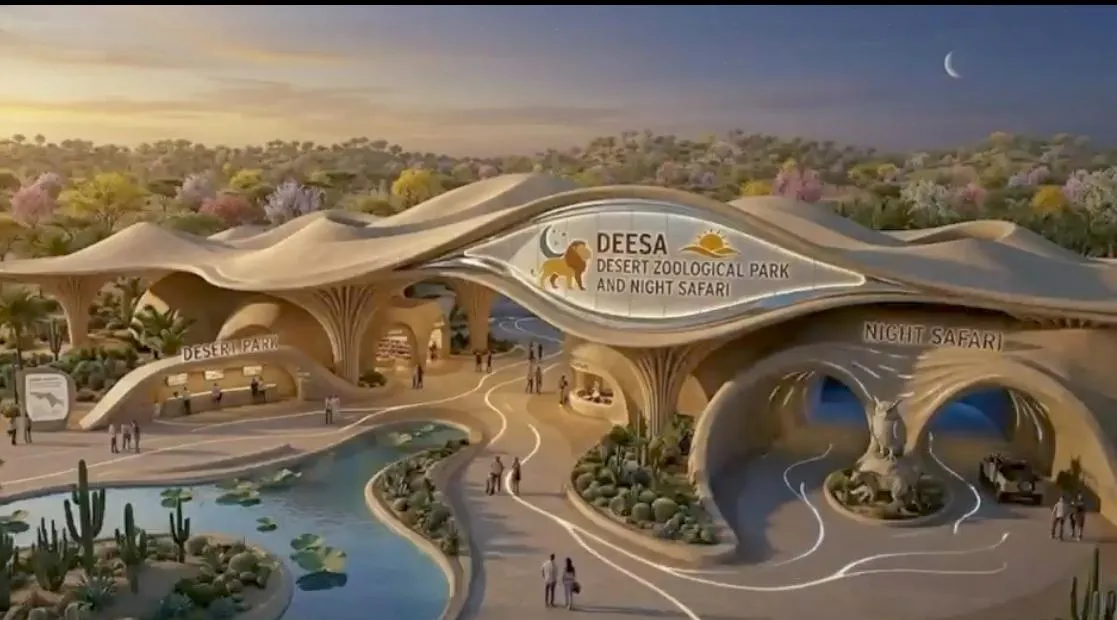
Banaskantha, Aug 2026 : Gujarat’s ambitious plan to develop a 103-hectare desert-themed zoological park and drive-through night safari at Juna Deesa in Banaskantha district has received approval from the Central Zoo Authority (CZA), paving the way for a major wildlife conservation and eco-tourism project estimated to cost ₹542.14 crore.
The proposed facility, being developed by the Gujarat Forest Department on government land, will combine wildlife conservation, rescue and rehabilitation with environmental education, scientific interpretation and tourism. The park is expected to house around 2,700 animals and birds belonging to nearly 83 native and exotic species.
Gujarat Forest and Environment Minister Arjun Modhwadia said the project had been prepared in accordance with CZA guidelines and would be developed over approximately 103 hectares at Juna Deesa.
“The proposed Desert Zoological Park and Night Safari is being developed over about 103 hectares of government land at Juna Deesa. The project has been prepared in accordance with Central Zoo Authority guidelines and has an estimated cost of ₹542.14 crore. It has now received approval from the Central Zoo Authority,” Modhwadia said.
Minister of State for Forests and Environment Pravin Mali said the facility would be designed as a modern conservation centre while offering visitors a distinctive wildlife experience.
The project will include a conventional day zoo along with five dedicated night safari enclosures. The night safari will allow visitors to observe nocturnal animals after sunset in specially designed habitats.
Mali said the facility would go beyond tourism by serving as a centre for conservation breeding, wildlife rescue, rehabilitation, environmental education and scientific interpretation of nature. He added that the international-standard night safari would be one of the project's major attractions.
According to Principal Chief Conservator of Forests (Wildlife) and Chief Wildlife Warden Gujarat, Dr Jaipal Singh, the park will be developed around a desert ecosystem featuring natural arid landscapes.
Among the Indian species proposed for the facility are chinkara, blackbuck, Indian wild ass, Asiatic lion and leopard. The park will have separate enclosures for herbivores and carnivores, besides an aviary, reptile house and butterfly park.
The planned Indian desert collection will include the Indian porcupine, Indian hare, hedgehog, desert hare, Indian wild ass, sloth bear, caracal, Indian wolf, golden jackal, striped hyena and Indian desert fox.
Visitors will also have access to a reptile safari, rainforest biome and aquarium. The project is expected to showcase wildlife from African and Australian desert ecosystems as well.
The African section is proposed to include Angolan giraffe, Grevy’s zebra, scimitar oryx, African kudu, springbok, addra gazelle, black rhinoceros, chimpanzee, meerkat, African cheetah, African lion, fennec fox, bat-eared fox and ostrich.
Kangaroos, emus and wallabies are among the Australian species proposed for the facility.
The park will also feature an interpretation centre, food court, souvenir shop, golf cart services and other visitor amenities.
Environmental sustainability has been incorporated into the project's planning. Aradhana Sahu, Chief Conservator of Forests, Gandhinagar Wildlife Circle, said the facility would use several green technologies to minimise its ecological footprint.
These measures will include rainwater harvesting, a sewage treatment plant, solid waste management systems, solar energy, native plantations and green buffer zones.
Forest officials said Juna Deesa was selected for the project because of its contiguous 103-hectare land parcel, naturally occurring sand dunes, proximity to the Banas River and connectivity through road and railway networks.
Popattrao Garrdi, Deputy Conservator of Forests, Banaskantha Wildlife Division, said the project would strengthen the region's tourism infrastructure and complement established destinations such as Vadnagar, Ambaji and Nadabet.
“Once completed, it will emerge as a flagship wildlife conservation and eco-tourism destination,” he said.
The project forms part of Gujarat’s broader efforts to expand wildlife conservation, environmental education and eco-tourism infrastructure. With its focus on desert habitats and a combination of day and night wildlife experiences, the Juna Deesa facility is expected to become a major attraction in northern Gujarat.
The proposed park will also provide dedicated infrastructure for conservation breeding, wildlife rescue and rehabilitation, while creating greater public awareness about desert ecosystems and their biodiversity.
The CZA approval marks a significant milestone for the project. Its development and operation will be governed by the authority’s guidelines regulating zoos and night safari facilities in India, with the emphasis remaining on conservation, animal welfare, environmental sustainability and responsible tourism.