New Delhi, Aug 2026 : Hindustan Aeronautics Limited (HAL) is stepping up efforts to develop a Rotary Unmanned Aerial Vehicle (RUAV) designed to perform logistics and Intelligence, Surveillance and Reconnaissance (ISR) missions in high-altitude and difficult terrain, potentially giving the Indian Armed Forces a new autonomous capability for operations along the country’s challenging northern borders.
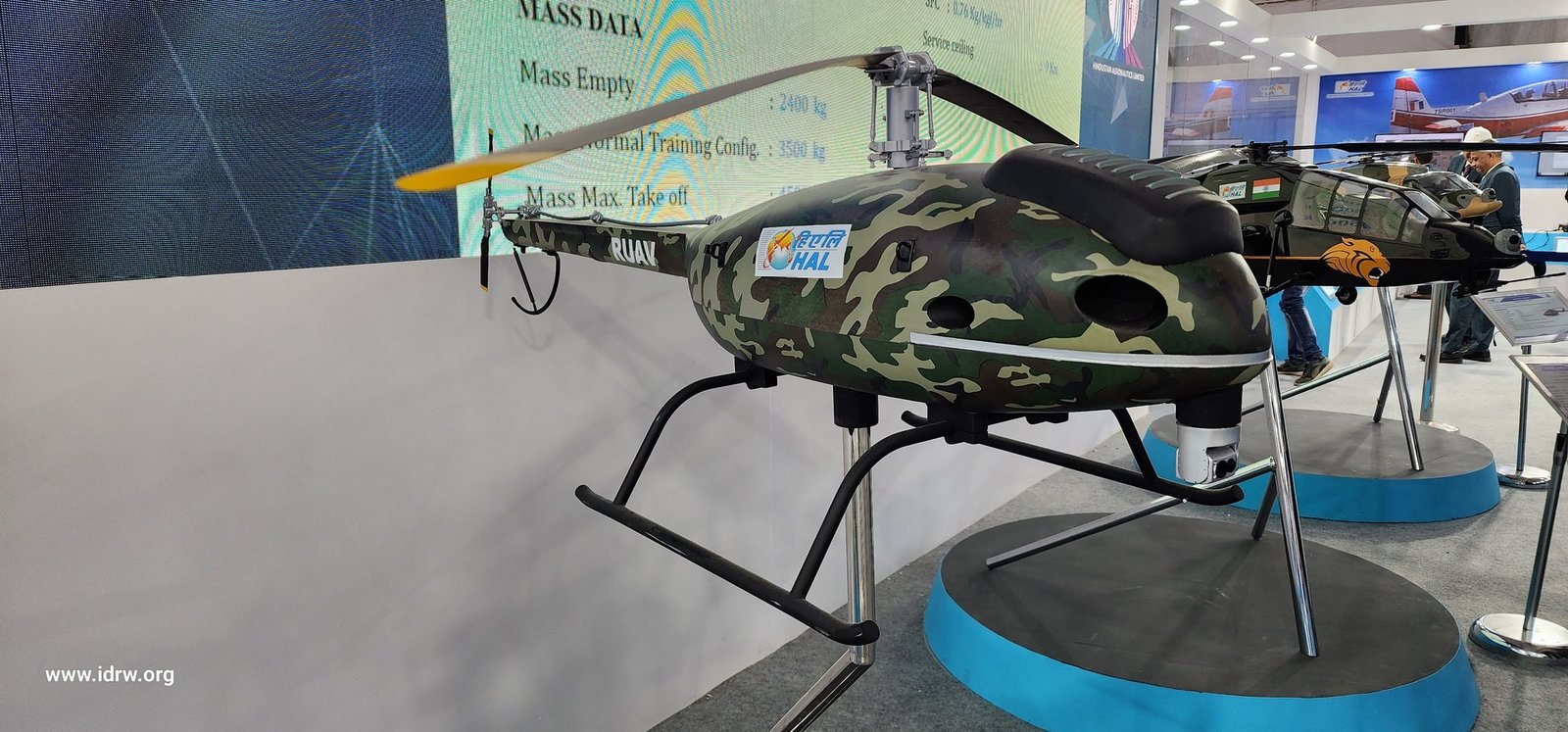
HAL has not publicly disclosed the precise configuration or development stage of the platform, leaving open the possibility that the initiative could involve the RUAV-200, an indigenous rotary-wing drone developed with the Defence Research and Development Organisation (DRDO) and IIT Kanpur, or a much larger unmanned version of the Advanced Light Helicopter (ALH) Dhruv.
The development comes at a time when the Indian military is increasingly exploring unmanned logistics solutions for supplying troops deployed in some of the most inhospitable areas of the country. Locations such as Ladakh and the Siachen Glacier pose severe operational challenges, with extreme cold, high altitudes and unpredictable weather frequently limiting conventional aviation operations.
Rotary-wing unmanned aircraft can offer a major advantage in such environments because they do not require conventional runways. They can operate from confined locations, deliver essential supplies and return without exposing helicopter crews to the risks associated with repeated flights into hazardous terrain.
HAL’s proposed RUAV concept is expected to have a dual role, combining logistics with persistent surveillance. Such a platform could potentially transport food, medical supplies and ammunition to isolated military positions while also conducting surveillance missions along sensitive areas. The same technology could eventually support disaster relief and humanitarian operations in remote mountainous regions.
For ISR missions, rotary UAVs could be equipped with electro-optical sensors and day-and-night cameras, allowing them to monitor areas for extended periods while transmitting information to ground-based command centres.
One potential candidate for HAL’s programme is the RUAV-200, an indigenous coaxial-rotor unmanned aircraft conceived specifically for high-altitude logistics. Developed with DRDO’s Aeronautical Development Establishment, the platform has been described as a “mule drone” intended to automate the transportation of supplies such as food, medicines and ammunition to remote outposts.
The RUAV-200 is understood to use a Wankel engine and has a maximum take-off weight of around 200 kg. Its projected payload capacity is approximately 40 kg, with a range of up to 100 kilometres. The aircraft incorporates autonomous flight technology and a crashworthy structure and is designed for vertical take-off and landing.
With a reported service ceiling of around 6,000 metres, the RUAV-200 is intended to address the unique demands of high-altitude operations. Its relatively compact size could make it particularly useful for missions where larger helicopters face limitations because of terrain, altitude or weather.
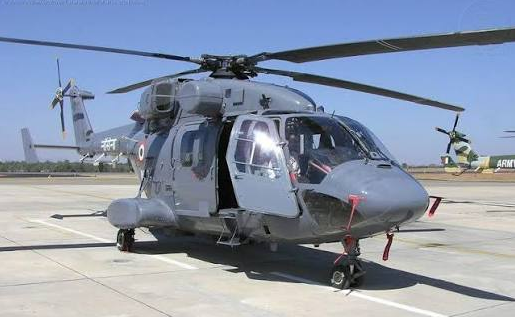
However, another possibility is that HAL is examining a substantially larger unmanned platform based on the ALH Dhruv. Converting the proven 5.5-tonne utility helicopter into an autonomous aircraft would represent a major expansion in the scale of India’s unmanned logistics capabilities.
The Dhruv is powered by twin Shakti turboshaft engines and has considerably greater payload and endurance potential than smaller logistics drones. An unmanned version could potentially undertake heavy supply missions, casualty evacuation and humanitarian relief operations without placing pilots at risk in dangerous environments.
A major advantage of an unmanned Dhruv would be its compatibility with India’s existing helicopter ecosystem. The armed forces already operate more than 400 Dhruv helicopters, meaning a drone derivative could potentially benefit from established manufacturing facilities, maintenance infrastructure, trained personnel and existing supply chains.
HAL has yet to clarify whether its current efforts relate specifically to the RUAV-200, an unmanned Dhruv, or a broader programme involving multiple rotary UAV categories. Given the increasing demand for autonomous military aviation, the company could potentially be pursuing several platforms simultaneously to meet different operational requirements.
The global defence industry is increasingly investing in unmanned helicopters capable of performing logistics, surveillance and other missions while reducing risks to human crews. For India, the technology has particular relevance in the Himalayas, where extreme altitude, severe weather and difficult geography create significant challenges for conventional aviation.
Autonomous rotary-wing systems could eventually undertake routine resupply and surveillance missions, allowing manned helicopters to focus on combat, troop movement, casualty evacuation and other high-priority operations.
HAL’s push into rotary UAV technology therefore represents more than an expansion of its unmanned aircraft portfolio. It signals a broader move towards autonomous aviation and could become an important element of India’s future military logistics and surveillance architecture, particularly along its high-altitude frontiers.
(The content of this article is sourced from a news agency and has not been edited by the Mavericknews30 team.)