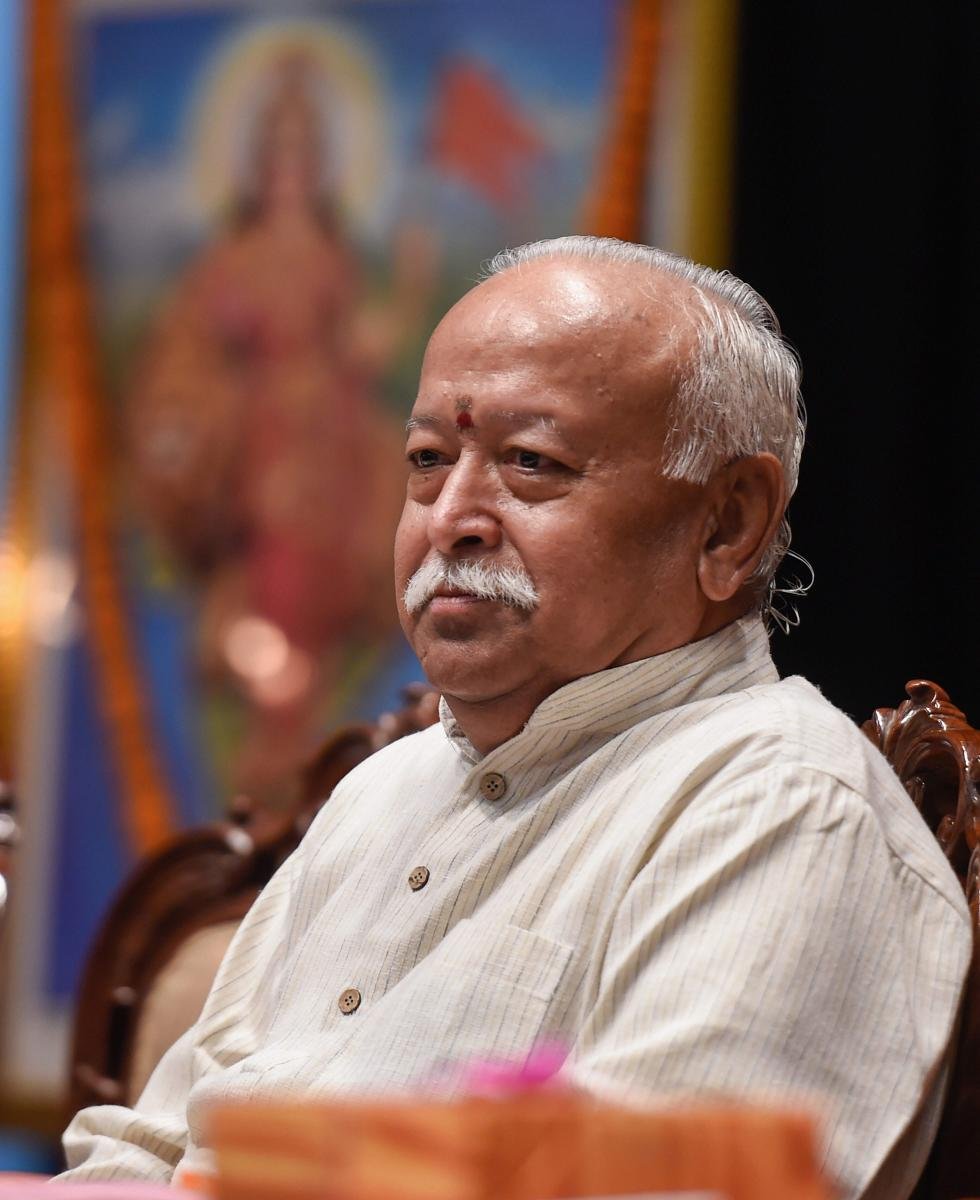
Washington, Aug 2026 : Hindu advocacy organisation HinduPACT has accused the US Commission on International Religious Freedom (USCIRF) of conducting what it described as a “smear campaign” against Rashtriya Swayamsevak Sangh (RSS) chief Mohan Bhagwat ahead of his proposed visit to the United States.
In a statement issued from San Ramon, California, HinduPACT criticised remarks by USCIRF Chair Asif Mahmood and Commissioner Gene Mills opposing Bhagwat’s visit, alleging that their statements lacked balance and unfairly portrayed Hindu institutions as threats to religious freedom.
The organisation claimed that USCIRF had moved beyond its mandate of monitoring religious freedom and was increasingly being used as a platform for ideological criticism of Hindu organisations and India.
“This is not scrutiny. It is an attempt to criminalize Hindu civilizational organization, stigmatize Hindu public leadership, and recast India’s majority tradition as suspect in the court of American opinion,” HinduPACT said in its statement.
The organisation also objected to Mills’ reported call for sanctions against RSS members allegedly responsible for violations of freedom of religion or belief. HinduPACT said such a demand lacked what it called “rigor, due process, or evidentiary discipline”.
The advocacy group further alleged that USCIRF had paid insufficient attention to issues affecting Hindu communities in the United States, including anti-Hindu hatred, vandalism of temples and what it described as civic exclusion faced by some Hindu Americans.
HinduPACT also named the Council on American-Islamic Relations (CAIR), the Indian American Muslim Council (IAMC) and Hindus for Human Rights (HfHR), accusing them of supporting opposition to Bhagwat’s proposed visit. The statement did not include responses from the three organisations or USCIRF to the allegations.
Ajay Shah, founder and chair of HinduPACT, accused the federal commission of abandoning its stated mandate and adopting what he characterised as an anti-Hindu narrative.
“USCIRF has disgraced its mandate. When its chair speaks about India and the RSS, he sounds less like the head of a pluralistic American commission and more like an advocate for a hardened anti-Hindu narrative,” Shah said.
Shah argued that Bhagwat heads one of the world's most influential Hindu organisations and should not be subjected to what he described as politically motivated criticism.
“Mohan Bhagwat leads one of the world’s most consequential Hindu organizations. He should not be met with slander scripted by CAIR, IAMC, and HfHR, groups that have made a habit of treating Hindu self-assertion as extremism,” he said.
Defending the RSS, Shah highlighted its decades-long involvement in relief operations, education, village development and community organisation. HinduPACT described the RSS as a major organising force within contemporary Hindu society, claiming that its influence has been built largely through volunteer networks and community-level activities.
The organisation said the RSS had established a presence across neighbourhoods and villages through social and community initiatives rather than relying primarily on policy institutions or public seminars.
HinduPACT also alleged that Hindu organisations face a recurring pattern of criticism when they become more prominent in public life.
“Every time Hindu organizations gain visibility, the same machinery activates: selective outrage, guilt by association, and a studied refusal to acknowledge anti-Hindu bias by name,” it said.
The group called on elected representatives, community leaders and members of the broader American public to reject what it described as sectarian lobbying being presented as human rights advocacy.
The controversy comes against the backdrop of continuing debate in the United States over religious freedom, Hindu-American political participation and perceptions of the RSS and its ideological influence in India.
USCIRF is an independent, bipartisan federal commission established under the International Religious Freedom Act of 1998. It monitors religious freedom conditions in countries around the world and makes policy recommendations to the US President, Secretary of State and Congress. Its recommendations are advisory and do not have binding legal force on the US government.
The dispute over Bhagwat's proposed visit is therefore likely to draw further attention to competing views about the RSS, religious freedom and the role of US institutions in assessing organisations and developments connected with India.
(Disclaimer :The content of this article is sourced from a news agency and has not been edited by the Mavericknews30 team.)