New Delhi, Aug 2026 : The Indian Air Force has initiated the process to acquire 150 advanced jet trainer aircraft, marking a major step towards modernising its pilot-training infrastructure and replacing the ageing fleet of British Aerospace Hawk Mk-132 trainers.
The IAF has issued a Request for Information (RFI) to global aerospace manufacturers, seeking details of aircraft that can meet its requirements for Stage-III (F) advanced jet trainers. These aircraft will constitute the final stage of training for fighter pilots before they transition to frontline combat platforms such as the Tejas, Rafale and Sukhoi Su-30MKI.
Manufacturers have been asked to submit their responses by October 5, while the subsequent Request for Proposal is scheduled to be issued in December 2027. Trials and detailed evaluations will follow, meaning the selected aircraft are unlikely to enter operational service before the 2030s.
At the RFI stage, the IAF has specified that trials will be conducted on a no-cost, no-commitment basis, allowing the service to evaluate available platforms without creating a procurement obligation.
Three-stage training pipeline
The IAF's pilot-training system is structured around three broad stages.
The first stage lasts approximately 24 weeks and is conducted on the Pilatus PC-7 Mk-II basic trainer, which is progressively being replaced by the indigenous HTT-40 developed by Hindustan Aeronautics Limited (HAL). Cadets receive instruction in basic flying manoeuvres, aviation theory, navigation and meteorology. On completion, they are streamed into fighter, transport or helicopter training.
The second stage, also lasting around 24 weeks, provides specialised training according to the selected stream. Fighter trainees use the Kiran Mk-II, while transport trainees train on the Dornier-228 and helicopter trainees on the Chetak.
This phase focuses on more advanced aircraft handling, navigation, tactical skills and operational procedures.
The third stage is conducted after commissioning and represents the transition towards operational flying. Fighter pilots undergo advanced training on platforms such as the Hawk Mk-132, learning high-speed manoeuvres, tactical combat skills and sophisticated instrument flying.
They are also introduced to combat systems and combat-support systems before being posted to operational squadrons. Even after joining frontline units, pilots continue training on their assigned aircraft and progressively acquire operational expertise.
Preparing for a larger fighter fleet
The requirement for 150 advanced trainers comes at a crucial time for the IAF. The service currently has around 29 operational fighter squadrons, against a sanctioned strength of 42.5.
The new trainer requirement is also closely linked to India's plans to expand and modernise its combat fleet. The IAF is expected to induct additional Tejas Mk-1A aircraft and Rafales, followed by the Tejas Mk-2 and, eventually, the Advanced Medium Combat Aircraft (AMCA).
A larger and more technologically advanced fighter fleet will require a corresponding expansion of the pilot-training ecosystem. The proposed acquisition is therefore not simply a replacement programme but part of a broader effort to create the training capacity required for future combat aviation.
Lessons from the past
The importance of advanced jet training was highlighted by the experience before the Hawk Mk-132 entered IAF service in 2008.
Previously, trainee pilots could make a relatively abrupt transition from intermediate trainers to high-performance fighters such as the MiG-21. The absence of a dedicated advanced jet-training stage created a significant gap between basic flying instruction and the demands of frontline fighter operations.
A Parliamentary Committee report in 2010 noted that 44 per cent of aircraft crashes between 2004 and 2010 were attributed to human error, with inadequate training infrastructure identified as one of the contributing factors.
The introduction of advanced trainers was aimed at reducing this transition gap and giving pilots an opportunity to develop the skills required for high-performance combat aircraft in a controlled training environment.
Technology at the heart of the new trainers
The proposed aircraft are expected to represent a major technological upgrade over the existing training fleet. The IAF's requirements include fly-by-wire flight controls, a glass cockpit and configurable hands-on-throttle-and-stick systems.
The navigation system is expected to integrate NavIC, GPS and GLONASS, providing multiple sources of positioning and navigation information. Zero-zero ejection seats, capable of protecting pilots during emergencies even at zero speed and altitude, have also been specified.
The aircraft must be designed to resist departures from controlled flight and should be capable of automatically recovering if the pilot releases the controls.
A major emphasis has been placed on embedded simulation and synthetic training. The trainers are expected to incorporate virtual avionics and electronic warfare suites, while also being capable of simulating missile seeker heads during flight.
The aircraft will need secure data-link connectivity with 360-degree dome simulators as part of a Live-Virtual-Constructive (LVC) training environment. Holographic debriefing capabilities are also part of the requirements, allowing instructors to conduct detailed post-flight analysis.
Faster maintenance and future upgrades
The IAF is also seeking aircraft that can be maintained rapidly in operational conditions. The requirements include the ability to refuel and rearm an aircraft within 30 minutes and replace an engine within one hour.
Artificial intelligence-based predictive maintenance systems are expected to help identify potential technical problems before they lead to failures or extended downtime.
The aircraft must also feature an open architecture, allowing systems and capabilities to be upgraded in the future and enabling equipment from multiple vendors to be integrated.
These requirements indicate that the IAF wants its future trainers to replicate not just the flying characteristics but also the technological environment of modern combat aircraft.
Global and Indian contenders
Several international platforms could emerge as contenders during the procurement process. Potential candidates include the Boeing-Saab T-7 Red Hawk, Leonardo M-346 Master and Korea Aerospace Industries T-50 Golden Eagle.
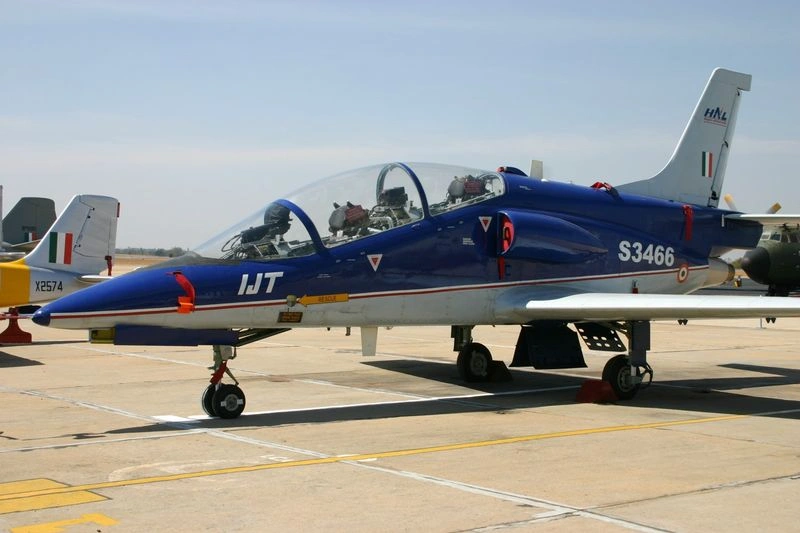
India's HAL is also expected to be an important contender. The company has proposed the Tejas as a lead-in fighter trainer and is developing the HLFT-42, which was showcased at Aero India 2023.
The HLFT-42 is being designed as an advanced jet trainer with combat capabilities, potentially providing India with a domestic option for meeting part of its future training requirements.
The planned acquisition of 150 aircraft therefore represents more than a fleet replacement exercise. It signals a fundamental shift towards preparing Indian fighter pilots on platforms that closely mirror the technologies, systems and operational demands of next-generation combat aircraft.
As India expands its indigenous fighter programme and moves towards the AMCA era, strengthening the training pipeline will be essential. The IAF's latest initiative reflects an attempt to ensure that the future growth of its combat fleet is matched by an equally capable, modern and technologically sophisticated system for producing combat-ready pilots.
(The content of this article is sourced from a news agency and has not been edited by the Mavericknews30 team.)