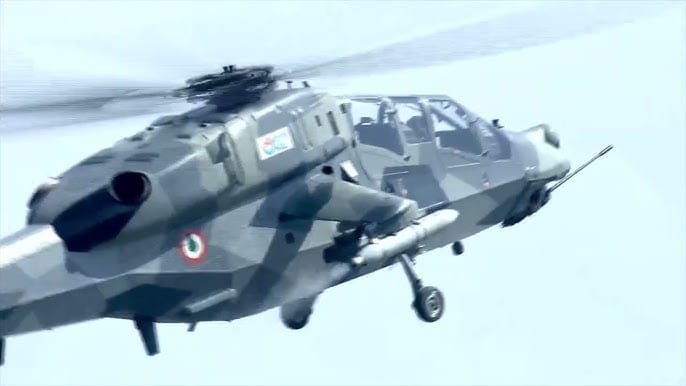
Goa, Oct 2026 : On 26 August 2026, HAL and Safran announced a contract with their joint venture, SAFHAL, for the development, manufacture and support of the Aravalli engine for the Indian Multi-Role Helicopter (IMRH) and its naval counterpart, the Deck-Based Multi-Role Helicopter (DBMRH). The PIB's India–France Joint Statement of 17 February 2026 had already acknowledged the Safran–HAL partnership for IMRH development. Subsequently, on 2 September, Moneycontrol, citing CNBC Awaaz, reported that a costing committee had cleared a proposed ₹13,500 crore development allocation for consideration by the Cabinet Committee on Security. This should not be confused with confirmed final sanction.
Whatever the eventual funding decision, the programme's value will depend on the capability India builds through it. The IMRH programme should leave the country with more than a new aircraft. It should establish the engineering capability to sustain that helicopter, adapt it as operational needs change and develop its successors. That is the strategic case for investing in IMRH, and the standard against which its progress should be judged.
There is a concrete reason to examine that case now.
START WITH THE MISSION
During my naval service, I participated in the initial studies and formulation of the Joint Services Qualitative Requirements (JSQRs) for the IMRH. Our assessment at that stage favoured separate naval and Army/Air Force versions, with configuration differences, including rotor blade count, under consideration.
The Navy was already somewhat ahead in defining its requirements, having issued a Request for Proposal (RFP) for a deck-based multi-role helicopter to replace the Sea King 42B. The Navy's requirement was subsequently addressed, in part, through the induction of the MH-60R and the mid-life upgrade of the Kamov-28.
High-altitude operations in areas such as Ladakh place particular demands on rotor performance, engine power and aircraft weight. Naval operations impose a different set of requirements, including deck handling, folding arrangements, corrosion protection and maritime mission equipment. These demands favour separately optimised versions, while permitting common engines and components wherever operationally suitable. HAL's published programme description distinguishes the IMRH from the naval DBMRH and specifies blade folding for shipboard operations.
A common technological foundation may be practical, but pursuing an identical configuration for both environments requires careful assessment of the compromises involved in payload, endurance, ship compatibility and safety margins. The extent of commonality should follow demonstrated operational suitability, with each version judged against the missions it must perform.
MAKE THE ENGINE PARTNERSHIP COUNT
Aravalli offers a significant opportunity. Safran's announcement places the new engine in the 3,500–4,000 shaft-horsepower class and describes a contract covering design, development, manufacture, supply and lifecycle support. The scope extends across the engine's operational life, creating an opportunity for Indian engineers and suppliers to acquire substantial expertise.
The important questions concern what that expertise will enable. What design responsibilities will Indian teams hold? What knowledge and rights will allow them to investigate defects, introduce improvements and manage obsolete components? Which modifications can be undertaken domestically, and which will require the partner's approval? The announcement alone does not establish the answers; these should be explicit programme objectives.
International collaboration can accelerate development and share risk. Its strategic return will depend on the engineering responsibilities India assumes and the capabilities it retains. Manufacturing an increasing share of components is valuable, but it must be accompanied by a thorough understanding of their design and behaviour within the complete system.
BUILD CAPABILITY THROUGH DELIVERY
This requires disciplined development. Engine maturity, transmission testing and airframe progress must be closely coordinated. Stable requirements for each version would allow engineers to work towards clearly defined configurations. Changes should have identifiable consequences for cost, weight and schedule, with additional capabilities introduced through planned upgrades wherever practical.
Testing must also contribute to the development of domestic expertise. Ground rigs, flight trials, certification activities and mission-system integration generate knowledge that can inform future aircraft development. Indian suppliers should participate early enough to qualify their products and establish repeatable manufacturing processes. A predictable programme gives them the confidence to invest in people, infrastructure and equipment.
Operational delivery remains indispensable. The Services need aircraft they can operate, maintain and return to service reliably. Spares, technical publications, simulators, training and overhaul facilities must develop alongside the helicopter. A maintenance task that is manageable in a factory may prove difficult aboard a deployed ship; such operational realities must influence the design well before production.
DEFINE SUCCESS BEFORE SANCTION
The Government, HAL and the Services should agree on measures that capture both operational delivery and industrial learning. Progress reporting should cover tested performance, certification and production readiness, alongside domestic design responsibility and lifecycle support capability. Localisation percentages provide useful information but cannot, by themselves, establish technological autonomy.
IMRH deserves support because it can strengthen India's helicopter capability for decades. The purpose of this investment should be clear from the outset: to deliver aircraft suited to distinct Service missions and establish the engineering depth to sustain and improve them. The programme will have fulfilled its larger promise when India can apply what it learns to the next helicopter with greater confidence and control.
An all-encompassing project management committee, with equal participation from all Services, the design agency, industry partners and certifying agencies, supported by clear management roles and accountability, may be the key to the success of such a mega project.
About the author: Captain(IN) Anshuman Chatterjee (Retd.) has extensive experience operating multi-role helicopters from ships’ decks and commanded INAS 330, the Indian Navy’s carrier-based Sea King 42B squadron.
Sources
1. Press Information Bureau, 17 February 2026. India–France Joint Statement.
https://www.pib.gov.in/PressReleasePage.aspx?PRID=2229412
2. Moneycontrol, 2 September 2026. Report on the proposed IMRH design and development allocation.
https://www.moneycontrol.com/news/business/companies/hal-s-rs-13-500-crore-helicopter-design-plan-likely-to-get-ccs-nod-cnbc-tv18-14020977.html
3. Safran, 26 August 2026. HAL and Safran Helicopter Engines sign final contract with SAFHAL, launching development and production of the Aravalli engine.
https://www.safran-group.com/pressroom/hal-and-safran-helicopter-engines-sign-final-contract-safhal-launching-development-and-production-2026-08-26
4. Hindustan Aeronautics Limited. IMRH programme description, including the naval DBMRH and blade folding for shipboard operations.
https://hal-india.co.in/research-development-details/imrh