Union Environment Minister stresses the need for Science-based Conservation of Open Natural Ecosystems alongside Forests
Healthy Grasslands are indispensable for Biodiversity, Livelihoods and Climate Resilience: Shri Bhupender Yadav
India launched its first-ever Guide to Grasslands and Other Open Natural Ecosystems (ONEs) of India at the 17th Session of the Conference of the Parties (COP17) to the United Nations Convention to Combat Desertification (UNCCD) in Ulaanbaatar (Mongolia), on 17.08.2026. The document highlights the rich diversity, ecological significance and socio-economic importance of India’s grasslands, savannas, deserts and other open natural ecosystems. It marks an important step towards strengthening their conservation, restoration and sustainable management.
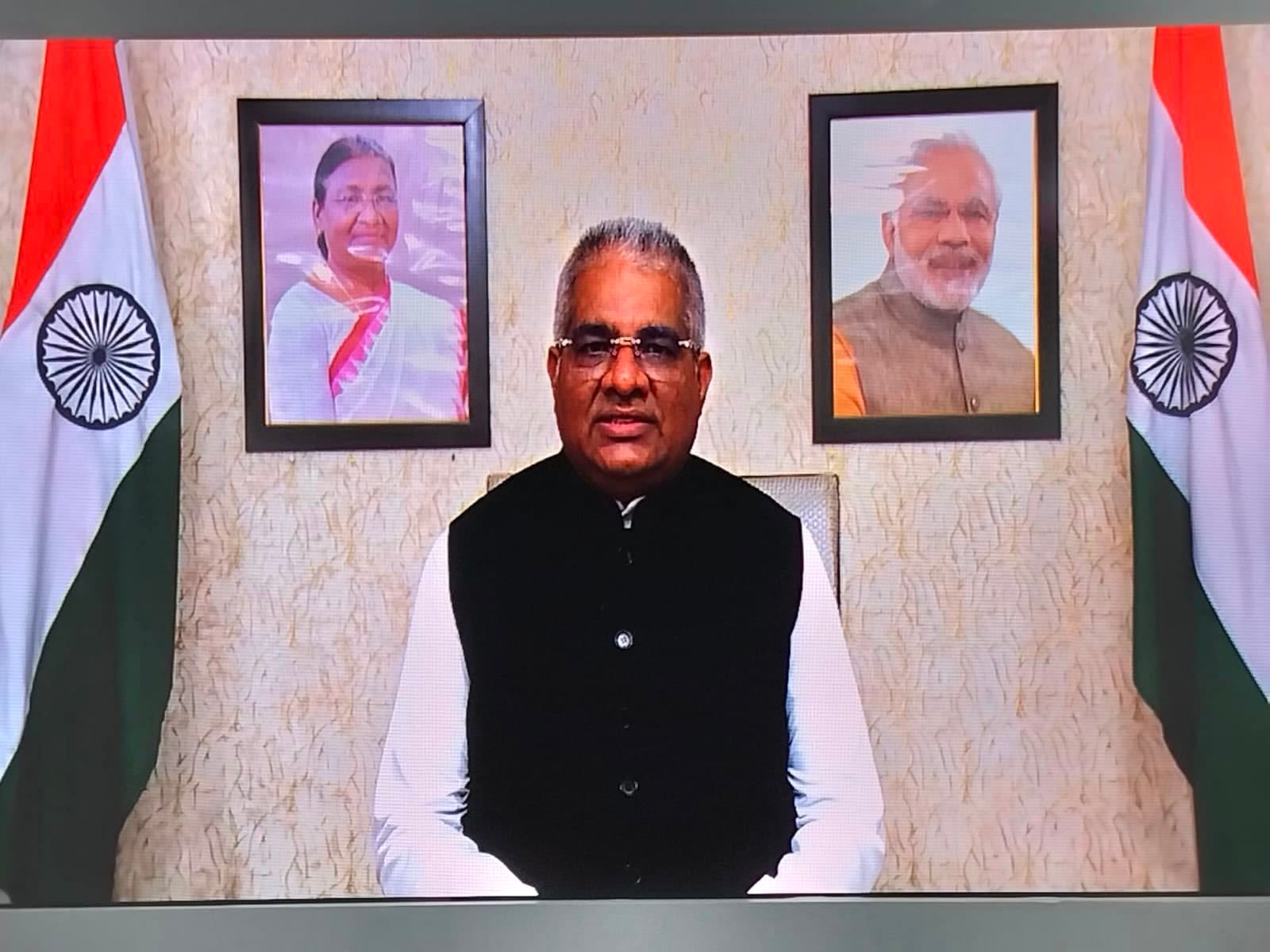
The launch was preceded by a special video message from Shri Bhupender Yadav, Minister for Environment, Forest and Climate Change, Government of India. He informed that grasslands, scrublands and ravines have for too long been judged by the absence of trees, despite these ecosystems sheltering species found nowhere else on earth and sustaining pastoral communities. He said modern science reinforces the understanding of local communities that healthy grasslands are indispensable for biodiversity, livelihoods and climate resilience.
Shri Yadav said the Guide was close to his heart as he grew up in Ajmer, Rajasthan, surrounded by grazing lands and desert scrub that were often described as “wasteland”. Recalling the traditional Oran or gauchar landscapes protected by villages, he said local communities understood that land, herds and their own lives were closely interconnected.
The Minister described the Guide as an important step towards recognising India’s open natural ecosystems and stressed the need for their science-based conservation alongside forests. He hoped it would inspire greater understanding and conservation of these ecosystems.
The Guide was launched at an official UNCCD COP17 side event under the aegis and guidance of the Ministry of Environment, Forest and Climate Change (MoEF&CC), Government of India. The publication of the Guide and the event was organised by the Ashoka Trust for Research in Ecology and the Environment (ATREE) in collaboration with the International Union for Conservation of Nature (IUCN), Centre of Excellence on Sustainable Land Management (CoE-SLM), Indian Council of Forestry Research and Education (ICFRE), and Space Applications Centre (SAC), ISRO. It brought together representatives from Government, scientific and research institutions, international organisations and civil society.
Presentations and discussions highlighted the diversity and distribution of India’s grasslands and ONEs, their ecological importance, and the role of their restoration in achieving India’s Land Degradation Neutrality (LDN) targets. The need for stronger scientific knowledge, improved land-degradation assessment and landscape-level planning was also emphasised.
The Guide brings together information on major Open Natural Ecosystems across India, covering their geographical settings, ecological characteristics, biodiversity, and the communities and tribes associated with them. It also contains thematic sections on pastoralism, fire ecology and carbon sequestration. India’s ONEs range from Himalayan and Terai grasslands to the Thar and Banni landscapes, Deccan savannas, rocky plateaus, ravines, scrublands, coastal ecosystems and desert landscapes. These ecosystems support diverse biodiversity, contribute to soil and water processes, store substantial carbon in their soils, and sustain pastoral, livestock-based and agricultural livelihoods.
The event also featured two fireside chats with national and international experts, scientific institutions, civil society and community-focused organisations. Discussions focused on grassland and dryland conservation and restoration, people-centred rangeland governance, climate resilience, and the institutional, scientific and policy measures needed for landscape-scale conservation and sustainable management of ONEs.
The launch reaffirmed India’s commitment to a science-informed and landscape-based approach to land restoration and sustainable land management. It underscored the need to bring grasslands, rangelands and other open natural ecosystems into mainstream discussions on land degradation, biodiversity conservation, climate resilience and sustainable livelihoods.
The Guide is expected to serve as a valuable resource for policymakers, researchers, conservation practitioners, development agencies and communities working towards the conservation, restoration and sustainable management of India’s grasslands and other ONEs. Its launch at COP17 also provides an important platform for India to showcase its diverse open ecosystems and strengthen their representation in the global discourse on land restoration, rangelands and Land Degradation Neutrality.