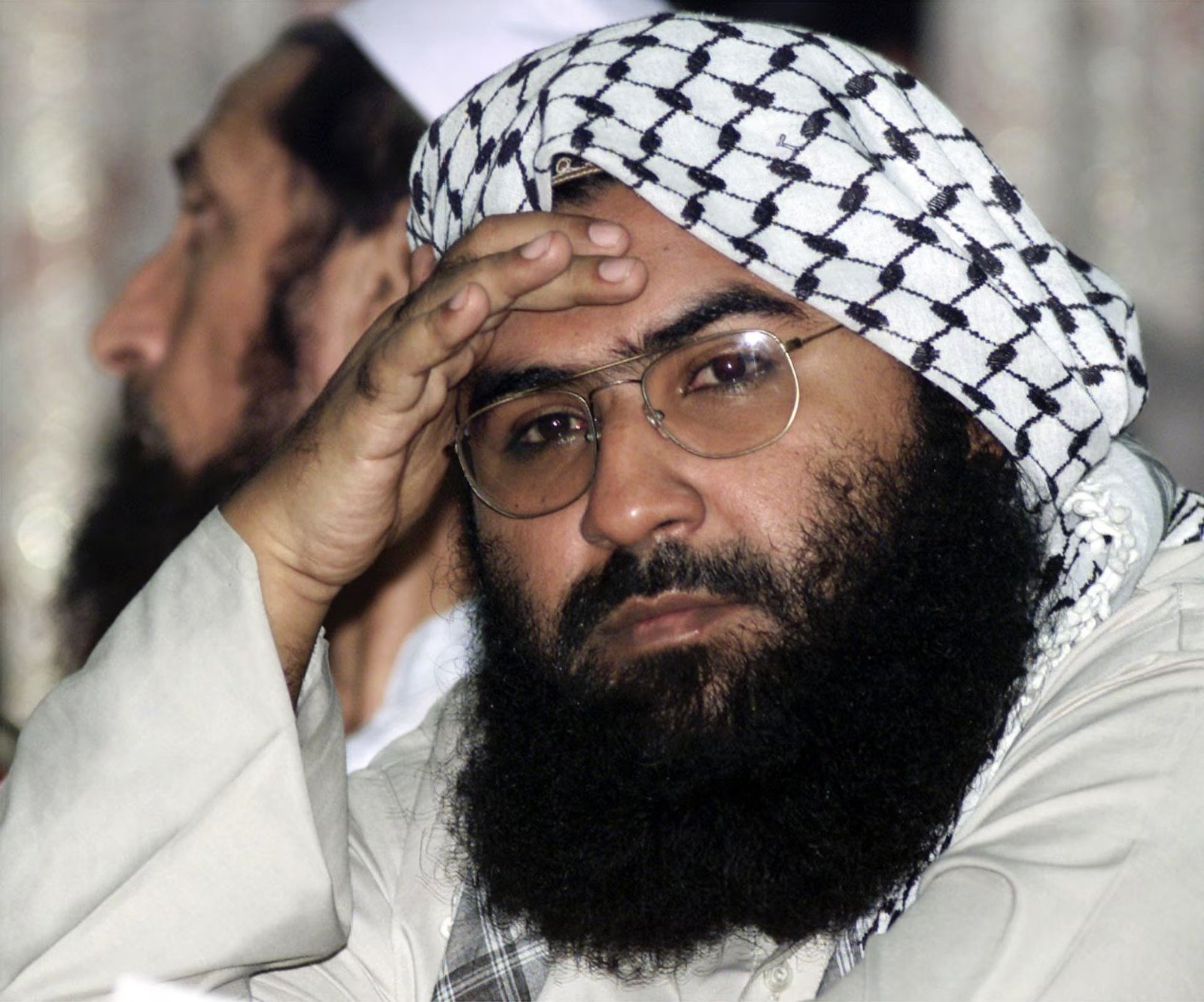
New Delhi, Aug 2026 : Indian security agencies have raised concerns over a renewed campaign of propaganda surrounding Jaish-e-Mohammad (JeM) chief Masood Azhar, with intelligence inputs suggesting that content glorifying the Pakistan-based terrorist leader is being widely circulated to influence and radicalise young recruits.
Azhar has largely remained out of the public spotlight since Operation Sindoor, prompting speculation about his health and whereabouts. According to Indian intelligence inputs, Azhar is reportedly in poor health and has been kept away from public view by Pakistan’s Inter-Services Intelligence (ISI). Security concerns and the possibility of an attack targeting him are also believed to have contributed to his continued absence from public platforms.
An Intelligence Bureau official said that while Azhar may remain underground, his ideology continues to have considerable influence among sections of potential recruits. The official said Azhar’s speeches and writings remain an important part of the propaganda machinery used by JeM to attract and radicalise young people.
According to the official, Azhar continues to command significant attention compared with other Pakistan-based militant leaders such as Lashkar-e-Taiba chief Hafiz Saeed and Hizbul Mujahideen chief Syed Salahuddin. His speeches are considered particularly inflammatory and are repeatedly used by handlers to reinforce extremist narratives among recruits.
Following Operation Sindoor, questions reportedly emerged within JeM cadres and among newer recruits regarding Azhar’s prolonged absence. For a period, the ISI and JeM circulated audio and video recordings purportedly featuring Azhar. Intelligence officials later noticed that cadres had begun questioning whether some of the material was newly recorded.
The strategy subsequently changed, with the organisation reportedly providing its cadres with explanations for Azhar’s absence rather than attempting to conceal it. According to intelligence inputs, recruits are now being encouraged to work in Azhar’s name and are repeatedly exposed to his speeches and ideological material.
Security officials believe the approach is aimed at keeping Azhar’s influence alive despite his physical absence. Sympathy is also reportedly being used as part of the recruitment narrative.
During Operation Sindoor, Azhar is believed to have lost several members of his family, including close relatives. JeM is reportedly using these losses to portray him as a figure who has made personal sacrifices for the organisation and its cause.
According to intelligence inputs, recruits are being exposed to narratives portraying the deaths of JeM members and Azhar’s relatives as sacrifices that must be avenged. The material is allegedly being used to encourage recruits to identify themselves with the group and its leadership.
Indian agencies have also detected a significant increase in the circulation of content associated with Azhar in both India and Pakistan. His speeches, ideological writings and other propaganda material are reportedly being disseminated through various channels and used to influence vulnerable sections of the youth.
Officials said the propaganda is not confined to Pakistan. Intelligence inputs indicate that handlers are also forwarding such material to individuals and groups operating in India, asking them to circulate it widely.
Security agencies are particularly concerned about individuals and small modules inspired by JeM and Azhar’s ideology. Officials said some such groups could potentially attempt attacks while claiming allegiance to the organisation or its leadership.
Investigators believe the strategy could serve multiple purposes for the ISI and JeM. By keeping Azhar at the centre of the propaganda narrative while limiting his direct public exposure, the organisation can continue leveraging his influence without necessarily exposing his location or current condition.
Another concern for Indian agencies is the alleged use of loosely structured modules rather than overtly operating as formal JeM units. Officials believe handlers are encouraging individuals to function under the ideological banner of the organisation while maintaining operational distance from its formal structure.
Security agencies suspect that such a model could make it more difficult to establish direct links between attacks in India and Pakistan-based handlers. It could also allow the handlers to maintain plausible deniability while continuing to influence individuals through propaganda.
The intelligence assessment comes amid heightened scrutiny of extremist networks and online radicalisation following Operation Sindoor. Agencies are monitoring the circulation of militant propaganda, recruitment narratives and ideological material linked to Pakistan-based terrorist organisations.
Officials stressed that the continuing circulation of Azhar’s speeches and writings demonstrates that physical isolation from public view does not necessarily diminish the influence of a militant leader. Instead, digital dissemination and closed communication networks can allow extremist groups to preserve and amplify an individual’s ideological influence.
Indian agencies are therefore keeping a close watch on the propaganda ecosystem surrounding JeM, particularly material aimed at young recruits and individuals vulnerable to radicalisation.