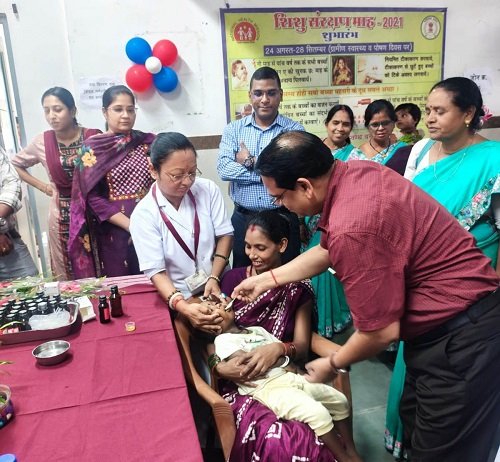
Raipur, August 2026 : Infancy is the most delicate stage of life, when proper nutrition and healthcare shape a child’s future. To reduce malnutrition, anaemia and infectious diseases among children aged 0–5 years, India’s Health Department and the Women and Child Development Department observe Infant Protection Month. The campaign acts as a protective shield for newborns and young children while improving their overall health and nutritional status.
In Chhattisgarh, the latest phase of the campaign began on August 18, 2026, with special attention to children aged 9 months to 5 years.
Objectives of the campaign
The primary goal is to reduce infant and under-five mortality. The campaign also focuses on:
Early identification of childhood illnesses
Providing essential vitamins and minerals
Educating mothers about nutrition and hygiene
Preventing malnutrition and related health problems
Key health services
Health centres and Anganwadi centres deliver the following services across villages and towns:
Vitamin A supplementation: Children aged 9 months to 5 years receive Vitamin A to prevent night blindness and strengthen immunity.
Anaemia prevention: Iron and Folic Acid (IFA) syrup is provided to children aged 6 months to 5 years.
Catch-up immunisation: Children who missed routine vaccines are immunised against measles, rubella, polio, whooping cough and tetanus.
Nutrition screening: Children are weighed and measured to identify moderate and severe malnutrition. Severely malnourished children are referred to Nutrition Rehabilitation Centres when needed.
Diarrhoea management: Mothers receive Oral Rehydration Salts (ORS) packets and zinc tablets to prevent dehydration.
Counselling for families
The campaign goes beyond medicines by encouraging healthy caregiving practices.
Breastfeeding and feeding
Initiate breastfeeding within one hour of birth and give colostrum, the first thick yellow milk.
Practice exclusive breastfeeding for the first six months.
After six months, introduce safe and nutritious complementary foods while continuing breastfeeding.
Offer new foods patiently without forcing the child, and cut food into small pieces to reduce the risk of choking.
Early childhood development
Read, talk and sing to your baby to support brain development.
Babies aged 4–12 months should get 12–16 hours of sleep in 24 hours, including naps.
Encourage daily physical activity by letting babies move freely on the floor, helping them build strength and explore their surroundings.
Avoid keeping babies in swings, strollers, bouncers or similar restraining devices for long periods, as they can hinder development.
Hygiene
Families are also taught proper handwashing and the importance of cleanliness while caring for children to reduce the risk of infection.
A shared responsibility
Infant Protection Month is more than a government programme; it is a reminder that every family and community shares responsibility for children’s well-being. Lasting change depends on the combined efforts of health workers, Mitanins and ASHAs, Anganwadi workers and parents.
Working together, communities can help raise a healthier, better-nourished and stronger generation.
Option 2
Infant Protection Month: Foundation of Healthy Childhood and a Secure Future
Special Article: Infant Protection Month – The Foundation of Healthy Childhood and a Secure Future
By Dhananjay Rathore
Joint Director, Public Relations
Raipur, August 20, 2026
Infancy is a delicate stage of life where proper nutrition and healthcare determine the course of a child’s future. In a developing country like India, the “Infant Protection Month” campaign is organized by the Departments of Health and Women & Child Development with the objective of reducing malnutrition, anaemia, and various infectious diseases among children aged 0 to 5 years. This special health initiative serves as a strong protective shield for newborns and young children, helping improve their overall health and nutritional status.
A new phase of the campaign began in Chhattisgarh on August 18, 2026, focusing on the special care of children between 9 months and 5 years of age.
Main Objectives of the Campaign
The primary aim of Infant Protection Month is to reduce infant mortality and mortality among children under five years of age. Other key objectives include:
- Early identification of illnesses among children.
- Providing essential vitamins and minerals.
- Raising awareness among mothers about proper nutrition and hygiene.
- Improving the overall health and nutritional status of children.
Key Health Services and Activities
During Infant Protection Month, services are delivered through health centres and Anganwadi centres across villages and urban areas.
Vitamin A Supplementation
Children aged 9 months to 5 years are provided Vitamin A doses to prevent eye disorders such as night blindness and strengthen their immunity.
Prevention of Anaemia
Iron and Folic Acid (IFA) syrup is distributed to children aged 6 months to 5 years to protect them from anaemia.
Complete Immunisation
Children who have missed routine vaccinations are immunised against serious diseases such as measles, rubella, polio, whooping cough and tetanus.
Identification and Treatment of Malnutrition
All children are assessed through weight and height measurements at the Anganwadi level. Severely and moderately malnourished children are identified, and those requiring intensive care are referred to Nutrition Rehabilitation Centres.
Diarrhoea Control and ORS Distribution
Mothers are provided ORS packets and zinc tablets to prevent dehydration caused by diarrhoea in children.
Awareness and Counselling Sessions
The campaign is not limited to providing medicines. Behavioural change among mothers and families is also an important component.
Importance of Breastfeeding
Mothers are encouraged to provide colostrum—the thick yellow first milk—within one hour of birth and to exclusively breastfeed their babies for the first six months.
Introduction of Complementary Feeding
After six months of age, mothers are advised to continue breastfeeding while introducing nutritious complementary foods in appropriate quantities and quality.
Between 6 and 12 months of age, infants begin consuming solid foods, though breast milk continues to remain an important source of nutrition. Parents are encouraged to introduce new tastes gradually and patiently without forcing the child to eat.
When children begin eating solid foods, food should be cut into small pieces to prevent choking hazards.
Supporting Brain Development
Parents are encouraged to read to their babies, talk to them and sing for them regularly to support cognitive and emotional development.
Ensuring Adequate Sleep
Infants aged 4 to 12 months should receive approximately 12 to 16 hours of sleep per day, including naps, to support healthy growth and development.
Promoting Physical Activity
Keeping infants active is essential for their development. Parents should engage them in physical activities throughout the day, encouraging movement of their arms and legs.
Allowing babies to sit, crawl and move freely on the floor helps build strength and enables them to explore and understand the world around them.
Hygiene and Sanitation
Families are educated about proper handwashing practices and the importance of cleanliness in child care to reduce the risk of infections.
Avoiding Restrictive Devices
Devices that excessively restrict a child’s movement can hinder development. Parents are advised not to keep infants for prolonged periods in swings, strollers, bouncing seats, exercise saucers or similar equipment. Instead, babies should be given ample opportunities to move freely and explore their surroundings.
A Collective Responsibility
Infant Protection Month is not merely a government programme; it is an opportunity for every family and community to recognise their responsibility towards children. Only when all stakeholders—health workers, Mitanins/ASHAs, Anganwadi workers and parents—work together can a healthy, malnutrition-free and empowered generation be created.
A healthy childhood is the foundation of a strong nation, and Infant Protection Month serves as an important step towards securing a brighter future for every child.