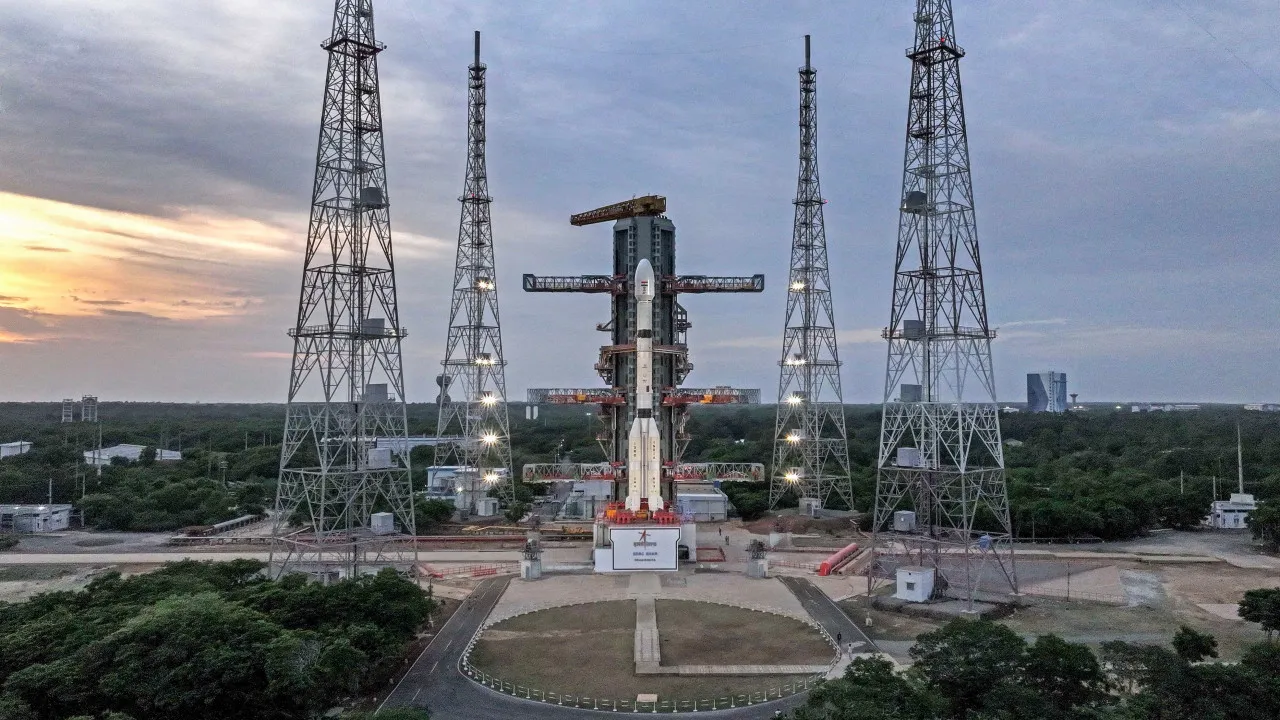
Chennai, Sep 2026 : The Indian Space Research Organisation (ISRO) on Friday successfully launched its advanced Earth observation satellite EOS-05 aboard the GSLV-F17 rocket from the Satish Dhawan Space Centre in Sriharikota, marking a significant addition to India’s space-based monitoring capabilities.
The 51.7-metre Geosynchronous Satellite Launch Vehicle (GSLV-F17) lifted off from the second launch pad at 2.55 a.m. after a 27.5-hour countdown. The three-stage launch vehicle performed as planned and placed the approximately 2,367-kg EOS-05 satellite into its designated Sub-Geosynchronous Transfer Orbit.
The satellite will now undergo a series of orbit-raising manoeuvres before being positioned in its operational orbit. EOS-05 has been designed to provide advanced Earth imaging capabilities from geosynchronous orbit, allowing it to observe large geographical areas repeatedly from a much higher altitude than conventional low-Earth-orbit observation satellites.
The new satellite is expected to strengthen India’s ability to monitor the Indian subcontinent and adjoining regions while generating data for a wide range of civilian and strategic applications. Its imagery can support disaster management, agriculture, environmental assessment, natural resource management and the monitoring of weather-related events.
Frequent imaging from its operational position is also expected to improve the availability of crucial information during rapidly developing natural disasters and other emergencies. The capability could help authorities track changing conditions over large areas and support faster decision-making during crisis situations.
The mission marks another important milestone for India’s Geosynchronous Satellite Launch Vehicle programme. GSLV-F17 is the 19th flight of the GSLV and features India’s indigenously developed cryogenic upper stage, a key technology for placing heavier payloads into higher orbits.
The successful mission also represents progress in ISRO’s efforts to establish a sustained Earth-imaging capability from geosynchronous orbit. An earlier attempt, GSLV-F10 carrying the EOS-03 Earth observation satellite, failed in August 2021 after the cryogenic upper stage could not complete its planned operation.
With EOS-05 now successfully placed in orbit, ISRO has added another sophisticated platform to India’s expanding Earth observation network. The satellite is expected to complement existing space assets and provide more frequent information over large areas.
The successful GSLV-F17 mission therefore strengthens India’s ability to conduct sustained space-based observation, offering an important technological resource for disaster response, development planning, environmental monitoring and other national requirements.