
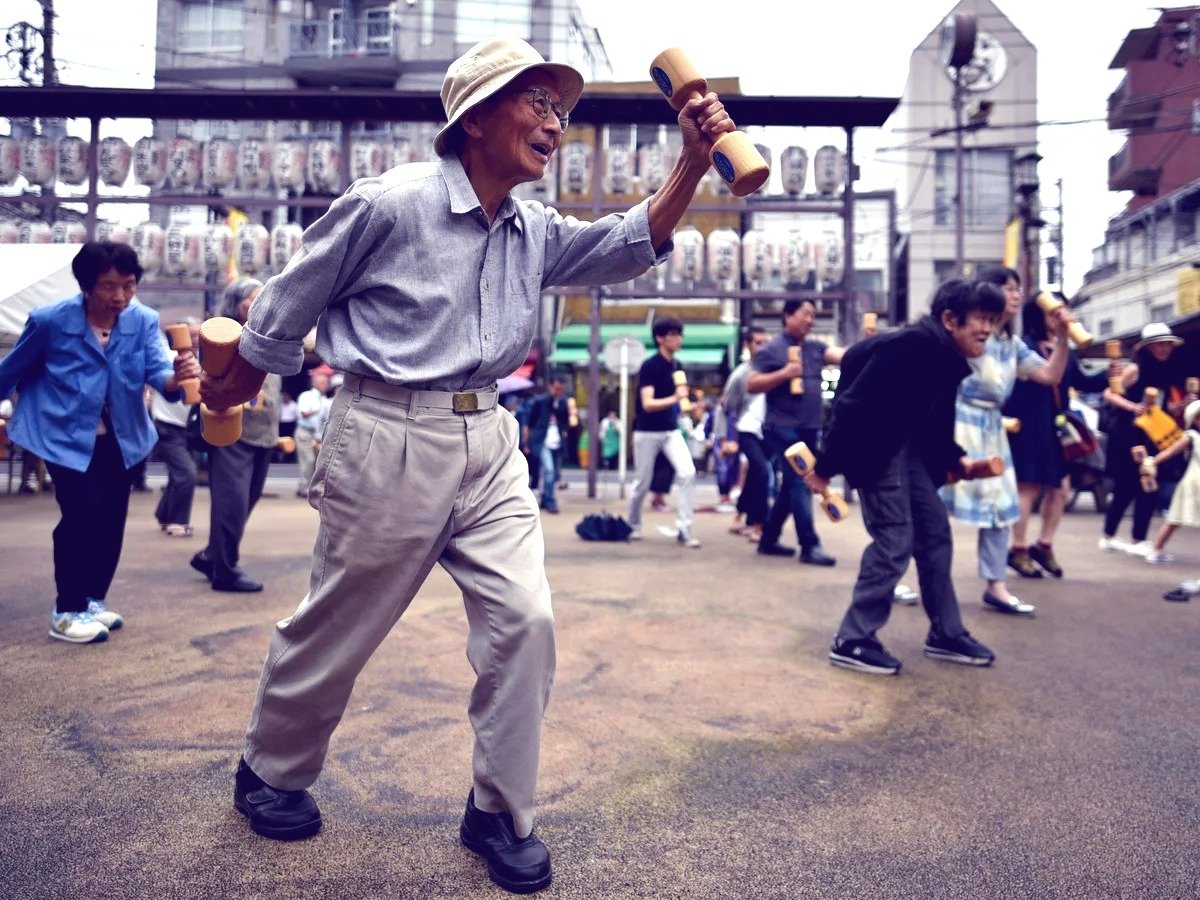
Tokyo; September 2026: Japanese Health Minister Kenichiro Ueno has announced that the total centenarians recorded till 15th of this month (September 2026) has reached 107,677, which according to him is very pleasing that many people are living long, healthy and active lives, citing advances in medical technology as well as healthy lifestyles and diets.
This figure is an increase of 7,914 from 2025 and the 56th consecutive annual rise. Women account for almost 88% of the total. But behind the celebration lies a profound imbalance. Japan’s elderly population continues to grow while the number of births remains at an all-time low, leaving a shrinking workforce to plug mounting pension, healthcare and social care costs.
Japan has one of the world’s oldest populations, with almost 03 in every 10 residents now aged 65 or older. That proportion is projected to approach 40% by 2070. Furthermore, more than 800,000 people were aged 95 or above in Japan last year while only 700,000 babies were born, according to government figures.
The country’s population is, therefore, also declining increasingly quickly. Preliminary census figures show that the population was lower in 45 of Japan’s 47 prefectures in 2025 than five years earlier, with only Tokyo and Okinawa recording increases. Japan’s population peaked at about 128 million in 2008, with the National Institute of Population and Social Security Research projecting that it will fall to 87 million by 2070 – a decline of roughly 30%.
While delving into the factual analysis of the root cause that glorifies such a monumental increase in age, Maverick News 30 could not unveil any single explanation for this longevity but taking into cognizance what researchers have propounded a combination of diet, activity and healthcare. The traditional Japanese diet tends to contain large amounts of fish, vegetables and rice, and comparatively low levels of saturated fat. Obesity rates are also significantly lower than in many Western countries.
Moreover, Japan’s universal health insurance system also provides broad access to treatment and medicines at relatively low cost compared with other countries such as the United States.
While living longer is an achievement, in Japan, it is also occurring alongside one of the world’s lowest birth rates. The country’s total fertility rate – the average number of children a woman is expected to have during her lifetime – fell to a record low of 1.14 in 2025. A rate of about 2.1 is generally considered necessary to maintain a stable population without requiring immigration to bolster working-age numbers.
Japan has introduced child allowances, subsidised childcare, parental leave programmes and other incentives intended to encourage couples to have children. None has yet reversed the long-term decline, however. Furthermore, social scientists say, fewer Japanese people are marrying, or they are marrying later when they are less likely to be able to have children, and many younger adults are worried about insecure employment, stagnant wages and demanding working hours, making having a family harder.
Women’s increased participation in the workforce has not always been matched by an equal sharing of childcare and household responsibilities, making parenthood particularly difficult to combine with a career for women.
Prime Minister Sanae Takaichi has identified population decline and the falling birth-rate as a major national challenge, while Japanese officials have repeatedly warned that the trend threatens the country’s economic and social foundations.
A shrinking working-age population means fewer people paying income taxes and social-security contributions, as spending on pensions, healthcare and elderly care rises in tandem. That imbalance places mounting pressure on public finances and on the younger workers supporting the system through taxes.
Labour shortages are also affecting industries ranging from construction and agriculture to transport, healthcare and social care. Rural areas face a particularly severe challenge as younger residents move to cities, leaving ageing communities with fewer workers and declining public services. Immigration can help to offset labour shortages, and Japan’s foreign population has risen in recent years. Foreign nationals, however, still account for only about 3 percent of the population, and proposals to accept substantially more migrants remain politically contentious.
Team Maverick.