UPFSDA shuts down 10 more blood centres with immediate effect
Lapses range from issuing blood without elisa testing to contaminated plasma and deployment of untrained staff
Action already taken against 14 centres earlier; show-cause notices to remaining inspected centres
Campaign continues to ensure availability of safe blood
Lucknow, November 2026 : To ensure that patients receive safe blood and blood components, the Food Safety and Drug Administration (FSDA) in Uttar Pradesh has tightened the noose around charitable blood centres. During the special inspection campaign being run across the state, large-scale irregularities have come to light at blood centres. Following surprise inspections that revealed numerous deficiencies, operations at 10 more charitable blood centres have been halted with immediate effect. With this, the number of centres brought under action has risen to 24. Under the campaign, 158 blood centres in 62 districts have been inspected so far. In the inspections, action was taken in some cases for issuing blood without mandatory infection testing, and in others because of contaminated Fresh Frozen Plasma (FFP), a broken cold chain and the absence of technical staff.
Scrutiny from blood quality to cold chain
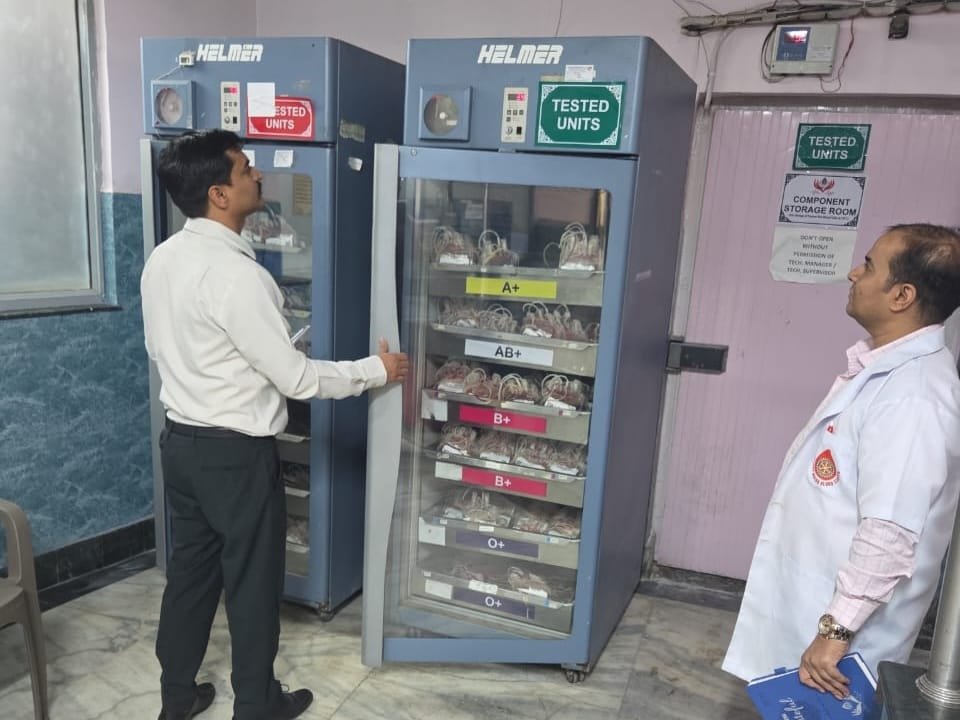
FSDA's inter-district drug inspector teams are examining the entire system at blood centres, from blood collection to the supply of blood and its components to patients. The scope of the inspection includes the ELISA setup for mandatory testing for infections such as HIV, HCV and HBsAg, safe storage of blood, cold chain, temperature control, donor and issue registers, stock reconciliation, availability of blood and components at prescribed rates, and deployment of trained technical staff.
During seasonal illnesses, particularly dengue and malaria, patients need additional blood and platelets. In such circumstances, any negligence in the functioning of blood centres can pose a serious threat to patients' lives. Keeping this in view, the department has intensified inspections of blood centres run by charitable trusts and societies.
Shocking lapses found at 10 centres
In the latest action, serious irregularities came to light at 10 blood centres in different districts. At many centres, blood was being issued without mandatory testing, while at some places even the standards for quality of blood components and safe storage were not being followed.
Surajpur Charitable Blood Centre, Gautam Buddha Nagar: During the inspection, key staff including the Medical Officer were found absent. The apheresis machine and oxygen cylinders were not available. Contaminated FFP and expired medicines were found in the deep freezer. Registers relating to temperature, blood donation camps and stock were incomplete. The centre was found operating despite its licence having been suspended. All activities have been halted, and it has been recommended that the licence be cancelled and the personnel concerned be blacklisted.
Saroj Charitable Blood Centre, Sitapur: Traces of red blood cells (RBCs) were found in an FFP unit here. Blood bags that had not undergone ELISA testing were kept in the tested refrigerator, and two such units had even been issued. The temperature monitoring devices and alarms of the deep freezer and refrigerator were found faulty. Sterility testing and other essential records were also not in line with standards. A stop order was issued to the centre.
Kanha Charitable Blood Centre, Prayagraj: Technical staff including the Medical Officer were found absent. Sterility testing was not being carried out, and the calibration period of the equipment had expired. Essential details and signatures were missing in the donor and issue registers. Shortage of emergency medicines, incomplete logbooks and unsatisfactory cleanliness were also found.
Gomti Charitable Blood Centre, Shahjahanpur: Here, 167 units of blood were issued without ELISA testing even though the kits required for infection testing were not available. The refrigerator and deep freezer were found switched off due to a disrupted power supply. Temperature records were missing, and the weight of blood bags was being decided arbitrarily instead of through the prescribed procedure. Serious deficiencies were also found in the deployment of untrained staff and in the sterilisation arrangements.
Jeevan Suraksha Charitable Blood Centre, Sambhal: Sterility testing was not being carried out. The apheresis machine and its logbook were not available, while the deep freezer with a capacity of -80 degrees Celsius was found switched off. Arrangements for emergency medicines, oxygen cylinders and a generator were also lacking. Because patients' contact numbers were not recorded, it was not possible to verify the blood that had been issued.
Etah Charitable Blood Centre, Kasganj: The Medical Officer was found absent on both days. Records related to HIV and HCV testing, ELISA printouts, sterility testing and donor verification were not available. The actual stock of FFP was 171 units, while 238 units were recorded in the register. Thus, a discrepancy of 67 units was found in stock. Several essential reagents were also unavailable.
Shri Ji Charitable Blood Centre, Ayodhya: A case of 23 units of blood components being issued without ELISA testing came to light. Untested blood was kept in the tested refrigerator, and sterility testing was not being carried out. Rust in the centrifuge, empty oxygen cylinders and the absence of an apheresis machine were found. In addition, the irregularity of bills for blood components being raised at rates higher than the prescribed government rates was also exposed. Blood collection and distribution at the centre were halted immediately.
Gramin Bharat Charitable Blood Centre, Agra: The Medical Officer and technical staff were found absent. Donor and issue registers were incomplete. Along with the lack of sterility testing, shortage of emergency medicines and negligence in cleanliness were observed.
Maa Maya Devi Charitable Blood Centre, Firozabad: Red-coloured FFP contaminated with RBCs was found in the deep freezer. Apheresis equipment, a haemoglobinometer, malaria kits and oxygen cylinders were not available. Licensed staff were also found absent. Many records related to mandatory testing, temperature monitoring and blood distribution could not be produced.
Jai Shree Shyam Charitable Blood Centre, Agra: Violations of biomedical waste management and safety protocols were found. Signs of tampering with testing and records emerged. Documents related to apheresis were also incomplete, raising questions about the reliability of the records. Operations at the centre were halted immediately.
Action had earlier been taken against these 14 centres too
Earlier, the department had also taken action against Jai Hind and Shri Balaji in Agra, Pakwara in Moradabad, Jeevan-24 in Amroha, Yashwanti in Bijnor, Bharat Humanity in Badaun, Dibai in Bulandshahr, Badlapur in Jaunpur, Anubhav in Lakhimpur Kheri, Manya in Gorakhpur, New Bapu in Aligarh, and KHS, Little Star and Rama Charitable Blood Centres in Lucknow.
Serious lapses found in the inspections of these centres included infection testing with rapid kits instead of ELISA, a temperature of 26.7 degrees Celsius in deep freezers with a capacity of -80 degrees Celsius, mould in the component room, use of expired medicines, and the absence of essential staff.
Notices to remaining centres, directions for safe disposal
FSDA has clarified that show-cause notices are being issued to those centres that have been inspected and where irregularities were found. An advisory has also been issued to all District Magistrates for the safe disposal, in accordance with standards, of the blood and blood components available at the blood centres whose operations have been halted. The department's emphasis is not limited to action against irregularities alone, but is on making the entire process of blood collection, testing, storage and supply to patients safe and transparent. Blood donation is a means of giving life to someone in need. In such a situation, so that patients' lives are not put at risk by the negligence of blood centres, FSDA has further intensified its monitoring and enforcement campaign.