Third Mumbai’ to Become New Growth Engine for Maharashtra; Foundation Laid for Infrastructure Projects in NAINA Region
Raigad-Alibaug, October 2026: The planned development of the NAINA region (Navi Mumbai Airport Influence Notified Area) aims to generate approximately 1.5 million jobs, including five lakh high-paying jobs, Maharashtra Chief Minister Devendra Fadnavis said on Sunday. He emphasised that local residents and original landowners would be given priority in the employment and economic opportunities emerging from the region’s development.
With the trust of farmers, their participation as partners in development, modern infrastructure and an efficient connectivity network, the ‘Third Mumbai’ will emerge as a new growth engine for Maharashtra, Fadnavis said.
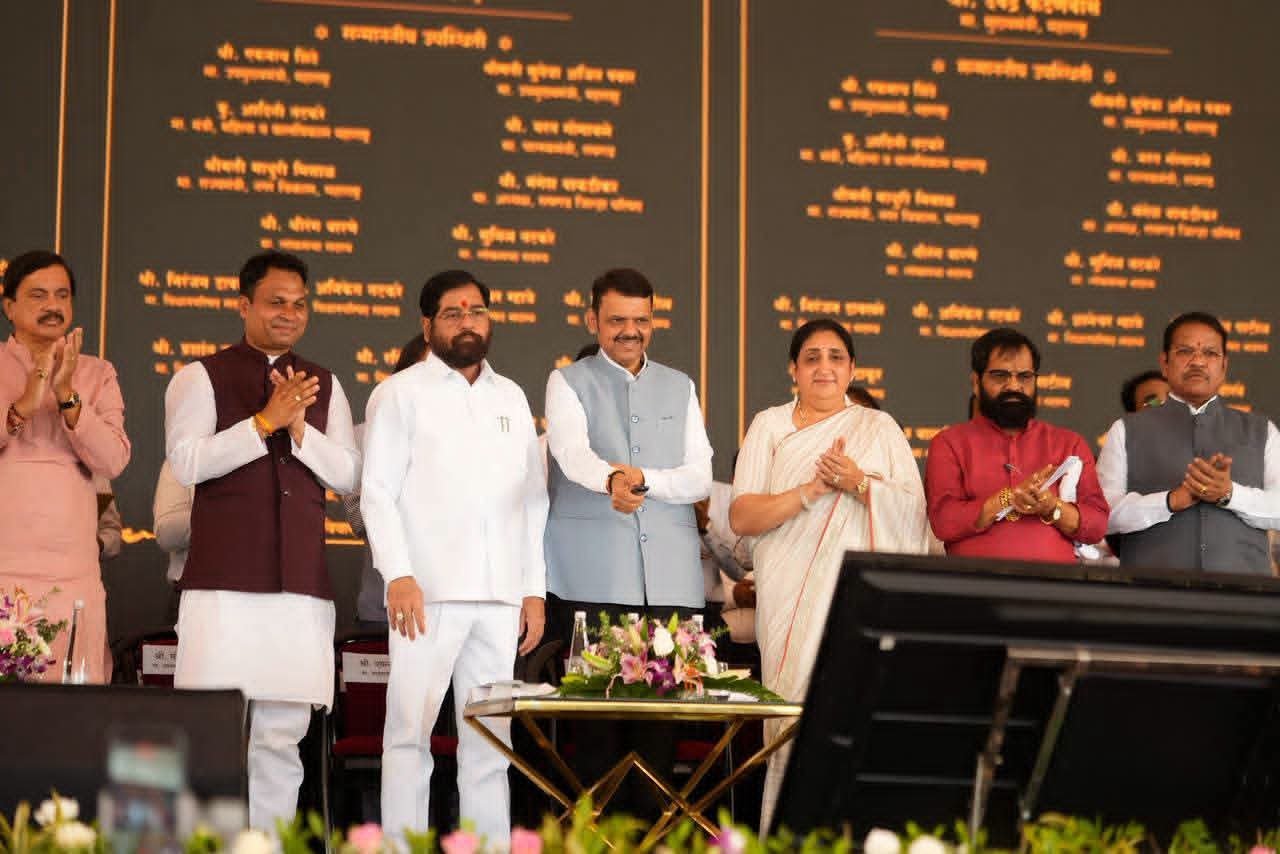
The Chief Minister laid the foundation stone for development works in the NAINA region at Shirdhon in Panvel taluka. He also inaugurated key connectivity projects on the eastern side of Navi Mumbai International Airport, including the SBR-9, BR-4 and BR-5 bridges and the Uran bypass bridge. Property cards were distributed to local landowners on the occasion.
Deputy Chief Minister Eknath Shinde, Deputy Chief Minister Sunetra Ajit Pawar, Guardian Minister Bharat Gogawale, Zilla Parishad President Mangesh Wakadikar, MPs Shrirang Barne and Sunil Tatkare, legislators and senior officials were among those present.
Planned Development to Accelerate Job Creation
Fadnavis said Navi Mumbai International Airport was not merely an airport but a major driver of economic development for the entire surrounding region.
An integrated development plan is being implemented to ensure the planned and time-bound development of areas influenced by the airport. Town planning schemes are being used to guide urban expansion and create more employment opportunities, he said.
Government Committed to Resolving Landowners’ Issues
The Chief Minister said the government had decided to undertake the foundation-laying ceremonies for development projects only after providing land-related documents to the concerned landowners.
Accordingly, village-wise surveys, identification of plots, verification of ownership records and the completion of necessary documentation are being taken forward. The state government will stand by landowners until their issues are resolved, Fadnavis assured.
Education, Healthcare, Sports and Knowledge Hubs to Shape NAINA’s Growth
The development of NAINA is not limited to roads, buildings and residential townships. It must also ensure employment, water supply and other essential civic amenities, the Chief Minister said.
Concepts such as an EduCity, MediCity, Sports City, AeroCity and Knowledge City will create diverse economic and social opportunities in the region. NAINA is expected to provide a new direction to development across Mumbai, Navi Mumbai, Raigad, Thane and Palghar, he added.
Fadnavis said Maharashtra was developing multiple economic centres, including the Mumbai Metropolitan Region, Pune, Chhatrapati Sambhajinagar and Nagpur. In the coming years, the Thane-Navi Mumbai-Raigad-Palghar belt would become another major engine of the state's economic growth.
He reiterated that development would be carried out in partnership with local residents while safeguarding their interests.
NAINA Development to Be Accelerated, Locals to Become Stakeholders: Eknath Shinde
Deputy Chief Minister Eknath Shinde described the occasion as historic, saying it would help resolve long-pending issues in the NAINA region and accelerate its development.
Navi Mumbai International Airport and the Atal Setu have opened new avenues for development in Panvel, Uran, Navi Mumbai and Raigad, positioning the region as a potential growth engine for Maharashtra. The inauguration of major airport connectivity projects would strengthen links with the Mumbai-Pune Expressway and national highways, he said.
Shinde said the government had prioritised the concerns of NAINA landowners and decided to reduce development charges and betterment charges to zero. The process concerning freehold rights was also in its final stage.
The distribution of property cards would enable the formal recording of ownership rights over land parcels. Those who contributed their land to facilitate development must receive a fair share of its benefits, he said, adding that the government was committed to making local farmers and original residents partners in the development process.
The government is also focusing on connecting Mumbai, Navi Mumbai and the proposed Third Mumbai through an efficient network of roads and metro services. Planning for NAINA has taken into account the region’s requirements over the next 25 to 50 years.
Working on the principles of “Trust, Transparency and Transformation”, the government will accelerate infrastructure projects, ensure justice for local landowners, generate employment for residents and provide citizens with quality infrastructure, Shinde said.
NAINA Infrastructure to Create New Employment Opportunities: Sunetra Ajit Pawar
Deputy Chief Minister Sunetra Ajit Pawar said planned development in NAINA, improved connectivity to Navi Mumbai International Airport and major infrastructure projects would create new employment opportunities for local residents.
The development works represented an important milestone for Panvel, Uran, Navi Mumbai and Raigad district, she said.
The SBR-9, BR-4 and BR-5 connectivity projects, costing approximately ₹953 crore, would make travel to the airport faster and smoother from Pune, Panvel, Thane and Kalyan.
The Uran bypass, built at a cost of approximately ₹50 crore, would reduce congestion in the town and make travel easier for local residents, fishermen and farmers. Connectivity through the Ulwe Coastal Road, Atal Setu and other major routes would further accelerate regional development, she said.
The integration of Navi Mumbai International Airport, Atal Setu, connecting infrastructure and the planned development of NAINA would boost industry, trade, services and tourism, creating fresh employment opportunities for local youth.
Pawar said these developments would also help ease the growing pressure on Mumbai while enabling Navi Mumbai and Raigad to emerge as important centres of Maharashtra’s economic growth.
Legislators Mahesh Baldi and Prashant Thakur also addressed the gathering.
Property Cards Distributed to Local Landowners
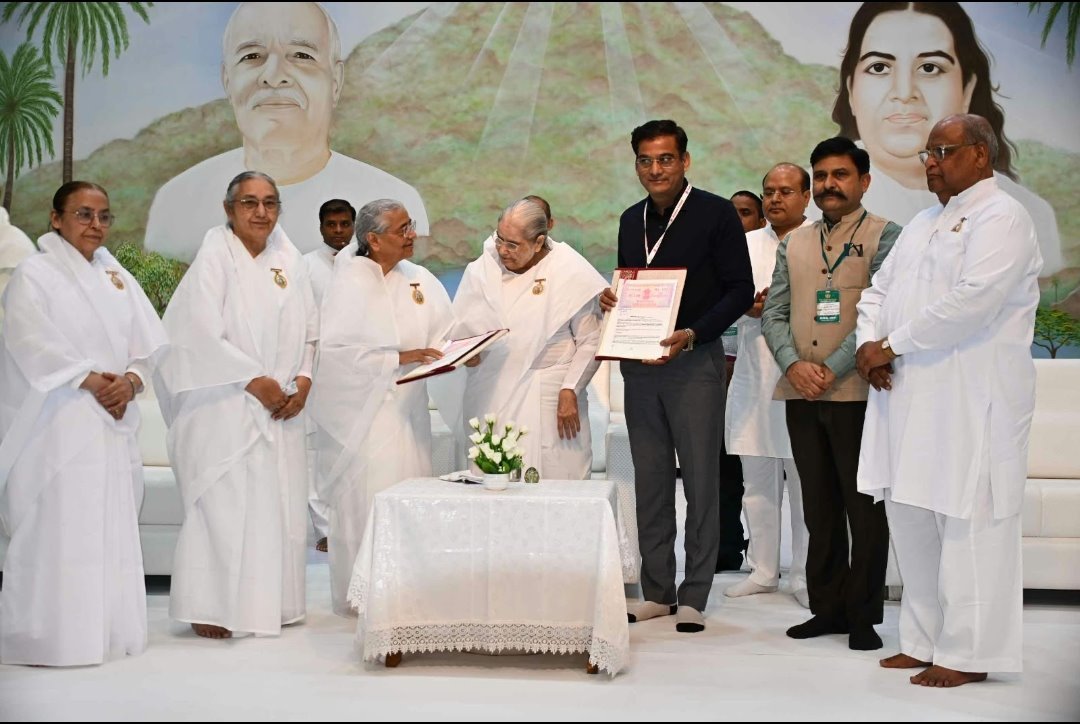
During the programme, Chief Minister Fadnavis distributed property cards to local landowners Rajaram Walku Patil, Ramchandra Shankar Bhoir, Namdev Maruti Bhoir, Devendra Janardan Bhagat, Dhanaji Shankar Kutle, Jagdish Waghmare, Ganesh Gaikar, Waman Ganpat Waghmare, Nilesh Dashrath Waghmare and Vinod Waghmare.
In his introductory remarks, CIDCO Vice-Chairman and Managing Director Ashwin Mudgal said Navi Mumbai International Airport was providing a new direction to development in Navi Mumbai, Panvel, Uran and neighbouring areas.
CIDCO, acting as the Special Planning Authority, is responsible for the comprehensive development of 94 villages spread across approximately 225 square kilometres. The objective is to transform NAINA into a modern, well-connected and sustainable urban centre through integrated planning for the airport, transportation networks, urban development and future economic opportunities.
CIDCO Joint Managing Director Shantanu Goyal proposed the vote of thanks.
Project Details
Uran Bypass Bridge
To ease traffic congestion in Uran and reduce travel time, CIDCO has constructed an 11-metre-wide bypass bridge between Hotel Anandi in the Dronagiri area of Navi Mumbai and Uran town at a cost of ₹50.26 crore.
The project has a total length of 941 metres, comprising a 640-metre bridge, a 153-metre approach road and a 148-metre connecting road.
Footpaths measuring 1.75 metres in width have been provided on both sides, while the carriageway offers 7.5 metres of road space for vehicles. The project is expected to reduce congestion and make travel in and around Uran faster and more convenient.
SBR-9, BR-4 and BR-5 Connectivity Projects
CIDCO has undertaken the SBR-9, BR-4 and BR-5 bridge projects at a combined cost of ₹953 crore to provide fast, convenient and uninterrupted connectivity to Navi Mumbai International Airport from the eastern side.
The bridges across Panvel Creek will establish direct eastern connectivity from Pune, Panvel, Thane and Kalyan via National Highway 4B to Navi Mumbai International Airport, the Ulwe Coastal Road, the Mumbai Trans Harbour Link (MTHL) and the Amra Marg.
The bridges have a combined length of 2,593 metres, including the central circular traffic island, and a total width of 60 metres.
The infrastructure includes a main carriageway with four lanes in each direction and two-lane service roads on either side. A central circular traffic island with a diameter of 100 metres has also been developed.
Cloverleaf interchanges constructed on the eastern and western sides of the airport are expected to facilitate signal-free, uninterrupted traffic movement and improve connectivity to the airport and surrounding areas.