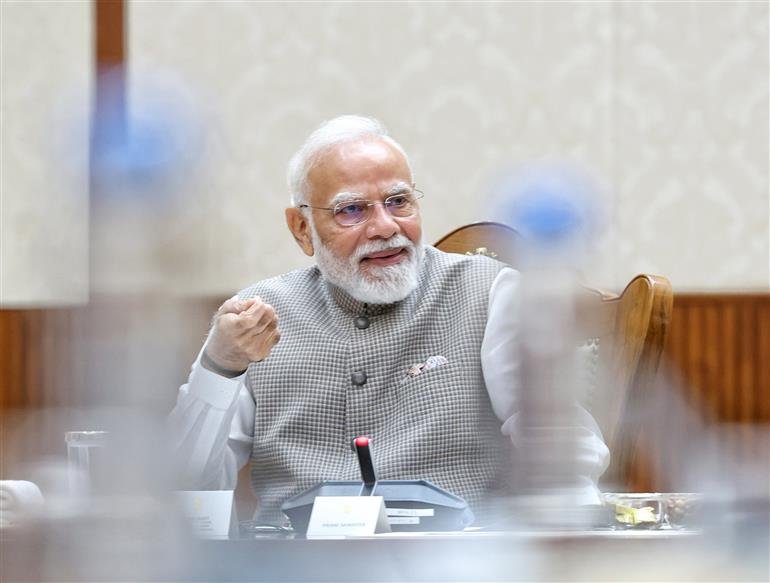
From Gujarat Chief Minister to Prime Minister, Modi joins a select group of leaders with 25 or more years in continuous executive office
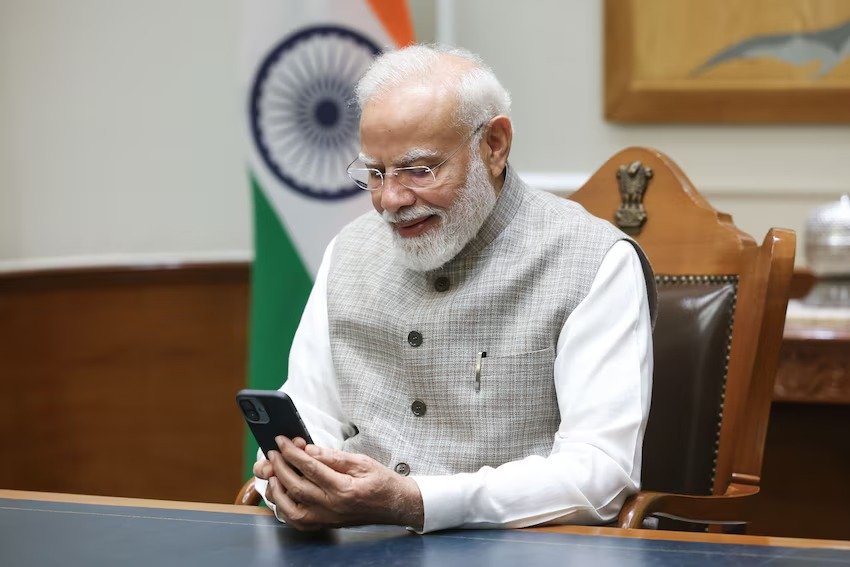
New Delhi, Oct 2026 : Prime Minister Narendra Modi will complete 25 years in uninterrupted executive office on October 7, marking a political journey that began with his swearing-in as Gujarat Chief Minister on October 7, 2001, and continued through his tenure as Prime Minister of India. The milestone places him among a relatively small group of leaders globally who have spent a quarter-century or more continuously in executive office.
Modi served as Gujarat Chief Minister from 2001 until 2014, when he moved to the national stage after the Bharatiya Janata Party won the Lok Sabha elections and he became Prime Minister. He has since continued in office after subsequent electoral victories.
In India, his continuous tenure exceeds the previous record held by Pawan Kumar Chamling, who served as Sikkim Chief Minister from December 1994 to May 2019. Chamling’s tenure lasted 24 years and 165 days, making him India’s longest-serving Chief Minister before Modi crossed the 25-year mark.
Another prominent example is Naveen Patnaik, who served as Odisha Chief Minister continuously from March 2000 to June 2024, completing more than 24 years in office. He was followed in the list of India’s longest-serving Chief Ministers by Jyoti Basu, who led West Bengal from June 1977 to November 2000 for 23 years and 137 days.
Basu’s tenure was closely associated with the Left Front government and its land reform and rural development policies in West Bengal. Patnaik, meanwhile, governed Odisha for five consecutive terms and remained in office until the 2024 Assembly election.
Long-serving leaders worldwide
Modi’s 25-year continuous tenure can also be viewed in the context of other long-serving political leaders across the world.
Singapore’s founding Prime Minister Lee Kuan Yew served continuously from June 1959 to November 1990, a tenure of more than 31 years. Singapore’s Prime Minister’s Office records his term as running from 1959 to 1990.
In Cambodia, Hun Sen served as Prime Minister for several decades, while Malaysia’s Mahathir Mohamad had two separate periods as Prime Minister, from 1981 to 2003 and again from 2018 to 2020. His combined tenure therefore exceeded 24 years, although it was not continuous.
Russia’s Vladimir Putin has also held executive office for extended periods as both President and Prime Minister. Germany’s Helmut Kohl served as Chancellor from 1982 to 1998, while Angela Merkel held the Chancellorship from 2005 to 2021, completing more than 16 years in office.
In China, Xi Jinping has served as General Secretary of the Communist Party of China and Chairman of the Central Military Commission since 2012. He has also been President of China since 2013.
A 25-year political journey
What distinguishes Modi’s milestone in the Indian context is the continuity of his executive career across two levels of government. He moved from leading a state government to heading the Union government without a break in executive office.
His tenure has also coincided with repeated electoral mandates. His supporters have highlighted initiatives spanning governance reforms, infrastructure, welfare delivery, technology-led administration, economic policy and India’s international engagement. The Union Cabinet on Tuesday also adopted a resolution commemorating his 25 years of continuous governance.
At the same time, Modi’s quarter-century milestone comes within India’s competitive electoral system, where governments and leaders face periodic elections at both the state and national levels.
As he completes 25 years in executive office, Modi’s political journey now stands as one of the longest continuous tenures in India’s post-Independence electoral history, with his current tenure as Prime Minister continuing alongside the government’s stated objective of building a Viksit Bharat.