Kathmandu, August 2026 : Nepal could require between $4 billion and $5 billion to rebuild after devastating floods and landslides that have killed more than 600 people and caused widespread destruction across the Himalayan nation, Finance Minister Swarnim Wagle said on Saturday.
Wagle told Reuters that the preliminary estimate represented a significant financial burden for Nepal, equivalent to nearly one-tenth of the country’s economy. However, he stressed that the figure was only an initial assessment and could change as authorities conduct a detailed evaluation of the damage.
“The initial estimate is between $4-$5 billion. Just an estimate,” Wagle said, adding that the country was likely to require less for reconstruction than it did following the devastating 2015 earthquake. “Loss and damage is being assessed,” he said.
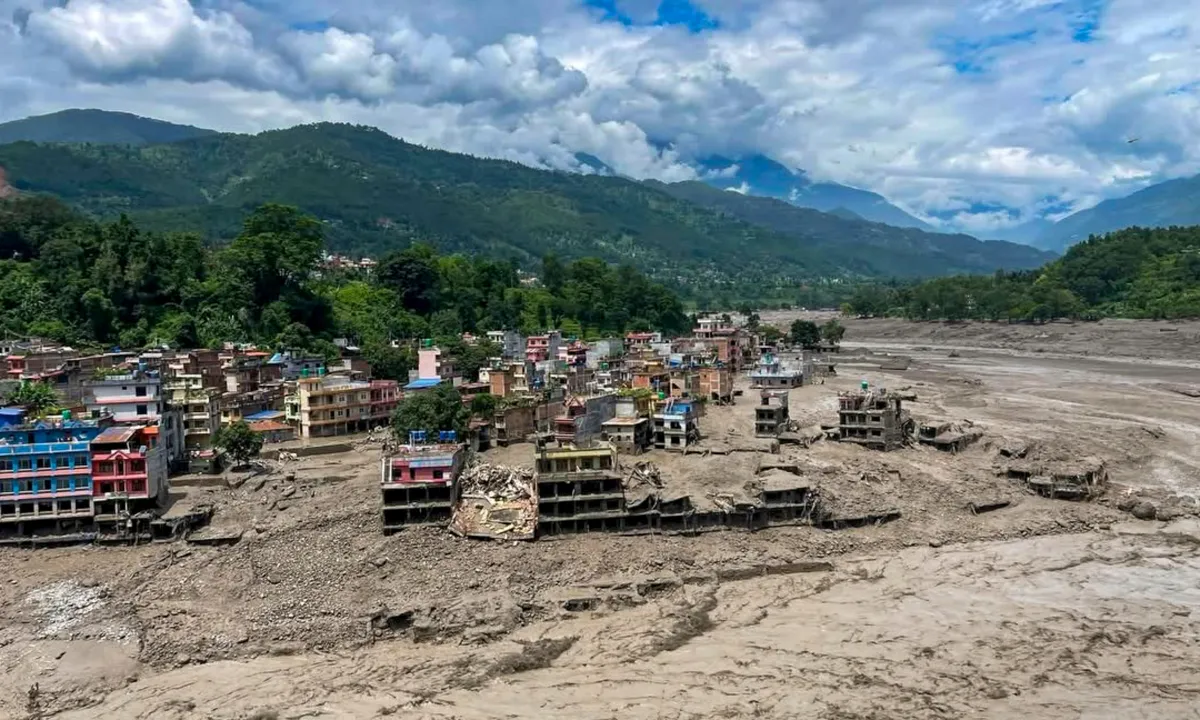
The disaster was triggered on Wednesday when a glacier collapse unleashed a massive torrent of water, rocks, ice, mud and debris through river systems in the Himalayan region. The resulting floods devastated settlements in border areas of Nepal and China’s Tibet, sweeping away bridges and roads and damaging critical infrastructure, including major hydropower projects.
Authorities have warned that the full scale of the destruction is still emerging as rescue and recovery teams reach areas that were cut off by floodwaters, landslides and debris.
The disaster is expected to deliver a major setback to Nepal’s economy, which depends heavily on remittances, tourism and hydropower. Several power projects have suffered damage, with affected facilities accounting for more than 12 per cent of Nepal’s national electricity-generating capacity.
The estimated reconstruction requirement remains below the approximately $9 billion spent rebuilding Nepal after the magnitude-7.8 earthquake in 2015, the country’s worst recorded natural disaster. That earthquake killed nearly 9,000 people, destroyed more than half a million homes and caused economic losses estimated at around one-third of Nepal’s economy.
Foreign Minister Shisir Khanal also warned on Saturday that reconstruction and rehabilitation following the floods could run into billions of dollars.
“The reconstruction and rehabilitation would entail perhaps billions of dollars,” Khanal told reporters in Kathmandu, stressing that the immediate priority remained rescuing survivors and saving lives.
“We will do loss and damage research and then we plan, but I am reaching out to our international community for support,” he said.
Three days after the disaster, rescue operations were continuing across the worst-affected districts. Khanal said the scale of the emergency was already placing significant pressure on the government’s existing resources and capabilities.
According to officials, rescue teams had recovered 626 bodies, while more than 2,426 people remained missing in Nepal. The numbers could change as search operations continue and authorities gain access to previously isolated areas.
Khanal also appealed to international partners for specialised assistance in identifying and preserving bodies recovered from rivers and downstream areas.
“Hundreds of bodies have been found downstream, and there is a risk of fast decomposition because these bodies have been in water for a long time,” he said.
Nepal’s limited healthcare and forensic infrastructure has created additional challenges. Khanal said the country lacked sufficient facilities to preserve recovered bodies in appropriate conditions for extended periods while authorities searched for relatives.
The government is therefore considering bringing in refrigerated or freezer trucks to temporarily preserve bodies until they can be identified and handed over to families.
Identifying the victims is emerging as another major challenge. Khanal said Nepal urgently needed greater forensic capacity, particularly for DNA collection, testing and identification.
“We need forensic capability,” he said, noting that the country’s existing capacity for DNA sampling, testing and reporting remains limited.
As rescue operations continue, the government faces the difficult task of simultaneously addressing immediate humanitarian needs and preparing for a massive reconstruction effort. Roads, bridges, settlements, power infrastructure and other essential facilities will need to be assessed before a long-term recovery programme can begin.
Officials are expected to undertake a comprehensive loss-and-damage assessment in the coming days. The final reconstruction cost could provide a clearer picture of the financial assistance Nepal will require from international partners as it moves from emergency rescue operations towards rehabilitation and rebuilding.