New Delhi, Aug 2026 : The government is set to significantly expand India's regional aviation network with an allocation of Rs 28,840 crore for the next phase of the UDAN scheme, Civil Aviation Minister Kinjarapu Ram Mohan Naidu said on Friday.
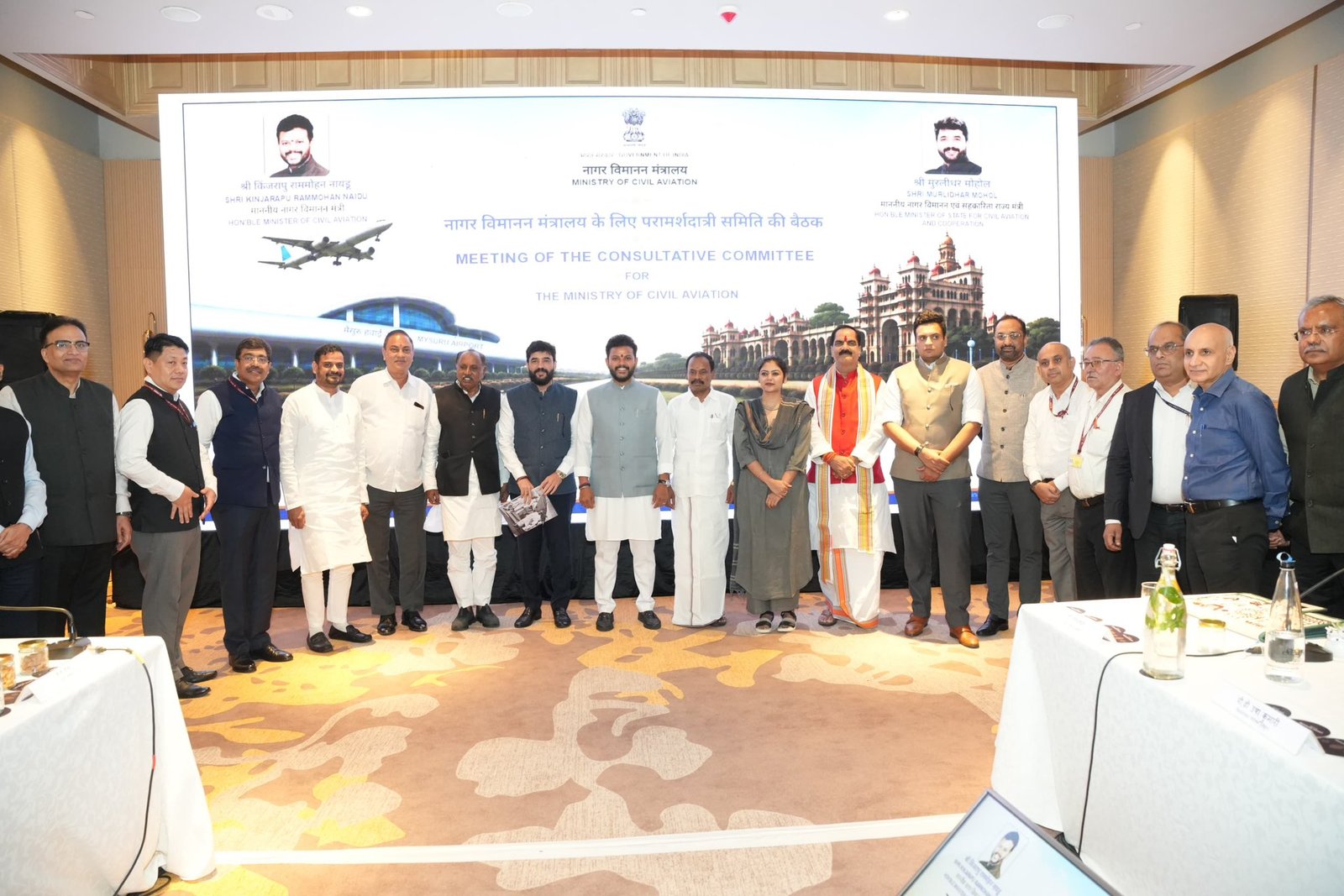
The announcement was made during a meeting of the Parliamentary Consultative Committee of the Ministry of Civil Aviation, chaired by Naidu in Mysuru, Karnataka. The meeting focused on the next phase of UDAN, reforms in the Flying Training Organisation (FTO) ecosystem and the transformation of the Indira Gandhi Rashtriya Uran Akademi (IGRUA).
Addressing members of the committee, Naidu said the government had invested around Rs 10,000 crore over the past decade towards airport development and viability gap funding for airlines under its efforts to expand regional connectivity.
“In the last 10 years, we invested around Rs 10,000 crore in airport development and Viability Gap Funding for the airlines. We are now taking this ambition to a new scale with an allocation of Rs 28,840 crore under the next phase of UDAN,” he said.
The minister said India's aviation growth was no longer confined to major metropolitan destinations or simply the construction of airports. He emphasised that the sector was increasingly becoming an important driver of regional development and inclusive economic growth.
“Driven by Prime Minister Narendra Modi’s vision of UDAN, aviation is increasingly becoming an engine of regional development and inclusive economic growth, benefiting farmers, exporters, businesses and communities,” Naidu said.
He added that India was simultaneously emerging as a hub for the next generation of aviation technologies, including drones and electric vertical take-off and landing (eVTOL) aircraft, while reforms were also being pursued in areas such as maintenance, repair and overhaul (MRO) and air cargo.
The committee was also briefed on reforms being undertaken in the FTO ecosystem to increase the availability of trained pilots while maintaining stringent safety and training standards.
According to the ministry, the number of FTOs has increased from 32 in 2020 to 41 in 2026, while the number of flying bases has nearly doubled from 32 to 63 during the same period.
The government has also introduced an FTO ranking framework intended to improve transparency and accountability among flying training institutions. The framework is expected to help aspiring pilots and their families make better-informed choices when selecting an institution for professional training.
Highlighting the growing demand for aviation professionals, Naidu said Indian airlines had placed aircraft orders on an unprecedented scale, creating an urgent requirement for a skilled workforce.
“Aircraft orders are only one part of the story; these aircraft will need a skilled and safety-conscious workforce to fly them. We do not want to import the workforce to operate India’s aviation growth. We want to train that workforce right here in India,” he said.
The committee also reviewed the transformation of IGRUA, one of India's prominent pilot training institutions. The academy has recorded a substantial increase in aircraft utilisation, with its fleet averaging 1,765 flying hours per aircraft annually, compared with a global benchmark of around 1,500 hours.
The institution has also achieved a budget surplus for the first time after more than two decades of recurring deficits, marking a significant improvement in its financial performance.
Members of Parliament Gopal Jee Thakur, Anup Sanjay Dhotre, Sayani Ghosh, Kamakhya Prasad Tasa, M. Dhanapal, Ramrao Sakharam Wadkute and Mysore MP Yaduveer Chamaraja Wadiyar attended the meeting.
Ministry of Civil Aviation Secretary Samir Kumar Sinha, Directorate General of Civil Aviation (DGCA) Director General Vir Vikram Yadav, Airports Authority of India Chairman Vipin Kumar and Bureau of Civil Aviation Security (BCAS) Director General Rajesh Nirwan were among the senior officials present.
Naidu welcomed the suggestions put forward by committee members and assured them that their recommendations would be duly considered as the government advances its initiatives to strengthen India's civil aviation ecosystem.
The proposed expansion of UDAN, alongside reforms in pilot training and aviation institutions, is aimed at ensuring that India's rapidly expanding aviation sector reaches smaller cities and communities while creating a stronger domestic workforce to support the industry's long-term growth.