From adulteration to misleading claims, a crackdown is coming
Food Safety Department sets standards from storage to transport
Using banned colours and chemicals will prove costly
No misleading sales in the name of bread
Cafe and shop counters also come under inspection
Everything from licences to records will be checked
Lucknow, November 2026 : Businesses that make and sell bakery and confectionery products such as bread, biscuits, cakes, pastries, cookies, chocolates and candies will now have to strictly follow the prescribed food safety standards. Using substandard raw materials, making products attractive with banned colours and chemicals, manufacturing in unhygienic conditions, improper storage and misleading claims can now prove costly. The Food Safety and Drug Administration, Uttar Pradesh, has issued detailed instructions for this sector. Businesses must mandatorily comply with the rules related to cleanliness, quality, storage, food colours, packaging and labelling.
Quality of raw materials and finished products must be ensured
To maintain the quality of bakery and confectionery products, regular monitoring of raw materials such as refined flour (maida), flour (atta), cocoa powder, eggs, nuts, margarine and shortening is essential. If mould, abnormal colour, foul odour, infestation or adulteration is observed, the material must be immediately separated from the stock. To prevent mould in packed raw materials, temperature and humidity must be controlled as per the instructions on the label.
For perishable products such as milk, custard and pastry fillings, maintaining a cold chain from storage through transport to delivery is mandatory. For bakery products with a shelf life of less than seven days, the use-by date must be clearly marked.
Using banned colours and chemicals will prove costly
The use of industrial dyes such as Rhodamine B, Metanil Yellow and Sudan dye to enhance the appeal of products is completely prohibited. The use of substances such as potassium bromate, potassium iodate, formalin, boric acid and salicylic acid is also forbidden. These are often used to hide substandard raw materials, staleness or mould. In bakery and confectionery products, only recommended colours and preservatives may be used, and only in standard quantities.
Strict standards for hygiene and processing
The floors, ceilings and walls of storage and processing areas must be smooth and even so that they can be easily washed. Proper drainage for water generated during washing and processing, and arrangements for regular waste disposal, are essential. Personal hygiene of workers and compliance with the prescribed dress code (apron, head net, gloves) are mandatory. Only potable water must be used for all washing work.
Storage and processing areas must have adequate lighting and ventilation. There must be separate, well-organised areas for receiving raw materials, preparation, baking, cooling, packing and storage, so that contamination does not spread from one food item to another. Mixers, ovens, trays, moulds and all equipment that comes into contact with food must be of food-grade quality.
Just adding colour won't pass for brown bread, whole wheat bread or milk bread
Breads sold under different names must contain the prescribed minimum quantity of the relevant ingredient. Whole wheat bread must contain at least 75 percent whole wheat flour of the total flour. Multigrain bread must contain a minimum of 20 percent of other permissible grains besides wheat. Milk bread must contain at least six percent milk solids. Breads sold under special names such as oat, bran, honey, fruit or others must also contain the prescribed quantity of the relevant ingredient.
Complete information on the packet is also mandatory
The packaging must carry the product name, list of ingredients, allergen information, nutritional details, vegetarian/non-vegetarian mark, batch number, manufacturing and expiry dates, and the 14-digit FSSAI licence number. Information on allergens such as milk, soy, gluten and nuts must be clearly stated. Cake boards, paper cups, wrappers and takeaway boxes must be food-grade. Using newspaper or printed paper to wrap or pack food items is prohibited. The trans fat content in vanaspati fat, margarine and shortening must not exceed two percent. Claims such as sugar-free, preservative-free, organic and healthy will also be verified against the product's actual formulation and records.
Cafe and shop counters also come under inspection
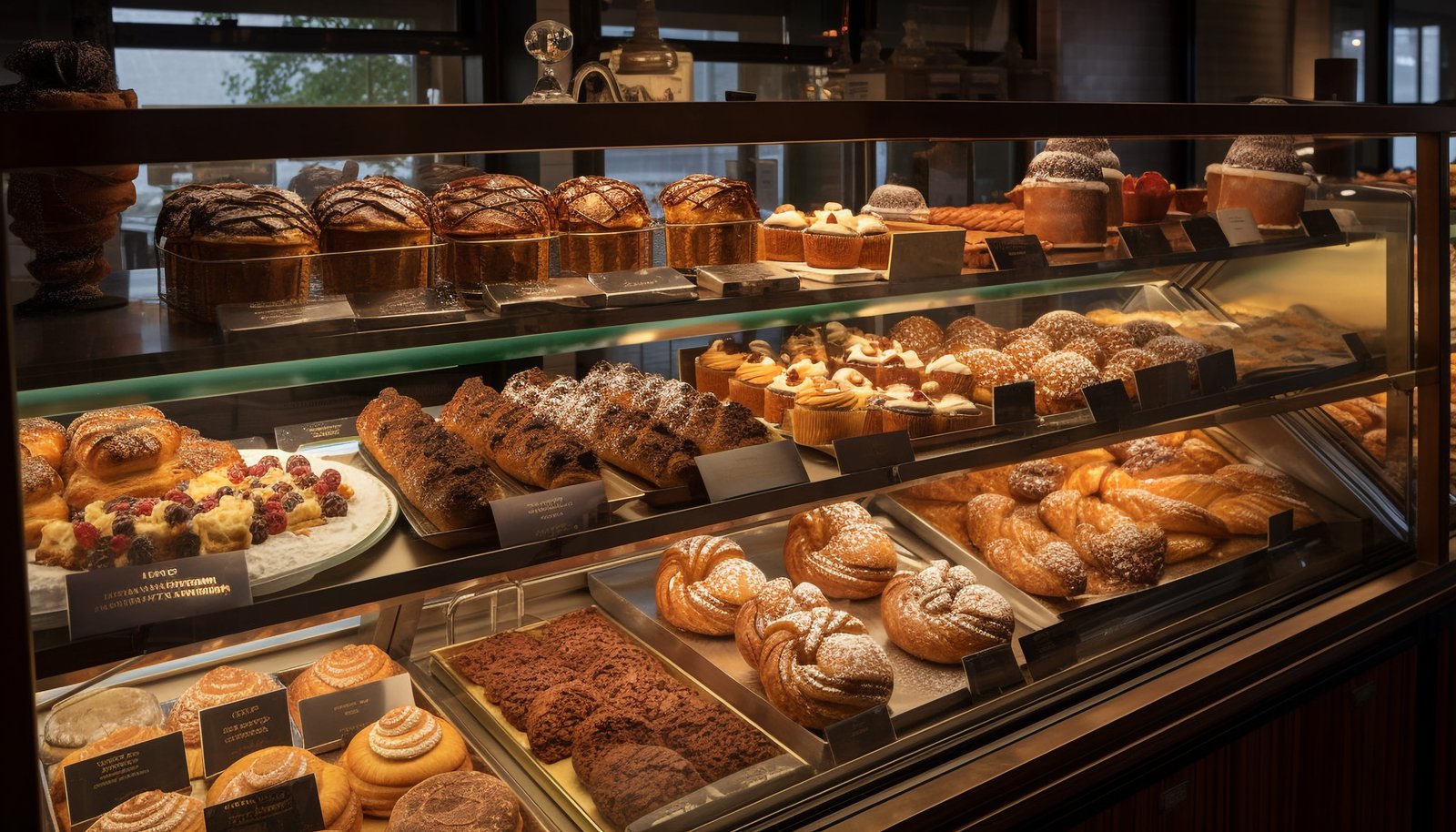
Open cakes, pastries, muffins, cookies and bread must be kept in glass display cases or food-grade covers so that they are protected from dust, flies and direct contact with customers. Cake-cutting knives, trays and other equipment must be regularly sanitised. Separate equipment must be used for raw and ready-to-eat food items.
Milk used in cafes must be kept at the appropriate temperature, and safe drinking water must be ensured for ice makers. Regular cleaning of coffee machines, blenders and juicers is also mandatory.
Everything from licences to records will be checked
All businesses must hold a licence or registration appropriate to their activities. Purchase bills, batch numbers and supplier records for refined flour, sugar, milk solids, fats, food colours and flavours must be preserved. Batch records of raw materials and finished products, recipes, formulations and shelf-life details must also be available.
Medical records of employees, drinking water test reports, pest control documents and temperature control records must also be maintained. There must be an effective system to immediately recall any product found unsafe in the market, along with complete distribution details.